


Billionaire Ray Dalio's Blunt 6-Word Statement on AI Sends a Chilling Message to Wall Street
Key Points
The Dow Jones Industrial Average, S&P 500, and Nasdaq Composite have rallied to new highs on the heels of the AI revolution.
While speaking at a recent conference, Dalio raised several historical red flags about major technological innovations.
Investors have a terrible habit of overestimating the pace of adoption and/or optimization of new technologies.
- 10 stocks we like better than S&P 500 Index ›
Despite recent volatility, 2026 has shaped up as another stellar year for Wall Street and investors. Since early June, the Dow Jones Industrial Average (DJINDICES: ^DJI), S&P 500 (SNPINDEX: ^GSPC), and Nasdaq Composite (NASDAQINDEX: ^IXIC) all tallied record-closing highs, driven primarily by artificial intelligence (AI) euphoria.
But not everyone on Wall Street believes the stock market's AI-driven parabolic gains are sustainable. Billionaire Ray Dalio, who founded the world's largest hedge fund, Bridgewater Associates, and was formerly its chief investment officer, recently offered a blunt and chilling message of what's to come.
Where to invest $1,000 right now? Our analyst team just revealed what they believe are the 10 best stocks to buy right now, when you join Stock Advisor. See the stocks »

Ray Dalio founded the world's largest hedge fund, Bridgewater Associates. Image source: Getty Images.
"All great technology changes produce bubbles"
On June 3, at the Forbes Iconoclast Summit in New York City, Bloomberg's Dani Burger interviewed Dalio about his take on global debt, the bond market, and the potential for an AI bubble. Dalio was particularly candid in his prediction of what's to come with the AI revolution. Said Bridgewater Associates' founder:
All great technology changes produce bubbles. And the reason they produce bubbles is because no one can get it exactly right. You have to spend a ton of money to capture your market share... or you don't spend enough, and you lose your market share. It's very imprecise with a lot of competition.
Dalio's chilling six-word assessment that "all great technology changes produce bubbles" is historically accurate and supported by previous tech bubbles, including the internet, nanotechnology, and metaverse, among others.
Billionaire investor Ray Dalio says, "all great technology changes produce bubbles," and sees signs in the booming artificial-intelligence market of a bubble that will eventually burst with the converting of wealth into money https://t.co/1b4uoz1BD5 pic.twitter.com/htU5wjXXTc
-- Bloomberg TV (@BloombergTV) June 3, 2026
Although Dalio didn't specify when he believes the AI bubble will burst, he focused on what he called the "pricking" of the bubble. Specifically, he claimed that when debt obligations become burdensome -- some of America's most influential businesses are funding their AI build-outs through debt and/or equity offerings -- the need to sell wealth to access the money to service these obligations is when things break.
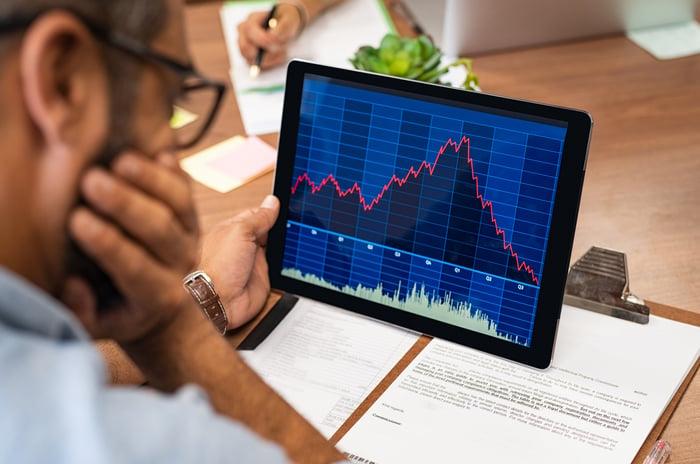
Image source: Getty Images.
Optimization has always been an issue with technological innovations
In addition to Ray Dalio's chilling comments on AI, I'll add that every hyped trend over the last three decades has dealt with an adoption and/or optimization issue.
For instance, the metaverse struggled with early stage adoption. While the prospect of an entirely new economy built in an immersive virtual space was compelling and prompted Wall Street analysts to assign an otherworldly addressable market to this opportunity, its adoption never lived up to the hype.
Optimization tends to be an even bigger issue. With the internet and now AI hardware, adoption hasn't been a problem. Businesses are spending aggressively to build-out their AI infrastructure, just as they did in the mid-to-late 1990s to expand their online presence.
But game-changing technologies take years to mature, and investors have a terrible habit of overestimating this process. Businesses didn't optimize sales and profits until after the dot-com bubble burst, and AI solutions are likely to share this fate, based on what history tells us.
Should you buy stock in S&P 500 Index right now?
Before you buy stock in S&P 500 Index, consider this:
The Motley Fool Stock Advisor analyst team just identified what they believe are the 10 best stocks for investors to buy now… and S&P 500 Index wasn’t one of them. The 10 stocks that made the cut could produce monster returns in the coming years.
Consider when Netflix made this list on December 17, 2004... if you invested $1,000 at the time of our recommendation, you’d have $371,842!* Or when Nvidia made this list on April 15, 2005... if you invested $1,000 at the time of our recommendation, you’d have $1,244,783!*
Now, it’s worth noting Stock Advisor’s total average return is 900% — a market-crushing outperformance compared to 207% for the S&P 500. Don't miss the latest top 10 list, available with Stock Advisor, and join an investing community built by individual investors for individual investors.
See the 10 stocks »
*Stock Advisor returns as of July 21, 2026.
Sean Williams has no position in any of the stocks mentioned. The Motley Fool has no position in any of the stocks mentioned. The Motley Fool has a disclosure policy.
Recommended Articles


