


Stanley Druckenmiller Says the 30-Year Treasury Bond Is "the Only Fiscal Disciplinarian We Have Left," Even After the Government Doubled Its Long-Dated Bond Buybacks to $4 Billion. Does That Signal Higher Rates for Longer?
Key Points
Investors continue to sell bonds due to concerns about rising U.S. debt and inflation.
The U.S. Treasury has made moves to push yields back down -- but so far, to no avail.
- These 10 stocks could mint the next wave of millionaires ›
The U.S. Treasury Department is very worried about long-term yields on government bonds. That's because rising yields are a huge headache for Uncle Sam. They make borrowing more expensive for consumers and businesses (mortgage and car loan rates are based on them) and could put a dent in economic growth. They also make it more expensive to fund the massive U.S. government national debt, which just hit $40 trillion.
That's why Treasury Secretary Scott Bessent recently made several moves to put a lid on rising yields. These included an intervention in currency markets in July to help Japan prop up the weakening yen. Treasury was worried that if Japan had to do this alone, it would have to sell some of the $1.1 trillion in Treasuries it owns, putting downward pressure on prices and sending yields higher.
Missed Nvidia in 2009? This Rare Signal Is Flashing Again. In 2009, a "Double Down" signal flashed for a little-known chipmaker called Nvidia. For the first time in years, that same "Total Conviction" signal is flashing for a company 1/100th the size of Nvidia. Continue »
And in August, Bessent said Treasury will double its buybacks of longer-dated Treasuries to push prices higher and yields lower -- or at least prevent yields from rising further. He said those purchases could be as much as $4 billion.
Bond yields continue to rise
It's not working, however. This week, yields on 10-year and 30-year Treasury bonds rose to near-multi-decade highs. That's bad for the stock market for the reasons I noted, and also because higher yields make bonds more attractive relative to risk assets like stocks, which could pull some money out of the stock market and send indexes lower.
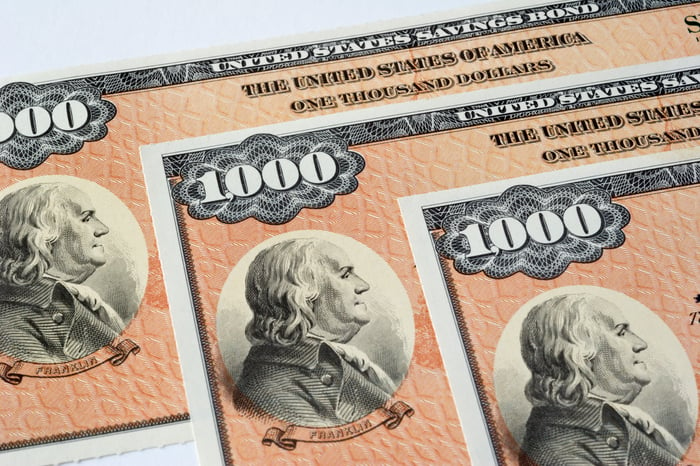
Image source: Getty Images.
In an opinion piece in The Wall Street Journal, billionaire investor Stanley Druckenmiller, who was Bessent's mentor at Soros Fund Management, criticized the Treasury's strategy to push down yields, saying Bessent is undermining the bond market, which he called "the only fiscal disciplinarian the U.S. has left."
And it seems pretty clear that Treasury's buybacks, which are small compared to the $900 billion a day in average Treasury security transactions, probably will have little lasting impact on yields.
That's because yields are set, of course, by the bond market. And bond investors seem to be selling Treasuries (sending prices lower and yields higher) for several reasons. They're worried about rising U.S. debt and the complete lack of will in Washington to address it or curb its growth. They're also worried that the Federal Reserve isn't doing enough to combat elevated inflation.
So, should investors expect bond yields, which set many interest rates, to remain higher for longer? Yes, they should. And it's something every smart investor needs to watch closely.
Where to invest $1,000 right now
When our analyst team has a stock tip, it can pay to listen. After all, Stock Advisor’s total average return is 984%* — a market-crushing outperformance compared to 212% for the S&P 500.
They just revealed what they believe are the 10 best stocks for investors to buy right now, available when you join Stock Advisor.
See the stocks »
*Stock Advisor returns as of September 3, 2026.
The Motley Fool has a disclosure policy.
Recommended Articles


