


SpaceX Shares Fall Over 5% to Hit New All-Time Low: Plans New Data Center in Texas, Morgan Stanley Warns xAI Capex May Reach $120 Billion
TradingKey - On July 22, Eastern Time, SpaceX ( SPCX) shares hit another record low, falling 5.32% to $116.97 as of press time.
It is reported that SpaceX AI is further ramping up data center construction, with a scale matching the gigawatt-level capacity of the existing Memphis campus. However, the company's Q1 AI-related capital expenditures have surged to $7.7 billion, approximately three times that of the same period last year. Morgan Stanley analysts predict that xAI will consume a combined total of up to $120 billion in cash between 2026 and 2027—a figure that is nearly 1.6 times SpaceX's IPO proceeds of $75 billion.
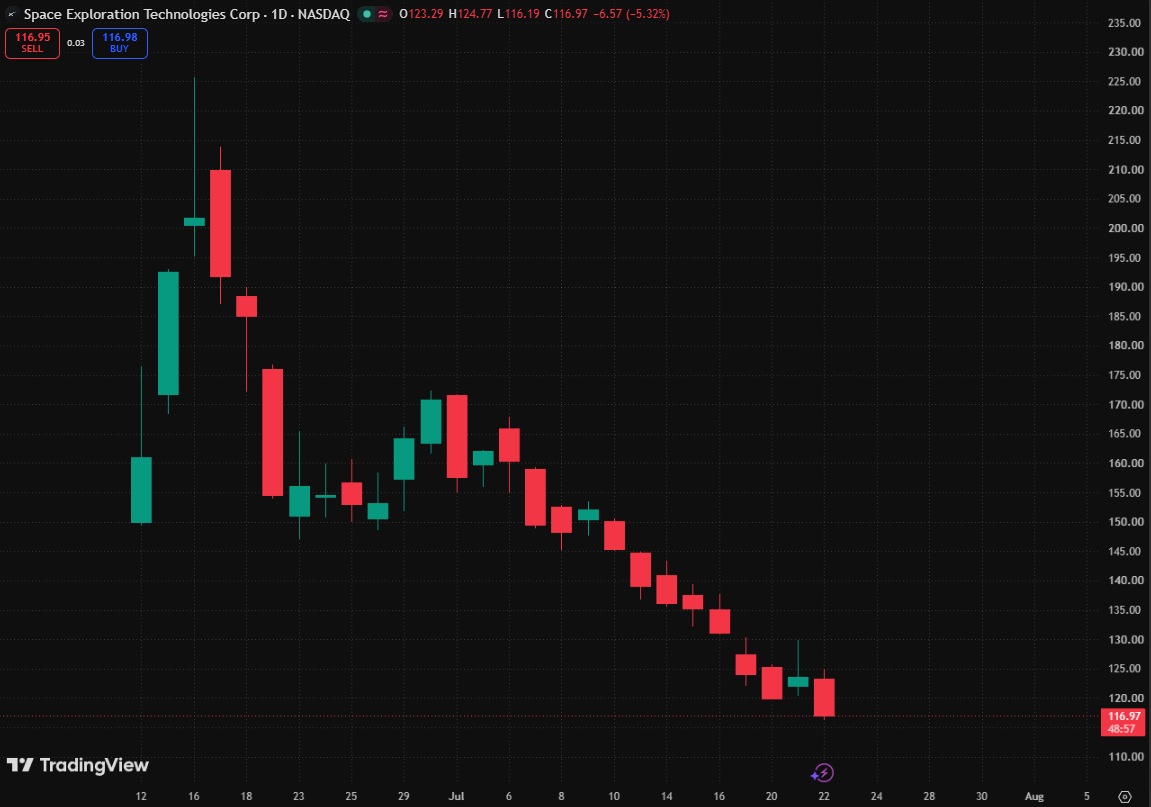
SpaceX stock chart, Source: TradingView
According to a report by The Information on Wednesday, xAI has scouted multiple sites in Texas and has begun laying the groundwork for at least one large data center. The company has sent some of its existing data center employees to the area and has recently posted numerous infrastructure-related job openings in Austin, Bastrop, and Corone.
Currently, xAI has about 1 gigawatt of computing power across its two operational data centers, equipped with hundreds of thousands of Nvidia GPUs. Two people familiar with the matter revealed that the company has discussed multiple options for its Texas expansion: including building multiple data centers from scratch, as well as retrofitting existing warehouses—the latter of which mirrors xAI's approach of converting an abandoned manufacturing facility in Memphis into its first data center.
This is also the trigger for the current decline, as xAI accounts for the bulk of SpaceX's capital expenditures. In 2025, xAI's business recorded an operating loss of $6.36 billion, making it the company's largest source of losses. Meanwhile, Starlink's 2025 operating profit of $4.423 billion is effectively subsidizing xAI's expansion.
Meanwhile, SpaceX is facing two major tests for its stock price. The company is set to release its first quarterly earnings report since going public on August 4. Previously, data disclosed by the company showed that Starlink's Q1 revenue was $3.257 billion, profit was $1.188 billion, and users exceeded 10.3 million, but ARPU has dropped to $66 from $99 in 2023.
The Q2 data will verify whether the growth trajectory is sustainable. Moffett Nathanson analyst Julie Zhu previously stated bluntly that there is currently no credible financial model that can support its valuation.
August 6 will mark the largest lock-up expiration in history. Calculated at current scale, this will become the largest stock lock-up expiration in the history of capital markets: up to 911.5 million restricted shares will become eligible for sale for the first time, representing a market value of up to $116 billion. These shares come from early investors and private market buyers, a significant portion of whom may seek to cash out on substantial returns.
As two key catalysts approach, short sellers are ramping up their bets at an unprecedented pace.
According to data from S3 Partners, currently about 206 million shares are shorted, representing 32% of the float, with a nominal short position of about $25 billion—whereas just a month ago, this figure was only about 40 million shares, representing 5% to 7%.
Matthew Unterman, head of research at S3 Partners, said: "We are seeing short sellers continue to increase their exposure as several key catalyst events approach, including the company's first earnings report as a public company and the subsequent lock-up expiration."
Recommended Articles


