


Google Strikes Before Q2 Earnings: Releases Gemini 3.6 Flash and Three New Models Focused on Extreme Cost-Performance
TradingKey - Google ( GOOGL) released three new Gemini models ahead of its Q2 2026 earnings release — Gemini 3.6 Flash, Gemini 3.5 Flash-Lite, and Gemini 3.5 Flash Cyber, which is specifically designed for cybersecurity.
Among them, 3.6 Flash and Flash-Lite are available starting today through the Gemini API, Google AI Studio, Gemini Enterprise, and Gemini apps, while Flash-Lite will also be coming to Google Search.
At a time when progress on its flagship AI model, 3.5 Pro, is under pressure and competitors are closing in, Google is betting on cost-effectiveness.
What Are the Features of the Three New Gemini Models?
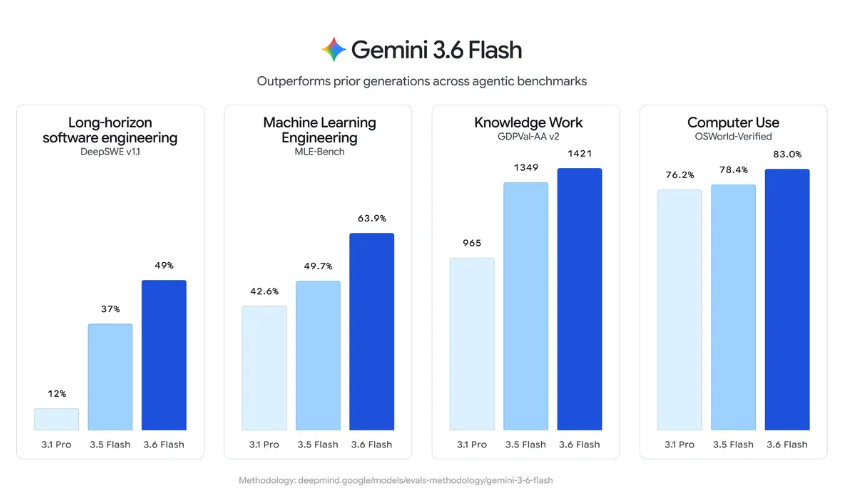
As a direct upgrade to 3.5 Flash, 3.6 Flash features comprehensive advancements in coding, knowledge work, and multimodal performance, while significantly improving token efficiency. According to the Artificial Analysis index, its output token usage is reduced by 17% compared to 3.5 Flash; on some benchmarks like Datacurve's DeepSWE, the reduction is as high as 65%. It also requires fewer reasoning steps and tool calls to complete multi-step workflows.
At the same time, official pricing has been reduced simultaneously. Input is priced at $1.50 per million tokens and output at $7.50 per million tokens, which are lower than 3.5 Flash, bringing down the overall cost of each Agent task.
[Source: Google Blog]
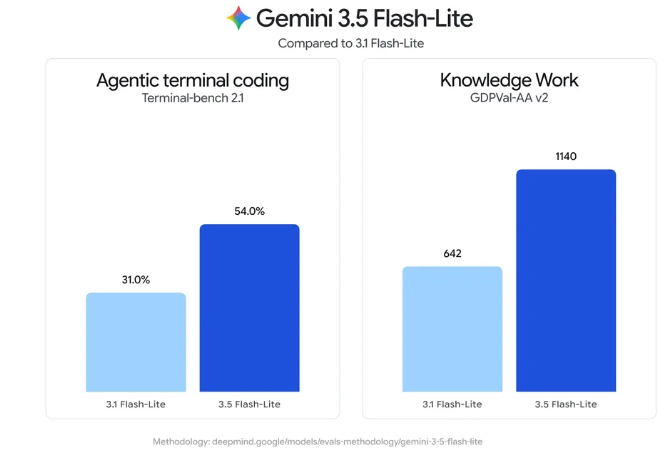
3.5 Flash-Lite is the fastest model in the 3.5 series, measured by Artificial Analysis at 350 output tokens per second, with pricing at just $0.3 per million input tokens and $2.5 per million output tokens, targeting low-latency, high-throughput scenarios such as agentic search and document processing.
In terms of performance, it significantly outperforms its predecessor 3.1 Flash-Lite in tests such as Terminal-Bench 2.1 (54% vs 31%) and the long-context benchmark GDM-MRCR v2 (72.2% vs 60.1%); more notably, on SWE-Bench Pro (54.2% vs 49.6%) and OSWorld-Verified (74.0% vs 65.1%), it even surpasses the higher-positioned Gemini 3 Flash. Developers can flexibly configure thinking levels based on workloads: routing high-frequency tasks to the low-latency, low-cost tier, while calling higher thinking levels for multi-step sub-agent tasks.
[Source: Google Blog]
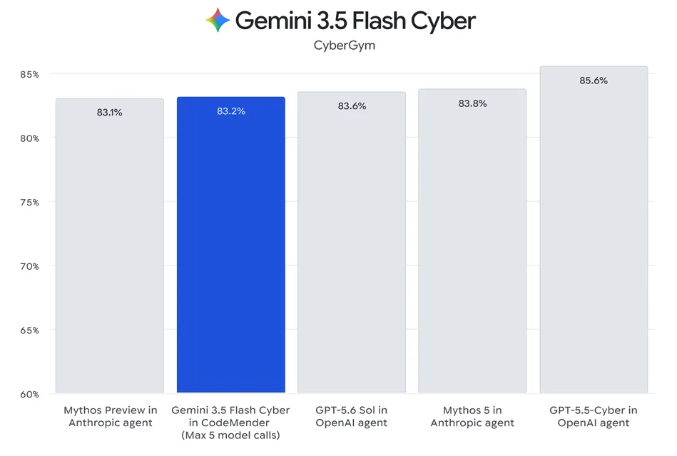
The most strategically significant release in this round is Flash Cyber. This model specializes in discovering and fixing software vulnerabilities, with a per-token price lower than that of larger models. In the CodeMender code security agent, multiple Flash Cyber agents work collaboratively to aggregate and generate a single report, achieving competitive frontier-level performance on the mainstream benchmark CyberGym.
Given the dual-use nature of such technology, Google has adopted a cautious rollout strategy: Flash Cyber will soon be made available exclusively to governments and trusted partners through CodeMender as a limited pilot, enabling front-line defenders to patch vulnerabilities before they can be exploited.
[Source: Google Blog]
This move directly targets Anthropic's stronghold—the latter has established a first-mover advantage in automated code defense with its Mythos model, and Flash Cyber is a key move for Google to narrow this gap and commercialize DeepMind's research achievements through enterprise security products.
Large Model Market Competition Fierce, Capital Markets Still Watching
Notably, the market's most anticipated Gemini 3.5 Pro model was not released in this round, following previous reports that its development is lagging by several months. Google's official stance is that Gemini 3.5 Pro is currently undergoing testing with partners and will be fully rolled out as soon as it is ready.
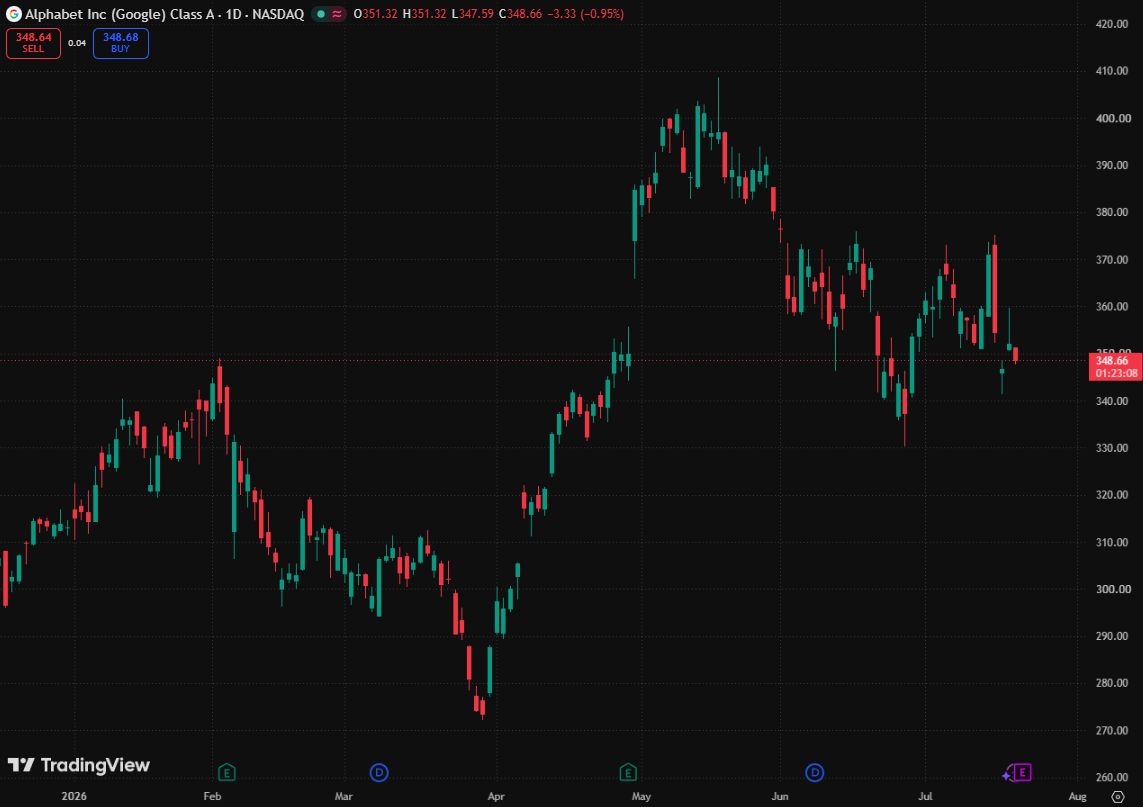
Capital markets adopted a wait-and-see attitude toward the three newly released models; as of press time, Google's stock price was still down about 1%, trading at $348.66.
[Source: TradingView]
Market analysis suggests that this may be related to intense external competition. For instance, demand for Moonshot AI's Kimi K3 is so explosive that it has restricted new subscriptions and API access due to capacity constraints, while Alibaba has started teasing Qwen 3.8 Max, claiming its overall performance is second only to Anthropic's Fable 5.
According to data from Artificial Analysis, the cost of the Gemini Flash series is already lower than comparable models from Anthropic, OpenAI, and Chinese manufacturers—the single-task cost of 3.6 Flash is reportedly lower than that of GPT-5.6 Terra Max, Kimi K3, and Qwen 3.7 Max.
Recommended Articles


