


The Space Force's $5.6 Billion Launch Program Has a New Contender. Here's Rocket Lab's Path to Winning It.
Key Points
Rocket Lab can't win NSSL missions until Neutron successfully completes its first flight.
A successful Neutron launch could unlock lucrative U.S. defense launch contracts for years.
Neutron's execution, not NSSL eligibility, will determine Rocket Lab's long-term opportunity.
- These 10 stocks could mint the next wave of millionaires ›
The U.S. military's most sensitive satellites have long ridden to orbit on a short list of trusted rockets. Now Rocket Lab (NASDAQ: RKLB) has forced its way into that conversation, earning a spot to compete in the Space Force's National Security Space Launch (NSSL) Phase 3 Lane 1 program, an arrangement with a maximum value of $5.6 billion through 2029.
But being invited to compete and actually winning work are two very different things, and the entire opportunity hinges on one machine: the Neutron rocket.
Where to invest $1,000 right now? Our analyst team just revealed what they believe are the 10 best stocks to buy right now, when you join Stock Advisor. See the stocks »
Why Neutron is the linchpin
Rocket Lab built its business on the small Electron rocket, but Electron is far too small for the heavy national-security payloads the Space Force needs to launch. Neutron, its larger reusable medium-lift vehicle, is the rocket designed to carry them. The program's structure makes this crystal clear: Rocket Lab has been on-ramped as an eligible bidder, but it cannot win any individual task orders until Neutron completes a successful first flight. In other words, no working Neutron means no share of the $5.6 billion in available contracts, full stop.
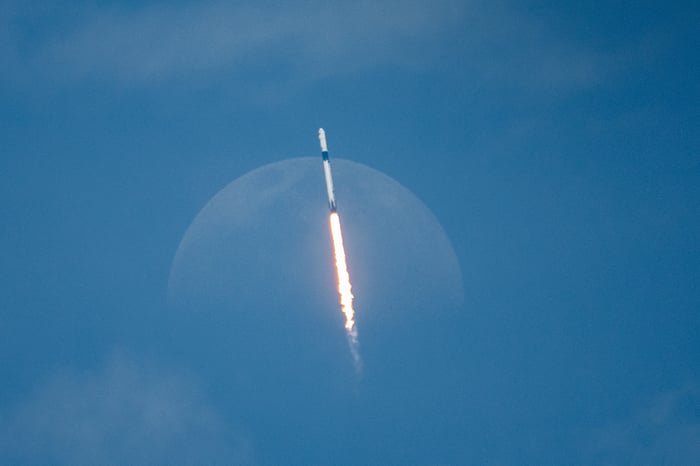
Image source: Getty Images.
The path to winning task orders
Being a contender requires passing a handful of milestones. First, Neutron has to fly, with a debut currently targeted for the fourth quarter of 2026. A clean flight would let Rocket Lab pursue formal certification and then compete for specific missions, and the program plans to award at least 30 launches over its life, with a possible extension into the next decade. Rocket Lab is trying to build credibility ahead of that debut, having already lined up a commercial launch backlog for Neutron and drawn interest from the military for a cargo-transport test. Each contract signed before the first flight strengthens the case that the rocket will have steady demand once it's flying.
Objectively, investors should know that the obstacles are significant. Neutron's timeline has already slipped once after a test failure on its first-stage tank, and new rockets are notoriously prone to delays and early setbacks. Rocket Lab is also arriving late to a field where Space Exploration Technologies (aka SpaceX) and United Launch Alliance are already securing task orders, so it will compete for missions against established providers with proven vehicles. Until Neutron flies, Rocket Lab remains on the outside looking in.
The takeaway for potential investors
Rocket Lab's inclusion in a $5.6 billion program is a genuine vote of confidence, but it is best understood as an option rather than a guaranteed payday. The value of that option rests almost entirely on Neutron's debut going well. A successful first flight would open the door to years of high-value government work and validate Rocket Lab's push to become a serious defense-launch player.
Don’t miss this second chance at a potentially lucrative opportunity
Ever feel like you missed the boat in buying the most successful stocks? Then you’ll want to hear this.
On rare occasions, our expert team of analysts issues a “Double Down” stock recommendation for companies that they think are about to pop. If you’re worried you’ve already missed your chance to invest, now is the best time to buy before it’s too late. And the numbers speak for themselves:
- Nvidia: if you invested $1,000 when we doubled down in 2009, you’d have $550,021!*
- Apple: if you invested $1,000 when we doubled down in 2008, you’d have $60,010!*
- Netflix: if you invested $1,000 when we doubled down in 2004, you’d have $396,542!*
Right now, we’re issuing “Double Down” alerts for three incredible companies, available when you join Stock Advisor, and there may not be another chance like this anytime soon.
See the 3 stocks »
*Stock Advisor returns as of July 16, 2026.
Micah Zimmerman has no position in any of the stocks mentioned. The Motley Fool has positions in and recommends Rocket Lab. The Motley Fool has a disclosure policy.
Recommended Articles


