


Want to Buy Tesla? 3 Reasons to Buy This Luxury Automaker's Stock Instead.
Key Points
Tesla is quickly transitioning from automaker to a technology and AI business.
Ferrari has separated itself from mainstream auto companies through lucrative pricing power and lofty margins.
Many investors may not know that roughly half of Ferrari's sales volume is already electrified via hybrids -- and it's prepared for the future.
- 10 stocks we like better than Ferrari ›
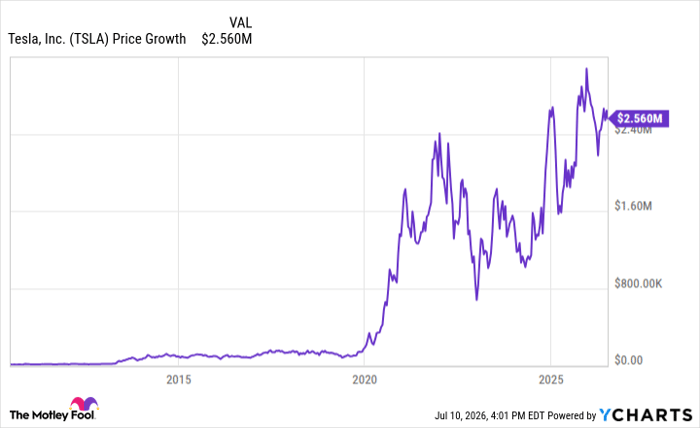
To say Tesla has been a solid investment might be the understatement of the century. A $10,000 purchase during Tesla's initial public offering would be worth roughly $2.57 million now.
Missed Nvidia in 2009? This Rare Signal Is Flashing Again. In 2009, a "Double Down" signal flashed for a little-known chipmaker called Nvidia. For the first time in years, that same "Total Conviction" signal is flashing for a company 1/100th the size of Nvidia. Continue »
TSLA data by YCharts.
It's also fair to say that some investors might not want to take on the added risk from Tesla as it drives toward a future that includes humanoid robots, driverless vehicles, and artificial intelligence (AI). It's not the same electric vehicle (EV) maker it once was, for better or worse.
If that business transition has you reconsidering your investment options, there's another automaker -- arguably the best auto stock out there -- named Ferrari (NYSE: RACE) that warrants your attention. Here are three reasons to consider it if Tesla is no longer an investment you're comfortable with.
1. Money, money, money!
Ferrari has long separated itself from the traditional automotive industry investment thesis. The industry is known for being capital intensive, cyclical, and for having thin margins. As you can see in the graphic below, Ferrari's margins for earnings before interest, taxes, depreciation, and amortization (EBITDA) dwarf the mainstream automotive industry.
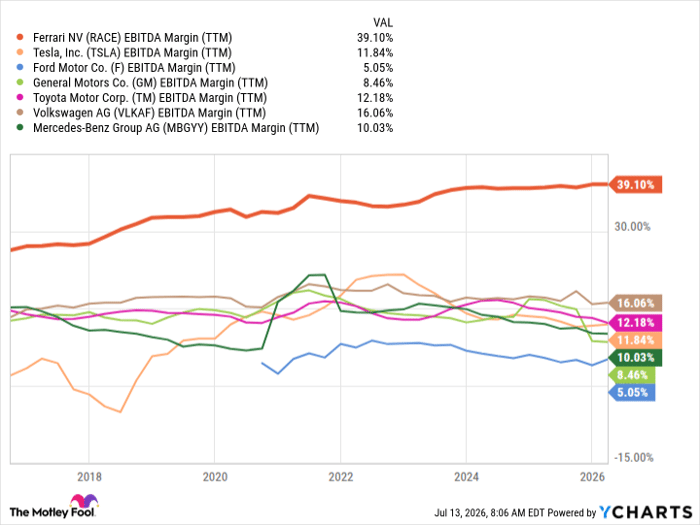
RACE EBITDA Margin (TTM) data by YCharts; TTM = trailing 12 months.
Ferrari's gross profit margins routinely check in above 50%, and often Wall Street values and views the automaker as a luxury goods stock. That's more than fair considering that Ferrari's pricing power and brand image enable it to deliberately limit production to drive scarcity and exclusivity. The result is that Ferrari simply doesn't need discounts or incentives to sell vehicles, and that means more money flows to the bottom line.
That's an important topic for Tesla investors because the company still operates in the mainstream automotive business, where discounts, price wars, and other factors can easily hinder margins. Not only does Ferrari generate much higher margins at any level you choose to look, but those margins are much more stable than Tesla's and consistently rising.
This is a good segue into what drives Ferrari's margins.
2. "One fewer car ..."
Another way Tesla can't match Ferrari is in the latter's brand image and pricing power, which help drive the previously mentioned lofty margins. Enzo Ferrari's famous mantra was to build "one fewer car than the market demands."
It's a simple concept that few can pull off, but Ferrari does it famously. While Tesla hopes to produce millions of vehicles for a mass market, the Italian automaker produces under 15,000 units a year, creating exclusivity and an emotional draw. It's why Ferrari is a lifestyle luxury brand, not a traditional automaker.
Here's an example of how powerful the brand already is: The company spends nothing on advertising, essentially. Instead, the Scuderia Ferrari Formula 1 team is the engine that powers its marketing and reach. It's not all show and no-go, either, because racing technology filters down into its high-end models, helping support their sky-high price tags.
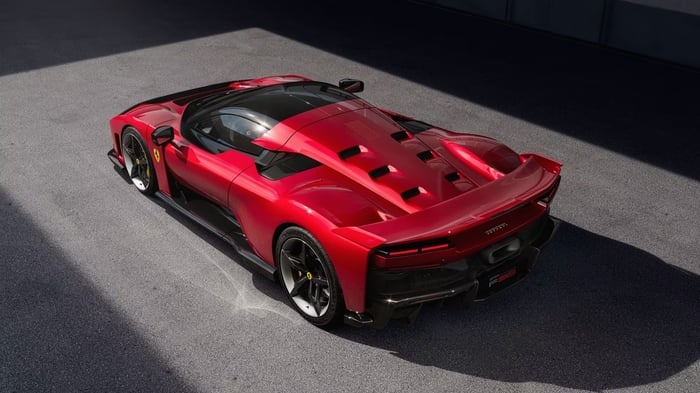
Ferrari's F80 drove a near $4 million price tag. Image source: Ferrari.
Another example of how different Tesla and Ferrari are is that the former still needs to fuel demand through price cuts at times, or with other incentives such as financing. Ferrari, on the other hand, won't even let you buy its limited-edition top-tier supercars unless you have already purchased its other vehicles in the past.
Buying a Ferrari takes a lot of money, but it's not all about that -- the company has to invite you into the club. These factors, among many more, make its brand and the pricing power nearly unmatched.
3. A different consumer base
Many investors throw around the phrase "Ferrari is recession-proof," but to be fair, it's closer to "recession-resilient." Its buyers have ultra-high net worths and are thus highly insulated from traditional economic downturns, inflation, or moves in interest rates. They can afford multimillion-dollar hypercars even amid a global recession, and they give the company a much more stable business that avoids the auto industry's historical cyclicity.
The loyalty that the brand generates is as intriguing as anything else the company does. It even ranks its customers based on how many cars they currently own, how long they've owned them, and their participation in official Ferrari brand events. In return, only the most loyal multicar owners are invited to purchase extremely exclusive models, which are highly priced and sell out even before being publicly announced.
What it all means
Ferrari is just a different animal, and while it shares the industry with mainstream automakers, they really operate in different worlds. It's evident in the company's lucrative margins that continue to rise, its powerful global brand and prestige that support extreme pricing without any discounts and incentives, and its supremely loyal consumer base.
Those are all things Tesla wants to generate one day, but right now, Ferrari is an excellent investment if you want to buy Tesla but are unsure about its future direction.
Should you buy stock in Ferrari right now?
Before you buy stock in Ferrari, consider this:
The Motley Fool Stock Advisor analyst team just identified what they believe are the 10 best stocks for investors to buy now… and Ferrari wasn’t one of them. The 10 stocks that made the cut could produce monster returns in the coming years.
Consider when Netflix made this list on December 17, 2004... if you invested $1,000 at the time of our recommendation, you’d have $398,160!* Or when Nvidia made this list on April 15, 2005... if you invested $1,000 at the time of our recommendation, you’d have $1,249,202!*
Now, it’s worth noting Stock Advisor’s total average return is 918% — a market-crushing outperformance compared to 209% for the S&P 500. Don't miss the latest top 10 list, available with Stock Advisor, and join an investing community built by individual investors for individual investors.
See the 10 stocks »
*Stock Advisor returns as of July 15, 2026.
Daniel Miller has no position in any of the stocks mentioned. The Motley Fool has positions in and recommends Ferrari and Tesla. The Motley Fool has a disclosure policy.
Recommended Articles


