


President Donald Trump Just Declared the Ceasefire Is Over. Here's What That Means for Oil Stocks.
Key Points
Geopolitical events can and have had a quick impact oil prices and stocks.
Both bullish and bearish cases for oil are supported by recent data, but energy stocks may warrant a higher portfolio weighting now.
- These 10 stocks could mint the next wave of millionaires ›
The recent end of the always-fragile ceasefire with Iran throws energy markets, oil in particular, back into the forefront of investors' minds, just when they were getting used to a $60 price handle again. It's a dynamic situation, and while near-term traders enjoy it, longer-term investors need to take a more reflective view.
Here are the bullish and bearish views on the matter.
Where to invest $1,000 right now? Our analyst team just revealed what they believe are the 10 best stocks to buy right now, when you join Stock Advisor. See the stocks »
The oil bulls' argument
President Trump couldn't have been any clearer on his recent Truth Social post:
The Islamic Republic of Iran has asked us to continue 'talks.' We have agreed to do so, but the United States has stated to them, in no uncertain terms, that the Cease Fire is OVER!
These statements support bullish arguments for oil, which have at least three parts.
First, oil remains susceptible to shocks. These include "known unknowns," such as Iran using the closure of the Strait to gain leverage in any conflict, and the potential for "unknown unknowns" that always overhang a commodity often produced in unstable parts of the world. Given that Iran has demonstrated political leverage in closing the Strait and no long-term resolution to the underlying conflict is in place, it wouldn't be surprising to see more of the same in the future.

Image source: Getty Images.
Second, futures markets continue to imply a relatively positive outlook for oil prices in the coming months. If this is replicated in how equity markets price oil stocks, it's a bullish sign because any shock to oil markets could create upside potential for oil prices and, in turn, oil stocks.
As you can see, the outlook worsened in May compared with April but corrected significantly in July after the memorandum of understanding (MoU) was agreed upon. However, the events of last week haven't persuaded futures markets to abandon their expectations of a decline in oil prices.
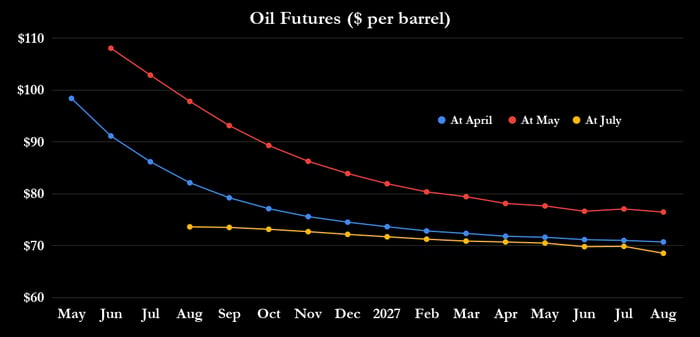
Data source: oilprice.com. Accessed on April 11, May 19, and July 13.
The third argument is that the impact of the closing of the Strait will linger (not least in the difficulty in restoring energy supplies from the Persian Gulf) and that production increases (OPEC and otherwise) will take time to kick in and are likely to be absorbed by the need for the two largest oil-consuming countries in the world, the U.S. and China, to replenish their strategic reserves.
While China and other countries don't publish their strategic petroleum reserve figures, it's hard not to think the U.S. will start to stockpile crude oil when possible, as it has been drawn down aggressively during the recent crisis.
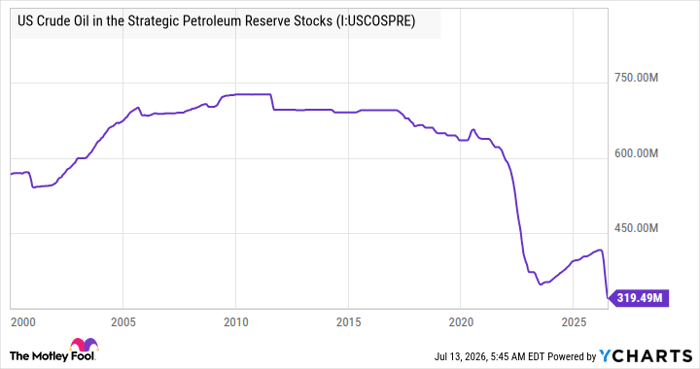
US Crude Oil in the Strategic Petroleum Reserve Stocks data by YCharts
The oil bears' case
The oil bears' argument relies on three key points of their own.
First, it's in nearly every country's interest to resolve the crisis and reopen the Strait. Iran needs to export energy through the Strait, as do the Arab countries in the Gulf region, while most of the rest of the world doesn't welcome higher energy prices.
Second, higher oil prices tend to reduce demand, and these adjustments could become structural over time. Indeed, in its January oil market report, the International Energy Agency (IEA) forecast global oil demand to increase by 930 thousand barrels per day (kb/d), from a total demand of 103.8 million barrels per day (mb/d) in 2025. However, the latest report calls for a 1 mb/d reduction in demand in 2026.
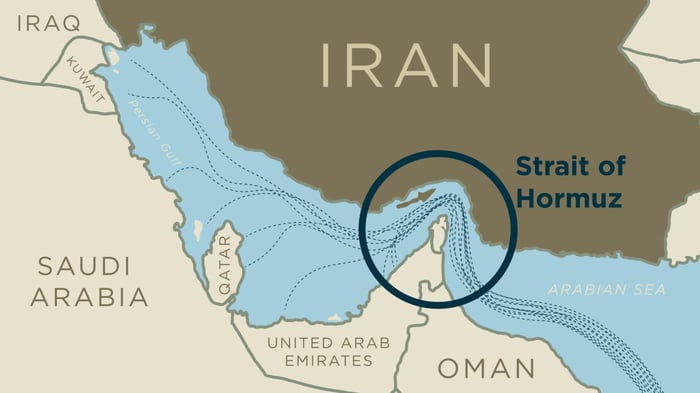
Image source: Getty Images.
Third, while the conflict has significantly reduced OPEC members' oil production (notably in Iran, Iraq, and Kuwait), OPEC+ members (including Russia) have increased their output quota by 940 kb/p since the conflict began. This intended production increase, alongside a resumption of supply from Iran, Iraq, Kuwait, and the UAE, could lead to a supply glut in 2027.
Where next for oil and oil stocks?
Both sides of the argument have their merits, but what's indisputable is that there's still potential for an oil price shock, and the oil markets (based on futures pricing and the market's reaction to the recent ceasefire end) suggest upside in oil stocks.
As such, it makes sense to ensure that energy stocks are included in a balanced portfolio, with a larger-than-usual weighting.
Where to invest $1,000 right now
When our analyst team has a stock tip, it can pay to listen. After all, Stock Advisor’s total average return is 929%* — a market-crushing outperformance compared to 211% for the S&P 500.
They just revealed what they believe are the 10 best stocks for investors to buy right now, available when you join Stock Advisor.
See the stocks »
*Stock Advisor returns as of July 14, 2026.
The Motley Fool has a disclosure policy.
Recommended Articles


