


Trump Backs Dell for a Second Time! Stock Surges Over 8% to Re-Enter Upward Channel as Political Dividends May Offset Memory Shortages.
TradingKey - On July 6, Eastern Time, Dell ( DELL) once rose to $429.74, returning to an upward trend. As of press time, it was up over 8%, trading at [price]. It is reported that [Trump] recommended Dell computers to the public and singled out Dell's CEO for his investment support of the "Trump Account" project, which he actively promotes. This children's investment account project, provided with initial seed funding and matching tax incentives by the US Department of the Treasury, is a key livelihood policy introduced by the current administration.
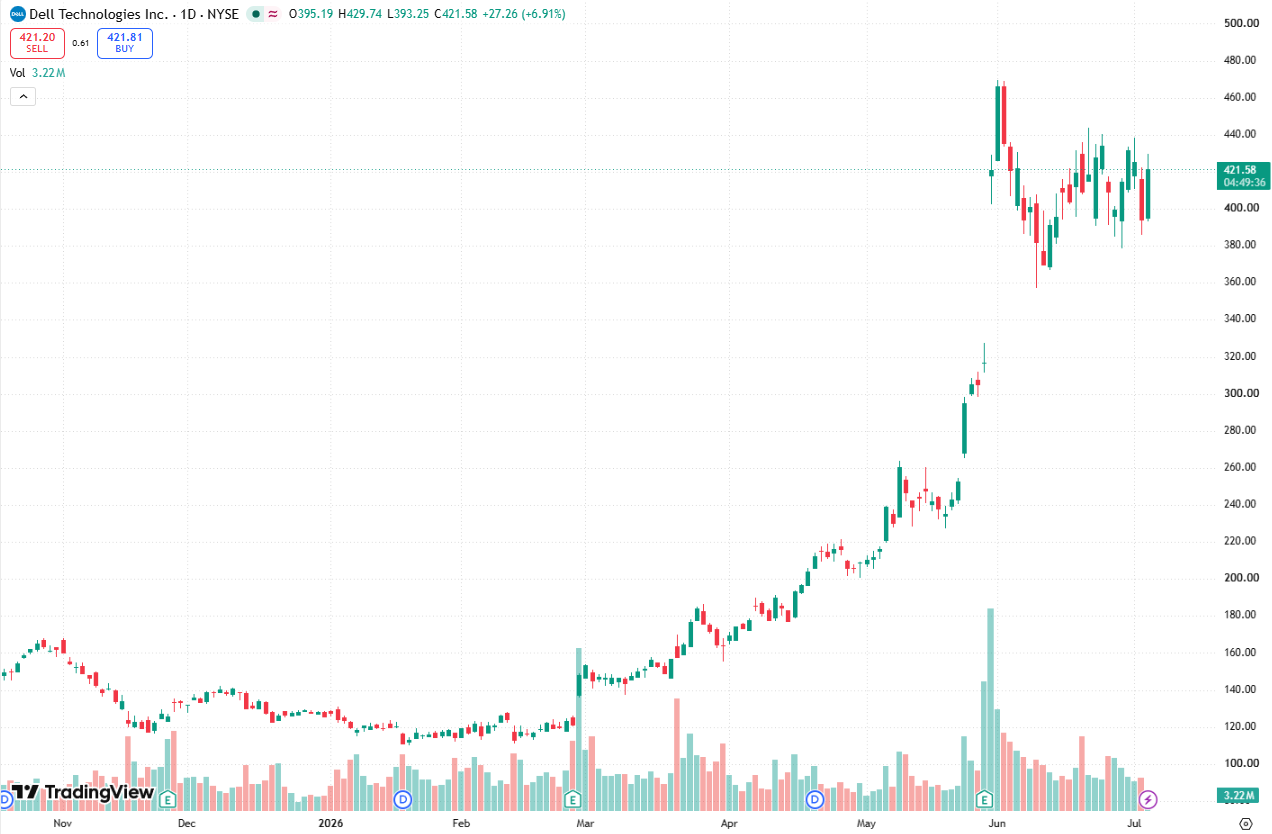
[Source: TradingView]
This is already the second time Trump has publicly endorsed Dell; a similar statement in February 2026 directly triggered unusual stock price movements for the target.
Recently, Dell secured a $9.7 billion contract from the Pentagon to provide a software suite to the US military. Official financial disclosure documents show that months before the company landed the massive contract, Trump's personal account had aggressively increased its holdings of Dell stock, with a single purchase in February alone ranging from $1 million to $5 million.
Although officials stated that the assets are managed by a blind trust overseen by his son Eric in an attempt to build a firewall against conflicts of interest, the semi-blind trust structure has not achieved complete independence. Market analysts suggest that under the premise that a president's public endorsement is sufficient to directly influence individual stock trends, this limited isolation mechanism cannot truly avoid conflicts of interest, and the related compliance controversies continue to ferment.
Meanwhile, just a few trading days ago, after Apple raised the prices of products like Mac and iPad, the market was alarmed by cost increases triggered by an unprecedented shortage of memory chips and storage devices. As cost pressures pass down the supply chain, PC giants such as Dell will face synchronized pressure; Dell's stock price fell sharply by 5.67% on that day.
Wall Street analysts said that as upstream chip capacity is heavily absorbed by high-margin AI computing infrastructure, the supply-demand imbalance and cost pain at the downstream traditional consumer electronics level have only just begun. In the coming quarters, global consumers may have to face the reality of collective price hikes for electronic products.
Recommended Articles


