


The Fed Has a Warning About the Iran War. Is Wall Street Listening?
Key Points
Two Fed presidents recently said that rate cuts were unlikely this year due to the impact of the Iran war.
Inflation is likely to be a headwind as long as oil prices remain elevated.
Accommodative Fed policy is correlated with bull markets.
- These 10 stocks could mint the next wave of millionaires ›
Stocks have soared in the last two weeks on signs that the war in Iran is coming to an end. The U.S. and Iran agreed to a ceasefire last week, and President Trump has said several times that he expects the war to be over soon.
After entering a correction during the conflict, the Nasdaq Composite hit an all-time high yesterday, and the S&P 500 set a record as well.
Will AI create the world's first trillionaire? Our team just released a report on the one little-known company, called an "Indispensable Monopoly" providing the critical technology Nvidia and Intel both need. Continue »
However, the sudden gains may be more tenuous than investors think. The situation around the Strait of Hormuz is still unresolved after the U.S. launched a blockade of the key waterway on Monday, and oil prices are still up substantially from where they were before the war broke out.
Now, Federal Reserve presidents are warning that the war could present longer-term headwinds for the stock market.
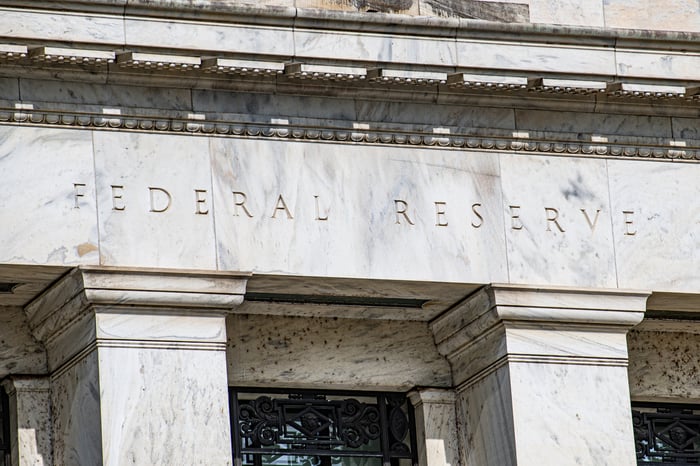
Image source: Getty Images.
The Fed speaks
Investors began the year expecting at least one rate cut from the Fed, following a series of rate cuts at the end of 2025. Stock investors watch the Fed's moves closely as lower rates tend to fuel stock market gains by encouraging investors to rotate from bonds into stocks and lowering borrowing costs for businesses.
That forecast for a rate cut predates the Iran war, which led to a spike in oil prices, and consequently, inflation is on the rise, making rate cuts less likely.
Chicago Federal Reserve president Austan Goolsbee said at a conference earlier this week that he was hopeful for multiple rate cuts this year when 2026 began, but added, referring to the war, "The longer this goes, the more it pushes that off." Inflation is likely to remain elevated as long as energy prices are high, and the impact of higher fuel costs should show up in a wide range of goods and services in the coming months.
Additionally, New York Fed president John Williams said on Thursday, the war in Iran had introduced "substantial risks" to the U.S. economy, including a supply shock that could lead to a surge in commodity prices, ultimately hurting corporate profits and economic growth.
Why it matters to investors
The Federal Reserve isn't the only factor influencing the stock market, but it is a significant one. The boom of the 2010s was driven in part by a near-zero Fed funds rate, and the pandemic stock market surge also benefited from rock-bottom interest rates as a result of Fed policy.
As of Thursday at 12:15 p.m. ET, stocks were on track for another winning day, but if oil prices and interest rates remain elevated, further gains this year will be more challenging. Keep an eye on inflation readings, as they will show the impact of the war and influence the Fed's interest rate policy.
Where to invest $1,000 right now
When our analyst team has a stock tip, it can pay to listen. After all, Stock Advisor’s total average return is 1,017%* — a market-crushing outperformance compared to 197% for the S&P 500.
They just revealed what they believe are the 10 best stocks for investors to buy right now, available when you join Stock Advisor.
See the stocks »
*Stock Advisor returns as of April 16, 2026.
The Motley Fool has a disclosure policy.
Recommended Articles


