


Better Nuclear Energy Stock: NuScale Power vs. Constellation Energy
Key Points
NuScale Power has the only approved SMR design in the United States, and its first commercial project is moving forward.
Constellation Energy's entrenched nuclear fleet has racked up deals with Microsoft and Meta Platforms.
The debate between these two nuclear energy stocks boils down to whether investors would rather have a higher ceiling or a higher floor.
- 10 stocks we like better than NuScale Power ›
The U.S. energy landscape has gone nuclear, literally. Data centers are driving America's electricity needs higher. Last year, President Donald Trump signed executive orders outlining the desire to quadruple the country's nuclear power capacity to 400 gigawatts by 2050.
That makes nuclear energy stocks a hotbed of investor interest. NuScale Power (NYSE: SMR) and Constellation Energy (NASDAQ: CEG) are two very different companies, each offering distinct avenues for investing in the coming nuclear energy boom.
Will AI create the world's first trillionaire? Our team just released a report on the one little-known company, called an "Indispensable Monopoly" providing the critical technology Nvidia and Intel both need. Continue »
But which is the better choice for your money? Here is what you need to know.

Image source: Getty Images.
NuScale Energy and Constellation Energy are two different types of nuclear energy companies
Constellation Energy is a diversified energy company with 55 gigawatts of capacity across nuclear, gas, geothermal, wind, hydro, and solar. Its services were expanded following its acquisition of Calpine in January. It also proclaims itself the largest U.S. nuclear energy company, with a fleet of reactors totaling just over 22 gigawatts of capacity. These are traditional nuclear reactors, which use controlled nuclear reactions to generate heat that turns steam turbines to produce electricity.
NuScale Power is developing small modular reactors (SMRs) that operate similarly but at a much smaller scale. The benefit of SMRs is that they are potentially faster and cheaper to build, and they can operate in smaller areas that wouldn't be appropriate for a traditional reactor. SMRs are a newer technology, and to date, NuScale Power is the only company to receive regulatory design approval from the U.S. Nuclear Regulatory Commission.
NuScale's upside comes with risks
As a newer company, NuScale has far more room to grow. NuScale trades at a market cap of less than $4 billion today. Meanwhile, Constellation Energy is already one of the world's largest energy companies, with a market cap of $88 billion.
While its size gives it more growth potential, NuScale comes with several risks.
First, the company won't generate meaningful revenue anytime soon. It has contracted to provide six SMR modules for a former coal-burning plant in Romania, which won't likely begin operations before 2033. NuScale will also supply SMR modules for a landmark deal with the Tennessee Valley Authority for up to 6 gigawatts across seven states, but that deal is new and has no public timeline.
Unfortunately, things move at a snail's pace in the nuclear industry, and even these SMRs come with tons of red tape and regulatory hurdles. Second, NuScale is diluting investors as it pays out stock-based compensation and continues to burn money on operations. Management sold 39.3 million shares this year, raising $750 million in gross proceeds.
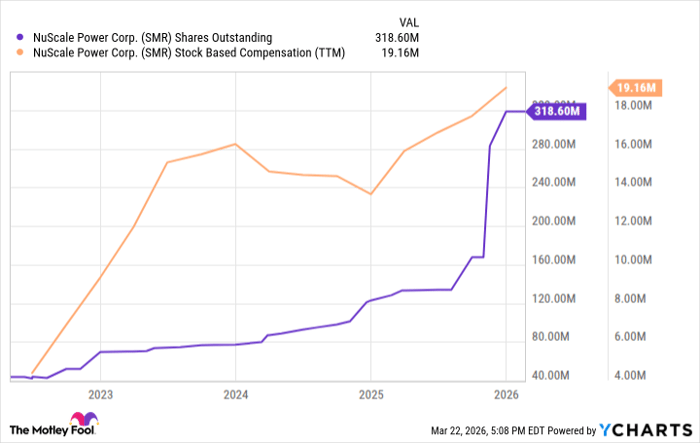
Data by YCharts.
While NuScale's market cap is small, the valuation isn't necessarily cheap. Remember, NuScale is years away from commercial activities, and the company may continue diluting investors along the way. The company may ultimately need to become a profitable leader in the nuclear industry to justify the stock's current risks, and that's no sure thing.
Why Constellation Energy wins out as the superior nuclear energy stock
Ultimately, Constellation Energy has a much, much, higher floor.
Since Constellation has already built its nuclear fleet, it's already cleared many of the hurdles involved. Plus, Constellation can revive, upgrade, or expand its existing reactors (both active and inactive), likely faster than it can build new ones. It has struck 20-year deals with Microsoft and Meta Platforms to supply electricity for their data centers, with both deals scheduled to come online by 2028.
Unlike NuScale, Constellation is already an entrenched and profitable business. Analysts expect the company's earnings to grow by an average of 15% annually over the next three to five years.
Last but not least, the stock pays a dividend yielding 0.6%, with plenty of room to grow, thanks to a payout ratio of just 15% of this year's earnings estimates. Management plans to increase the dividend by 10% annually, and at that rate, your dividend income would double every seven years.
All in all, investors should reasonably expect a growing dividend and double-digit annualized total returns from Constellation Energy over the long term. That won't make you rich overnight, but it can over the course of a decade or longer.
While NuScale's early lead in SMR design is appealing, it's hard to stomach the opportunity cost of holding a risky stock like NuScale over a proven leader like Constellation Energy.
Should you buy stock in NuScale Power right now?
Before you buy stock in NuScale Power, consider this:
The Motley Fool Stock Advisor analyst team just identified what they believe are the 10 best stocks for investors to buy now… and NuScale Power wasn’t one of them. The 10 stocks that made the cut could produce monster returns in the coming years.
Consider when Netflix made this list on December 17, 2004... if you invested $1,000 at the time of our recommendation, you’d have $503,592!* Or when Nvidia made this list on April 15, 2005... if you invested $1,000 at the time of our recommendation, you’d have $1,076,767!*
Now, it’s worth noting Stock Advisor’s total average return is 913% — a market-crushing outperformance compared to 185% for the S&P 500. Don't miss the latest top 10 list, available with Stock Advisor, and join an investing community built by individual investors for individual investors.
See the 10 stocks »
*Stock Advisor returns as of March 24, 2026.
Justin Pope has positions in Microsoft. The Motley Fool has positions in and recommends Constellation Energy, Meta Platforms, and Microsoft. The Motley Fool recommends NuScale Power. The Motley Fool has a disclosure policy.
Recommended Articles


