




The U.S. Government Just Told 340 Million Americans to Eat More of What Tyson Foods Sells
Key Points
Tyson is a leader provider of beef, chicken, and pork in the U.S.
The new protein-heavy dietary guidelines in the U.S. favor the company's core business.
Tyson has also been removing artificial ingredients from its prepared foods, aligning with the new guidelines.
- 10 stocks we like better than Tyson Foods ›
The U.S. Department of Health and Human Services released updated dietary guidelines in January that emphasize whole foods and protein while shunning added sugars and highly processed foods. The new guidelines recommend 1.2 grams to 1.6 grams of protein per kilogram of body weight from both animal and plant sources daily, compared to the recommended dietary allowance of just 0.8 grams per kilogram.
The updated guidelines are a sea change, and it's unequivocally good news for Tyson Foods (NYSE: TSN).
Where to invest $1,000 right now? Our analyst team just revealed what they believe are the 10 best stocks to buy right now. Continue »
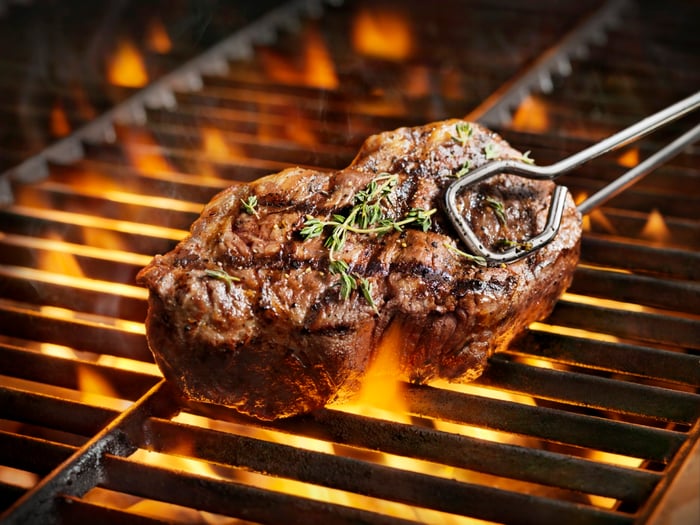
Image source: Getty Images.
A leader in animal protein
Tyson generates most of its revenue from its beef, pork, and chicken segments. While the beef business is pressured by a historically small cattle herd and steep price increases, the chicken business is booming. In the first quarter of 2026, chicken volumes rose 3.7% year over year, compared to a 7.3% decline for beef.
By 2030, the USDA predicts that poultry will account for roughly 50% of per-capita meat consumption in the United States. This trend could be amplified by the impact of the new dietary guidelines. Beyond shifts in consumer behavior, the National School Lunch Program is required to follow the guidelines and feeds nearly 30 million children each school day. Changes will take time to play out, but this is clearly a long-term positive for Tyson Foods.
Outside of its meat business, Tyson Foods is ahead of the game in another way. The dietary guidelines recommend avoiding highly processed foods, especially those with artificial flavors, petroleum-based dyes, and artificial preservatives. In Tyson's prepared foods segment, the company has already been moving in that direction.
In early 2025, Tyson removed all petroleum-based synthetic dyes from its branded products in the U.S. Last September, Tyson announced that it would remove high fructose corn syrup, sucralose, BHA, and titanium dioxide from its branded products in the U.S. by the end of 2025. "By simplifying our labels and using the same ingredients you find in your pantry, we are providing consumers what they are looking for," said Tyson vice president Jon Kathol during the first-quarter earnings call.
Buying into a long-term trend
Tyson stock has surged recently, but it remains down around 34% from its all-time high. The beef business is facing challenges, but demand for chicken is almost certain to continue rising as the new dietary guidelines drive changes in consumer behavior and government programs. Tyson's prepared foods business could benefit as well if consumers start paying closer attention to nutrition labels.
With shares of Tyson trading at about 17 times the average analyst estimate for fiscal 2026 earnings, now could be a good time to invest in this reasonably priced stock that can ride the wave of increased protein consumption.
Should you buy stock in Tyson Foods right now?
Before you buy stock in Tyson Foods, consider this:
The Motley Fool Stock Advisor analyst team just identified what they believe are the 10 best stocks for investors to buy now… and Tyson Foods wasn’t one of them. The 10 stocks that made the cut could produce monster returns in the coming years.
Consider when Netflix made this list on December 17, 2004... if you invested $1,000 at the time of our recommendation, you’d have $446,319!* Or when Nvidia made this list on April 15, 2005... if you invested $1,000 at the time of our recommendation, you’d have $1,137,827!*
Now, it’s worth noting Stock Advisor’s total average return is 932% — a market-crushing outperformance compared to 197% for the S&P 500. Don't miss the latest top 10 list, available with Stock Advisor, and join an investing community built by individual investors for individual investors.
See the 10 stocks »
*Stock Advisor returns as of February 3, 2026.
Timothy Green has no position in any of the stocks mentioned. The Motley Fool has no position in any of the stocks mentioned. The Motley Fool has a disclosure policy.
Recommended Articles


