


Today’s Market Recap: ISM Beats Boost Stocks, Gold and Silver Remain Under Pressure
Track the Market Trend
TradingKey - On February 2, 2026, markets rebounded on Monday following last week’s volatile close. The S&P 500 rose 0.54% to finish at 6,976.44, while the Nasdaq Composite climbed 0.56% to 23,592.11. The Dow Jones Industrial Average led gains with a 1.05% advance to 49,407.66, shrugging off early selling pressure tied to weakness in commodities.
Economic data from the Institute for Supply Management showed that U.S. manufacturing expanded in January, with activity reaching its highest level since mid-2022. The report injected fresh confidence into the outlook for industrial production and supported broader equity sentiment.
Prices of gold and silver remained under pressure following steep weekend declines that triggered margin calls across the market. Though some intraday recovery was seen, the pullback marked a decisive halt to the historic rally in precious metals and raised further concerns about volatility ahead.
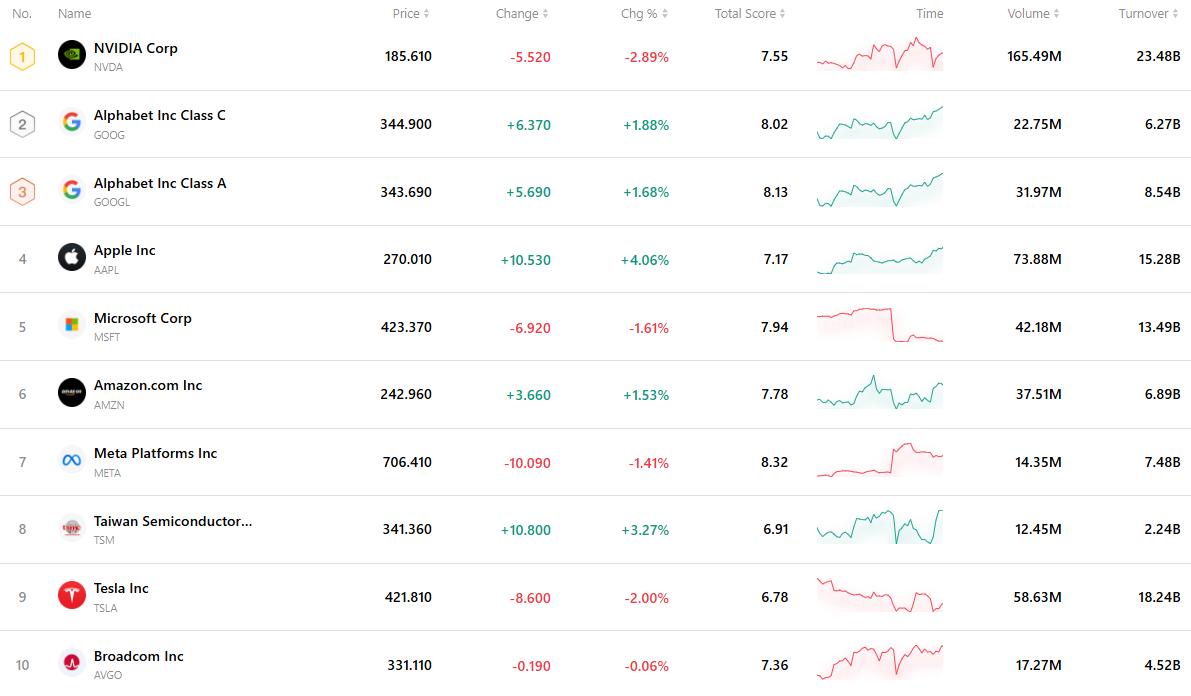
Investors continued to express caution over high-spending AI initiatives, fueling diverging performance across large-cap tech. Micron Technology (MU) extended its gains on the back of upbeat analyst commentary. Nvidia (NVDA), however, edged lower after reports suggested its potential $100 billion investment in OpenAI may be facing internal pushback, adding to uncertainty around long-term AI monetization.
AT&T (T) rose after completing its fiber infrastructure deal with Lumen Technologies, a move seen by analysts as a step toward strengthening network competitiveness. Walt Disney (DIS) underperformed following forward guidance that failed to fully convince investors, despite otherwise solid earnings figures.
Palantir Technologies (PLTR) added 0.81% to close at $147.78 as the stock benefited from a pre-earnings upgrade issued by William Blair. After the bell, the company released fourth-quarter results that topped expectations, reinforcing analyst optimism ahead of the report.
Apple (AAPL) closed up 4.06% at $270.01, continuing its upward trend following last week’s record-setting fiscal Q1 2026 results for the period ended December 28, 2025. Analysts noted particular strength in the iPhone category and increased momentum in India, both of which contributed to renewed investor optimism.
Market Headline
Strong manufacturing data signals unexpected expansion in U.S. factory activity. The U.S. ISM Manufacturing PMI for January surged to 52.6, up sharply from 47.9 in December and far above the consensus estimate of 48.5. This marked the highest reading since February 2022, driven by a strong rebound in new orders and output. While the headline figure returned to expansion territory, the employment sub-index remained below the key 50 level despite hitting a 12-month high. Meanwhile, the prices paid index climbed to a four-month peak, indicating building input cost pressures.
Government shutdown delays January's key non-farm payroll report. The scheduled release of January’s non-farm payroll data faced another postponement due to the ongoing partial U.S. government shutdown. On February 2 (local time), the Bureau of Labor Statistics announced the report—originally expected on February 6—will be delayed, with no new release date set. Emily Liddell, a Bureau spokesperson, stated the report “will be rescheduled once funding is reinstated,” adding to investor uncertainty around labor market trends.
U.S.-India trade pact reduces tariffs; Modi agrees to halt Russian oil purchases. Former President Donald Trump announced a new bilateral trade agreement with India, under which the U.S. will lower its reciprocal tariffs on Indian goods from 25% to 18%. In return, India will gradually eliminate tariffs and non-tariff barriers on American products. Notably, India committed to halting Russian oil imports and pledged to buy more than $500 billion worth of U.S. energy and other goods. Media reports indicate that India targets this volume of purchases over five years and that Washington plans to remove all tariffs on Indian exports over time.
Oracle (ORCL) rolls out $25 billion bond sale to back major cloud infrastructure investments. Oracle launched a multi-tranche $25 billion bond issuance as part of a broader $50 billion financing initiative aimed at expanding its AI-driven cloud infrastructure capacity. The debt sale spans eight tranches and involves underwriting support from top Wall Street firms, including Goldman Sachs and Citigroup. The issuance, one of the year’s biggest, intends to fund Oracle’s capital-intensive shift toward AI cloud services. Shares rose 4% on initial investor enthusiasm but declined later in the session amid broader market pullbacks.
SpaceX confirms merger with xAI, aligning Musk’s space and AI ventures. In an internal memo, SpaceX formally revealed a merger with artificial intelligence firm xAI, a deal that strengthens Elon Musk’s ambitions to integrate AI capabilities with aerospace exploration. The move follows earlier speculation and mirrors efforts to consolidate technological assets ahead of potential public listings.
Tesla (TSLA) to halt Model S/X production, shift focus to mass-market humanoid robots. Tesla unveiled its third-generation humanoid robot, “Optimus,” which is designed for scalable manufacturing with a target annual production of one million units. During its latest earnings call, CEO Elon Musk confirmed the company will end production of its Model S and Model X in Q2 2026. Fremont’s vehicle lines will be converted to support full-scale Optimus assembly. The robot marks Tesla’s most ambitious move into hardware beyond automobiles.
Palantir surges after earnings and revenue blow past forecasts. Palantir Technologies reported a 70% year-over-year jump in fourth-quarter revenue, exceeding analyst estimates. The company also issued full-year 2026 guidance well above market expectations, citing stronger demand for its AI and government contracts. Shares jumped more than 8% in after-hours trading as investors welcomed the results.
Top 10 Most Traded Stocks
The chart below highlights the ten most actively traded stocks in the current market. With their substantial trading volumes and high liquidity, these names serve as key benchmarks for tracking global market dynamics.
Recommended Articles


