




Can This REIT Maintain Its 15% Yield?
Key Points
Arbor Realty Trust is a mortgage REIT with two key operating segments.
A strained relationship between the two segments helped lead to a lower share price.
- 10 stocks we like better than Arbor Realty Trust ›
Mortgage REIT (mREIT) Arbor Realty Trust (NYSE: ABR) is down about 40% since the beginning of 2025. It's trading near early COVID-era lows with a double-digit yield -- but the reasons matter, and investors shouldn't hurry to call it a bargain. Here's why.
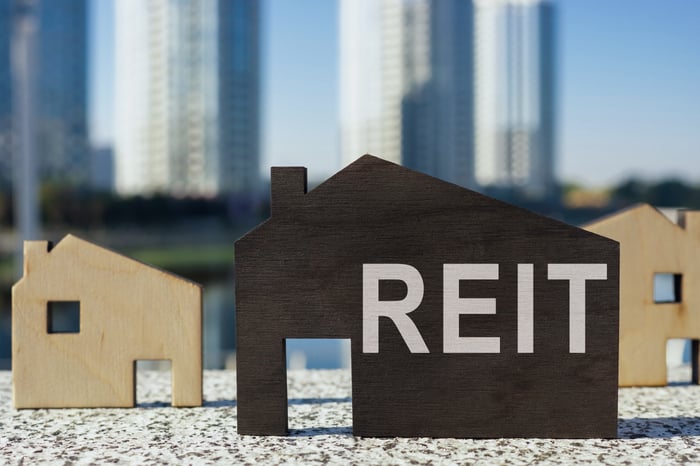
Image source: Getty Images.
Where to invest $1,000 right now? Our analyst team just revealed what they believe are the 10 best stocks to buy right now. Continue »
What Arbor Realty does
Arbor Realty is kind of a sophisticated mREIT, with two key operating segments. It is a direct lender and hold loans to maturity. Most of these are multifamily bridge loans. Revenue primarily comes from net interest income in this segment.
The second segment is the agency platform through which bridge loans are refinanced into long-term mortgages that can be repackaged into Fannie Mae or Freddie Mac securities. Non-Arbor Realty loans may also make use of this platform, and Arbor collects revenue from the gain on a sale of a loan to Fannie or Freddie, and on the servicing fees they receive during the life of the mortgage. This gives Arbor safe exits and a continued form of cash flow from each investment.
Why the share price declined
The relationship between these two segments is symbiotic, and lately that has been strained. In 2021 and 2022, Arbor and other lenders saw an uptick in lending due to near-zero interest rates and early COVID-era stimulus. As rates increased, originations slowed down.
Real estate valuations also declined because of higher borrowing costs. This meant Arbor's portfolio became concentrated on the 2021 and 2022 vintages, accounting for 51.4% of the $11.7 billion loan portfolio as of the latest quarter.
These vintages were underwritten at a peak in the market, right before Federal Reserve rate cuts and the end of COVID stimulus. Borrowers have struggled to refinance these into long-term mortgages because of lower valuations. More recent vintages, meanwhile, generally borrowed at a lower property value and are managing better.
Arbor's bridge loans typically come with three-year terms and one-year extensions. Between 2024 and 2025, many borrowers from these vintages could not refinance with the same principal. Others are hampered by long-term rates, which have not declined much in spite of the Fed's rate cuts that started in late 2024.
Arbor is therefore working to restructure these loans that have run out of time. In some cases, it is taking over properties until it can find new buyers.
The mREIT is normally known for paying and increasing its dividend. As more borrowers became delinquent, net interest income weakened, and the dividend was cut earlier in the year from $0.43 per quarter to $0.30. With the possibility of further cuts ahead, share prices have continued to trickle down. The recent low of $8 came when Arbor Realty Trust announced a new issue of senior notes that would come with higher interest expense than previous issues.
The path to recovery
Despite the distress, Arbor Realty Trust has largely preserved book value per share, which was $12.08 as of Q3. Many of the assets have not been adjusted for potential losses, however. During the Q3 earnings call, management explained that working on the troubled assets would take several months. If the mREIT can execute well, which it has done so far, then reported asset values should prove reliable.
The troubled portion of the 2021 and 2022 vintages (anything it rates below "pass" or "pass/watch," which isn't a distressed asset) accounts for 40.3% of the overall loan portfolio. Failure to execute on restructuring or rotating these assets means book value could take a big hit. This could lead to another dividend cut.
One area of strength is in the single-family rental portfolio, which has proved to be a durable and profitable asset class compared to multifamily in recent years. These make up 23.6% of the loans and have been the main source of growth. If it can continue originations here, that should mitigate potential losses from multifamily.
What you need to know before investing
Potential investors need to understand that Arbor is not out of the woods yet. The current share price may very well reflect what's left on the books if further losses materialize. More dividend cuts would mean the yield on cost may be much lower than 15% for some time.
Investors have to decide what yield (perhaps under 10%) they would accept before buying. Overall, there is value here to buy, but how much of a bargain it is depends on execution in upcoming quarters.
Arbor has been in worse condition before, such as during the 2008 financial crisis. The mREIT became a penny stock, but it did not go bankrupt. While this is its toughest hour since 2008, the lack of comparable distress is a testament to lessons learned.
Should you buy stock in Arbor Realty Trust right now?
Before you buy stock in Arbor Realty Trust, consider this:
The Motley Fool Stock Advisor analyst team just identified what they believe are the 10 best stocks for investors to buy now… and Arbor Realty Trust wasn’t one of them. The 10 stocks that made the cut could produce monster returns in the coming years.
Consider when Netflix made this list on December 17, 2004... if you invested $1,000 at the time of our recommendation, you’d have $477,544!* Or when Nvidia made this list on April 15, 2005... if you invested $1,000 at the time of our recommendation, you’d have $1,122,686!*
Now, it’s worth noting Stock Advisor’s total average return is 952% — a market-crushing outperformance compared to 195% for the S&P 500. Don't miss the latest top 10 list, available with Stock Advisor, and join an investing community built by individual investors for individual investors.
See the 10 stocks »
*Stock Advisor returns as of January 15, 2026.
Joseph Parrish has no positions in the stocks mentioned. The Motley Fool has no position in any of the stocks mentioned. The Motley Fool has a disclosure policy.
Recommended Articles


