




"You're Never Going to Run Out of Laundry Detergent Again": Inside Walmart's AI Vision
Key Points
Walmart has been experimenting with AI, and the company views 2026 as the year when AI will become truly useful for its customers.
Smarter product recommendations, automatic replenishment of household items, and direct purchases from chatbots are all in the works.
Walmart's early and aggressive adoption of AI could give the retailer a competitive advantage.
- 10 stocks we like better than Walmart ›
Mega-retailer Walmart (NASDAQ: WMT) has been exploring AI technology for several years. Generative AI has already found its way into e-commerce, with chatbots like Amazon's Rufus integrated into the shopping experience. However, Daniel Danker, Walmart's executive vice president of AI acceleration, views 2026 as a pivotal moment.
At the ICR Conference earlier this week, Danker laid out where Walmart is heading with its AI strategy. "This is the year where tinkering becomes transformation. This is the year where we've built a level of mastery around that, and we'll start building things that deeply address customer problems." Danker said.
Where to invest $1,000 right now? Our analyst team just revealed what they believe are the 10 best stocks to buy right now, when you join Stock Advisor. See the stocks »
While it will take time for Walmart's AI initiatives to bear fruit, the retailer is emerging as an AI leader within the retail industry.
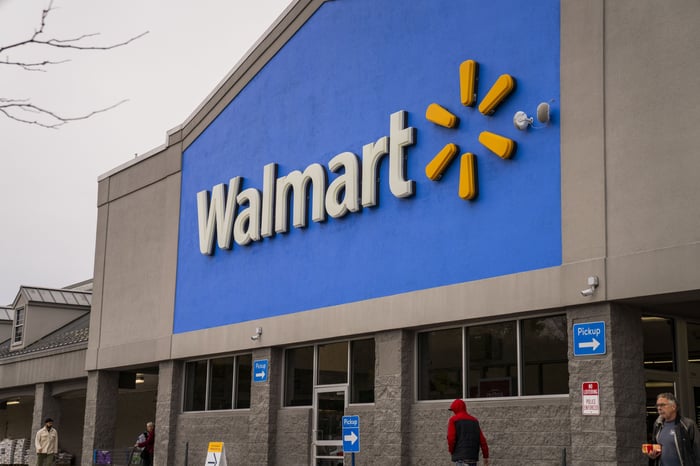
Image source: Getty Images.
Machine learning on steroids
Machine learning, a subset of AI that learns from data, has been around and in use for a long time. A retailer can use machine learning to predict what a customer is likely to buy based on their previous purchases. More than a decade ago, Target developed a system to predict whether a customer was pregnant based on their past purchases, sending mailers with maternity clothing and other related items. This is a classic example of machine learning.
The problem with machine learning is that it relies solely on pattern recognition. Danker provided an example of a machine learning system recommending turkeys to customers in the week following Thanksgiving, as many people had purchased turkeys in the previous week. AI is more advanced. Using an AI system, which can recognize patterns but also intake additional information and form an understanding of those patterns, turkeys could be recommended in the week before Thanksgiving. The AI system can reason why people are buying turkeys.
Another example Danker gave was the automatic purchase of household items. A machine learning system could send laundry detergent based on previous purchases of laundry detergent, but an AI system could factor in other data. It could infer household size from the amount of milk purchased, for example, and determine exactly the right moment to remind the customer to stock up or even process the purchase automatically. "We're on a journey toward it. We're not quite there yet, but we're moving fast," Danker said, noting that these types of use cases aren't yet ready for prime time.
Leaning into chatbots
While AI chatbots are a threat to many types of online businesses, particularly those that rely on monetizing content, the technology could be a boon for online retailers. While there's no guarantee that consumers will want to make purchases directly in chatbots, Walmart is getting in early.
In October, Walmart partnered with OpenAI to create shopping experiences within ChatGPT. The first step is enabling instant checkout, which will allow customers to shop and purchase items through Walmart without leaving ChatGPT.
In January, Walmart announced a deeper partnership with Alphabet's Google. Under the deal, Google's Gemini will automatically include Walmart and Sam's Club products in responses when they're relevant. Items added from Gemini can be combined with existing shopping carts, creating a seamless experience between Gemini and Walmart's websites.
Danker gave an example during the conference of how this might work. Imagine someone spilling red wine on their carpet. They may turn to ChatGPT or Gemini to ask for the best way to remove the stain. The chatbots could then recommend products that can do the job from Walmart's website and offer low-friction ways to purchase them.
While commerce in AI chatbots is still in its infancy, with hundreds of millions of users asking ChatGPT and Gemini questions each month, these integrations could have a meaningful impact on Walmart's revenue.
Is Walmart stock a buy?
Walmart is determined not to be left behind by the AI revolution, and in fact, it could gain an edge over competitors like Amazon by leveraging AI to enhance both the in-store and online experiences. However, the stock market is already pricing in some serious growth for the retailer.
Walmart stock trades for around 45 times the average analyst estimate for fiscal 2026 earnings. Analysts expect 12% growth in earnings per share for fiscal 2027, and less than 5% revenue growth. While Walmart's AI initiatives could accelerate growth somewhat, the valuation is tough to justify.
At the right price, Walmart stock would be a great investment. However, even with a potential tailwind from AI, the valuation appears to be overly optimistic.
Should you buy stock in Walmart right now?
Before you buy stock in Walmart, consider this:
The Motley Fool Stock Advisor analyst team just identified what they believe are the 10 best stocks for investors to buy now… and Walmart wasn’t one of them. The 10 stocks that made the cut could produce monster returns in the coming years.
Consider when Netflix made this list on December 17, 2004... if you invested $1,000 at the time of our recommendation, you’d have $477,544!* Or when Nvidia made this list on April 15, 2005... if you invested $1,000 at the time of our recommendation, you’d have $1,122,686!*
Now, it’s worth noting Stock Advisor’s total average return is 955% — a market-crushing outperformance compared to 196% for the S&P 500. Don't miss the latest top 10 list, available with Stock Advisor, and join an investing community built by individual investors for individual investors.
See the 10 stocks »
*Stock Advisor returns as of January 15, 2026.
Timothy Green has no position in any of the stocks mentioned. The Motley Fool has positions in and recommends Alphabet, Amazon, Target, and Walmart. The Motley Fool has a disclosure policy.
Recommended Articles


