


3 Smart Ways to Get Ahead of Inflation
Key Points
It’s easy to stick with the same bank or credit union, but making a change could help you outrun inflation.
If you’re having trouble paying bills as scheduled, take the opportunity to negotiate.
Choose a debt payoff plan that works for you.
- The $23,760 Social Security bonus most retirees completely overlook ›
Americans don't appear to need studies or statistics to tell them what they already know -- inflation has spiked since the beginning of 2025. It's currently sitting at over 3%. A recent poll from the Pew Research Center finds that three out of four Americans rate the current economy as fair or poor.
Anyone who lived through the 1970s knows the pinch of inflation and how long the suffering can last. While it's happening, the goal is to find ways to outsmart it. Here are three ideas that just may save you enough money to breathe a little easier.
Where to invest $1,000 right now? Our analyst team just revealed what they believe are the 10 best stocks to buy right now. Continue »
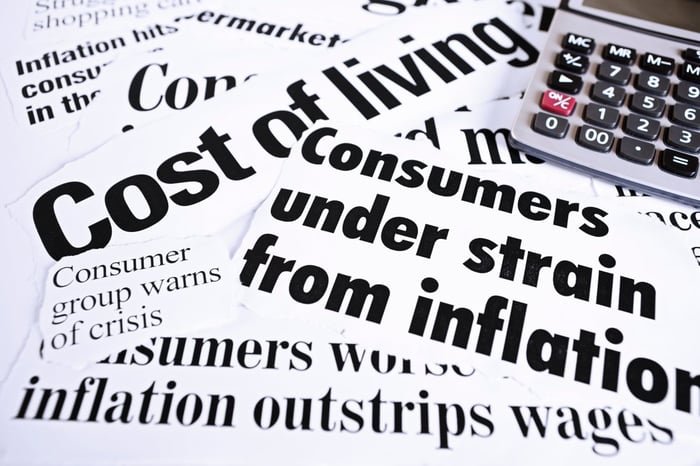
Image source: Getty Images.
1. Get a head start with a new bank account
Each month that your money sits in a low-interest savings account, it loses value. In short, if this were a foot race, interest would be beating your money by a mile.
Instead, look for a high-yield savings account that offers an annual interest rate of 4% or higher. Worried about putting your hard-earned money in an online account? Don't be. As long as the bank is FDIC-insured, it's as protected as it would be at your local bank.
2. Negotiate medical bills
Whether you're retired or hope to retire one day, healthcare costs can quickly drain your account. And if there's one thing you don't want as inflation rages, it's a drained account. Rather than ignoring medical bills or stressing over them as you're trying to fall asleep, give your medical providers a call.
You won't be the first person to call about an outstanding bill that day. In fact, you probably won't be the first person to call during that hour. Whoever picks up the phone is a real person who lives in the real world and knows what it's like to try to get ahead.
Give the office a call. Be honest about what you're going through and let them know that you're having trouble paying your medical bills. Ask about any financial assistance they offer, or whether you can go on an affordable payment plan.
None of this is new to them, and the people working in billing can help you sort out options.
3. Focus on paying off high-interest debt
Chances are, high-interest debt has never been part of your retirement plan. If you have credit cards or any other type of high-interest debt, your top priority is to eliminate it as soon as possible. It makes little sense to hold on to a debt that's costing 20% or more while also paying more for the things you need at the grocery store. The goal is to get out from under the interest rate. The process will pick up steam faster if you can put a little extra toward the debt each month.
Two of the most effective ways to pay off debt more quickly are the "snowball" and "avalanche" methods. Here's a quick rundown of how each process works.
Snowball
Here's how the highly effective snowball method works:
- Make a list of your debts, from lowest balance to highest balance.
- Use any extra funds you have to pay toward your smallest debt, while continuing to make minimum payments on other debts.
- Once the smallest debt is paid off, go after the next smallest debt on your list. This time, add the money you were paying on the smallest debt to the minimum payment you were making on the second smallest debt.
- Once the second smallest debt is paid off, roll all the money you were paying on the first two debts over the third smallest debt, and so on.
As you can see, the payment amount increases as your debts are paid off, accelerating the process of clearing all debts.
Avalanche
With the avalanche method, you attack debt based on highest to lowest interest rates.
- Make a list of your debts, from the highest interest rate to the lowest interest rate.
- Use any extra funds to pay toward the debt with the highest interest rate, while continuing to make minimum payments on other debts.
- Once the debt with the highest rate is paid off, go after the debt with the next highest rate. This time, add the money you were paying on the debt with the highest interest rate to the minimum payment you were making on the debt with the second-highest interest rate.
- Continue down the list, focusing on the next debt in line until all of them are paid off.
Financial good times come and go, but whether the U.S. is in the midst of inflation, a recession, or a bear market, it's easier to get by without high-interest debt.
As with many things in life, it pays to take action. Find a savings account that pays you the highest possible rate, negotiate bills when you can, and kick high-interest debt to the curb. Once you're on track, you may have money for all those things you've been meaning to do, like building an emergency fund, investing in bonds, or simply breathing easier.
The $23,760 Social Security bonus most retirees completely overlook
If you're like most Americans, you're a few years (or more) behind on your retirement savings. But a handful of little-known "Social Security secrets" could help ensure a boost in your retirement income.
One easy trick could pay you as much as $23,760 more... each year! Once you learn how to maximize your Social Security benefits, we think you could retire confidently with the peace of mind we're all after. Join Stock Advisor to learn more about these strategies.
View the "Social Security secrets" »
The Motley Fool has a disclosure policy.
Recommended Articles


