

Arthur Hayes says it’s ‘game over’ for the Fed. Here is why Powell doesn’t care

Source Cryptopolitan

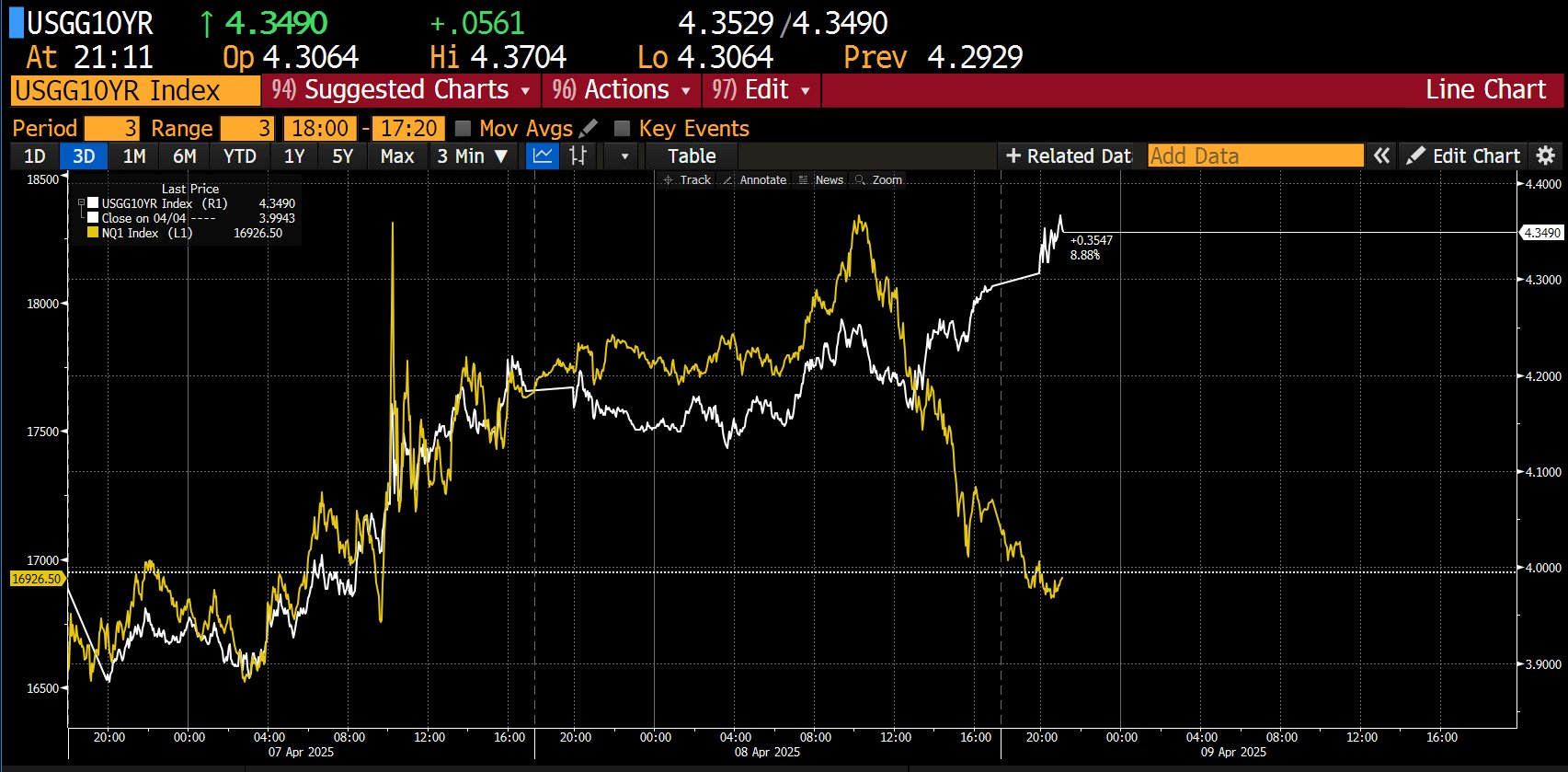
BitMEX founder and longtime trader Arthur Hayes said on Wednesday that the Federal Reserve has hit a wall. He posted on X that “the Fed is on the clock, shit is breaking down.” He said stock prices are falling while the 10-year Treasury yield is rising, calling that a sign of collapse.

Arthur explained that in the past, both stocks and the 10-year yield would fall together, which was fine. But now, yields are rising while stocks are crashing, and that, he said, is a problem. “Stocks down, 10-yr yield up, bad! (now),” he wrote.

Arthur added that when there are fewer dollars from exports, there’s no money left to buy Treasuries or equities. His final line: “Game Over!”
Arthur Hayes says it’s “game over” for the Fed. Here is why Powell doesn’t care
Source: Arthur Hayes (Twitter/X)

Arthur says markets are waiting for the Fed’s next move

In another post, Arthur warned that if the Treasury cancels upcoming 10- and 30-year bond auctions and starts using the Treasury General Account instead, that would be secret money printing. He said this would be a way to calm things down before “cuck JAYPOW does his duty.”

In Arthur’s words, the “elephant walk party begins shortly.” He said no matter what Powell does next, it’ll involve more money printing. “Yachtzee! We are green lit for Fed intervention,” he added.

The rest of the market moved fast. On Tuesday, traders increased bets that the Fed will begin cutting interest rates in May. Those bets jumped from 40% earlier in the day to 56% by the afternoon.

The change came after Donald Trump’s White House confirmed that more tariffs on Chinese imports will begin on Wednesday. That added pressure to an already slowing economy. Traders expect four more cuts before the end of 2025, based on CME Group futures.

Bond market reacts as Powell stays quiet

While Arthur posted about collapsing liquidity and money printing, bond yields surged. The 10-year Treasury yield shot up 12 basis points to 4.386%. It even went above 4.5% overnight. That’s the highest level since February.

Fixed income, usually the safe zone, is getting dumped. The 2-year yield also moved up, hitting 3.76%. That’s a two-point gain, and one basis point equals 0.01%.

The last time the Fed had to choose between slowing inflation and supporting the economy like this was in the 1980s. That’s when Paul Volcker picked inflation and slammed rates so high it triggered a recession.

This time, Jerome Powell is boxed in. He missed inflation in 2021, calling it “transitory.” That same word is now being used again by Powell’s team to downplay the impact of tariffs. But the numbers are already reacting.

Yields are moving, and the stock market is tanking. The White House had claimed the tariffs were helping by pushing rates lower. That didn’t hold. The bond market pushed the 10-year yield back above where it was before Trump announced the tariffs last Wednesday.

Ed Yardeni, president of Yardeni Research, said Tuesday night that “Trump administration officials have been taking credit for the recent drop in bond yields and mortgage interest rates.” He pointed out that the 10-year Treasury yield jumped from 3.87% on April 4 to 4.36% by Tuesday evening. He said investors might be afraid that countries like China could start dumping U.S. Treasuries.

That kind of fear adds even more pressure on Powell. If foreign buyers pull out of Treasuries, yields will climb faster. That means higher costs for housing, borrowing, and business across the board. But Powell hasn’t done anything yet. He hasn’t cut rates, and he hasn’t said what comes next.

The problem is that if the Fed does cut now, it could help short-term interest rates. But it could also make long-term rates climb even higher. Traders would see it as the Fed giving up. That would scare investors and increase inflation expectations. So cutting rates could actually make inflation worse, not better.

Cryptopolitan Academy: Tired of market swings? Learn how DeFi can help you build steady passive income. Register Now

Disclaimer: For information purposes only. Past performance is not indicative of future results.
placeholder
Bitcoin briefly loses 2025 gains as crypto plunges over the weekend.Bitcoin experienced a sharp decline this weekend, briefly erasing its 2025 gains and dipping below its year-opening value of $93,507. The cryptocurrency fell to a low of $93,029 on Sunday, representing a 25% drop from its all-time high in October. Although it has rebounded slightly to around $94,209, the pressures on the market remain significant. The downturn occurred despite the reopening of the U.S. government on Thursday, which many had hoped would provide essential support for crypto markets. This year initially appeared promising for cryptocurrencies, particularly after the inauguration of President Donald Trump, who has established the most pro-crypto administration thus far. However, ongoing political tensions—including Trump's tariff strategies and the recent government shutdown, lasting a historic 43 days—have contributed to several rapid price pullbacks for Bitcoin throughout the year. Market dynamics are also being influenced by Bitcoin whales—investors holding large amounts of Bitcoin—who have been offloading portions of their assets, consequently stalling price rallies even as positive regulatory developments emerge. Despite these sell-offs, analysts from Glassnode argue that this behavior aligns with typical patterns seen among long-term investors during the concluding stages of bull markets, suggesting it is not indicative of a mass exodus. Notably, Bitcoin is not alone in its struggles, as Ethereum and Solana have also recorded declines of 7.95% and 28.3%, respectively, since the start of the year, while numerous altcoins have faced even steeper losses. Looking ahead, questions linger regarding the viability of the four-year cycle thesis, particularly given the increasing institutional support and regulatory frameworks now in place in the crypto landscape. Matt Hougan, chief investment officer at Bitwise, remains optimistic, suggesting a potential Bitcoin resurgence in 2026 driven by the “debasement trade” thesis and a broader trend toward increased adoption of stablecoins, tokenization, and decentralized finance. Hougan emphasized the soundness of the underlying fundamentals, pointing to a positive outlook for the sector in the longer term.
Author  Mitrade
Nov 17, 2025
Bitcoin experienced a sharp decline this weekend, briefly erasing its 2025 gains and dipping below its year-opening value of $93,507. The cryptocurrency fell to a low of $93,029 on Sunday, representing a 25% drop from its all-time high in October. Although it has rebounded slightly to around $94,209, the pressures on the market remain significant. The downturn occurred despite the reopening of the U.S. government on Thursday, which many had hoped would provide essential support for crypto markets. This year initially appeared promising for cryptocurrencies, particularly after the inauguration of President Donald Trump, who has established the most pro-crypto administration thus far. However, ongoing political tensions—including Trump's tariff strategies and the recent government shutdown, lasting a historic 43 days—have contributed to several rapid price pullbacks for Bitcoin throughout the year. Market dynamics are also being influenced by Bitcoin whales—investors holding large amounts of Bitcoin—who have been offloading portions of their assets, consequently stalling price rallies even as positive regulatory developments emerge. Despite these sell-offs, analysts from Glassnode argue that this behavior aligns with typical patterns seen among long-term investors during the concluding stages of bull markets, suggesting it is not indicative of a mass exodus. Notably, Bitcoin is not alone in its struggles, as Ethereum and Solana have also recorded declines of 7.95% and 28.3%, respectively, since the start of the year, while numerous altcoins have faced even steeper losses. Looking ahead, questions linger regarding the viability of the four-year cycle thesis, particularly given the increasing institutional support and regulatory frameworks now in place in the crypto landscape. Matt Hougan, chief investment officer at Bitwise, remains optimistic, suggesting a potential Bitcoin resurgence in 2026 driven by the “debasement trade” thesis and a broader trend toward increased adoption of stablecoins, tokenization, and decentralized finance. Hougan emphasized the soundness of the underlying fundamentals, pointing to a positive outlook for the sector in the longer term.
placeholder
Markets in 2026: Will gold, Bitcoin, and the U.S. dollar make history again? — These are how leading institutions thinkAfter a turbulent 2025, what lies ahead for commodities, forex, and cryptocurrency markets in 2026?
Author  Insights
Dec 25, 2025
After a turbulent 2025, what lies ahead for commodities, forex, and cryptocurrency markets in 2026?
placeholder
Gold rises to weekly high as US, Iran reach peace dealGold price (XAU/USD) rises to a weekly high during the Asian trading hours on Monday. The precious metal rebounds after the United States (US) and Iran had reached a deal to end their conflict, easing concerns about inflation and higher interest rates.
Author  FXStreet
Jun 15, Mon
Gold price (XAU/USD) rises to a weekly high during the Asian trading hours on Monday. The precious metal rebounds after the United States (US) and Iran had reached a deal to end their conflict, easing concerns about inflation and higher interest rates.
placeholder
WTI consolidates below $72.00 as traders monitor geopolitical developmentsWest Texas Intermediate (WTI) – the benchmark US Crude Oil price – steadies during the Asian session on Friday, stalling the previous day's downfall amid mixed messaging from the US and Iran.
Author  FXStreet
Jul 10, Fri
West Texas Intermediate (WTI) – the benchmark US Crude Oil price – steadies during the Asian session on Friday, stalling the previous day's downfall amid mixed messaging from the US and Iran.
placeholder
Gold recovers above $4,100 as traders assess US-Iran conflict Gold price (XAU/USD) rebounds to around $4,120 during the early Asian session on Friday. The precious metal edges higher as traders weigh a resumption of war in the Middle East.
Author  FXStreet
Jul 10, Fri
Gold price (XAU/USD) rebounds to around $4,120 during the early Asian session on Friday. The precious metal edges higher as traders weigh a resumption of war in the Middle East.
goTop
quote