

L’intelligenza artificiale prevede il prezzo di XRP per il 31 gennaio 2025

Source Newsbtc

Dopo un 2024 caratterizzato da un trading laterale, sempre sotto la soglia di 1 dollaro, XRP ha vissuto un rally esplosivo all’inizio di novembre, complice l’effetto Trump.

L’asset ha sfondato la barriera dei 2 dollari, superando le performance di molti altri asset. Il picco è stato raggiunto il 2 dicembre, quando XRP ha toccato i 2,71 dollari, ma da allora ha perso parte dello slancio.

XRP ha continuato a registrare una certa volatilità, con episodi come il rapido crollo sotto i 2 dollari il 20 dicembre. Nonostante il forte slancio iniziale di novembre, il token non è riuscito a mantenere la spinta rialzista.

Al momento sta scambiando al livello di 2,53 dollari, con un rialzo del 3,80% in 24 ore. Nel grafico settimanale rimane in positivo con un guadagno del 3,94%, mentre in quello mensile del 5,28%.
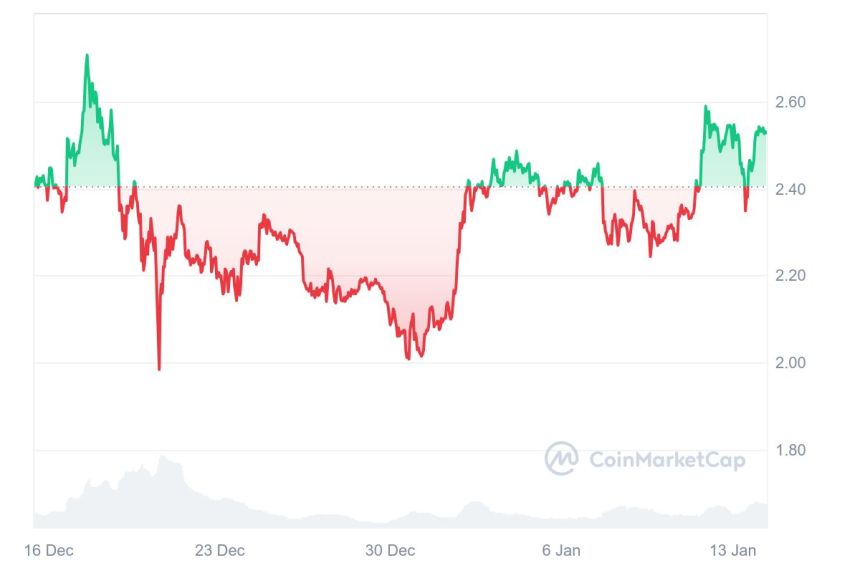
Gli sviluppi previsti per questo mese potrebbero influenzare in modo decisivo l’andamento di XRP. Domani, 15 gennaio, la SEC (Securities and Exchange Commission) presenterà la sua memoria di apertura nell’appello contro Ripple, un passaggio fondamentale per l’esito della battaglia legale.

Inoltre, il 20 gennaio Donald Trump assumerà ufficialmente la presidenza degli Stati Uniti, mentre Gary Gensler, il tanto criticato presidente della SEC, lascerà il suo incarico per fare spazio a Paul Atkins, noto per la sua posizione favorevole alle criptovalute.

Tutti questi fattori potrebbero avere un impatto notevole sulla traiettoria di XRP. Per capire come potrebbe evolversi nei prossimi giorni, abbiamo consultato l’algoritmo avanzato di PricePredictions, una piattaforma che analizza i movimenti del mercato crypto, per scoprire a che livello potrebbe arrivare XRP entro la fine del mese.

L’AI prevede un rialzo per XRP


L’algoritmo, tenendo conto di tutti gli sviluppi, prevede un trend rialzista per il token di Ripple. Secondo l’AI, l’asset potrebbe arrivare a 2,70 dollari entro la fine di gennaio. Si tratterebbe di un aumento di circa il 7% rispetto al prezzo attuale.

Le previsioni si basano su un’analisi tecnica approfondita, che prende in considerazione diversi indicatori per valutare la forza delle tendenze in corso e determinare se l’asset sia in una fase di ipercomprato o ipervenduto. Tra questi strumenti, troviamo la divergenza della media mobile di convergenza (MACD), l’indice di forza relativa (RSI) e le bande di Bollinger (BB).

Nel lungo termine, le previsioni sono ancora più ottimistiche: secondo l’intelligenza artificiale, XRP potrebbe superare la soglia dei 3 dollari a metà febbraio. Prevede anche una correzione nel breve termine, che potrebbe influenzare temporaneamente lo slancio rialzista.
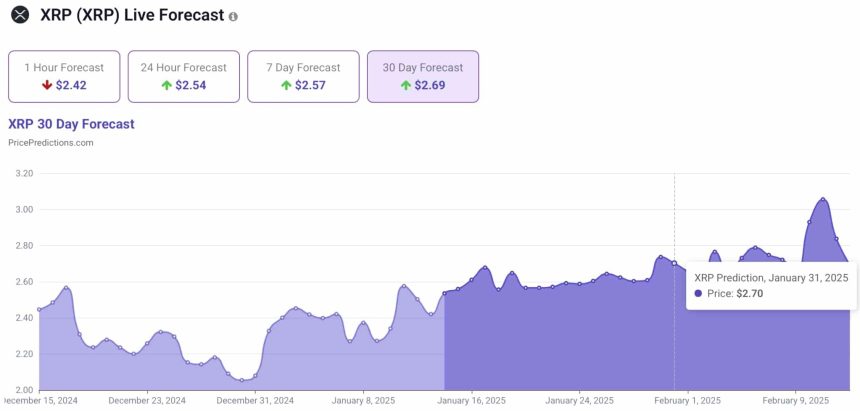
Anche diversi analisti prevedono un rialzo di XRP nei prossimi giorni. Ad esempio, il 12 gennaio Alan Santana ha condiviso la sua analisi, presentando un grafico di consolidamento che lo ha portato a ipotizzare un rally fino a 2,70 dollari, a condizione che si sviluppi uno slancio rialzista nel breve periodo. Ma l’analista è più ottimista rispetto all’intelligenza artificiale.

Secondo l’esperto, l’asset potrebbe proseguire lo slancio e raggiungere il livello di 2,90 dollari nelle prossime settimane.

Anche l’esperto di trading The Great Mattsby ha rilasciato una previsione rialzista per XRP, stimando che l’asset potrebbe toccare a breve nuovi massimi storici (ATH) sopra la soglia dei 2,70 dollari.
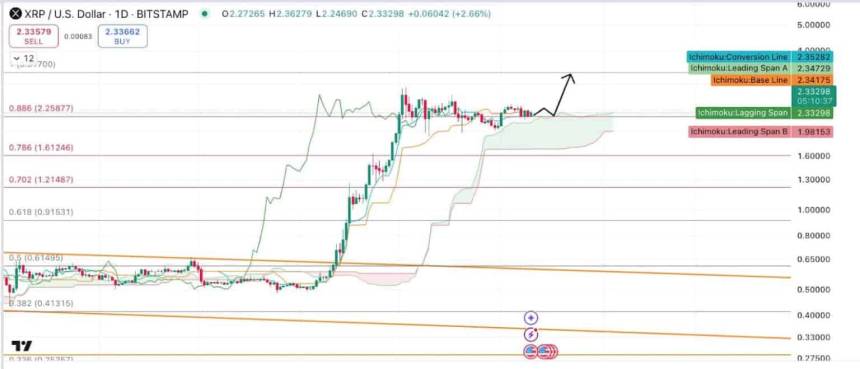
 

La sua analisi si basa sui ritracciamenti di Fibonacci, una tecnica ampiamente utilizzata per individuare i punti di inversione e le possibili nuove tendenze del mercato.

Anche se le analisi tecniche prevedono un possibile rialzo per XRP, è cruciale considerare fattori esterni che potrebbero influenzare la sua traiettoria.

Il recente dump di 690 milioni di dollari di XRP da parte di Ripple rappresenta un evento significativo che potrebbe innescare una pressione al ribasso nel breve termine, offuscando le previsioni degli esperti più ottimisti.

Alternative a XRP

Nel frattempo, mentre XRP continua a guadagnare slancio, molti investitori stanno diversificando i loro portafogli per cogliere nuove opportunità nel settore crypto. Progetti come Wall Street Pepe, attualmente in prevendita, stanno attirando molta attenzione.

Wall Street Pepe sta costruendo una community esclusiva, denominata $WEPE Army, che offre ai titolari del token l’opportunità di accedere a segnali di trading, strategie vincenti e consulenze specializzate.

I membri della community possono anche partecipare a gare settimanali di trading, creando così un ambiente competitivo e stimolante. Ogni aspetto del progetto è pensato per supportare i piccoli investitori, aiutandoli a comprendere meglio il mercato crypto e a cogliere le opportunità di guadagno.

$WEPE non è solo una meme coin: è un progetto che offre segnali di trading avanzati, una community attiva e un sistema di ricompense per lo staking.

Grazie a questa combinazione , il progetto sta attirando l’interesse degli investitori. Finora il progetto ha raccolto più di 47 milioni di dollari nella prevendita.


Disclaimer: For information purposes only. Past performance is not indicative of future results.
placeholder
Gold Price Forecast: XAU/USD drifts higher above $4,200 as Fed delivers expected cutGold price (XAU/USD) gains momentum to around $4,235 during the early Asian session on Thursday. The precious metal extends its upside after the US Federal Reserve (Fed) delivered an expected third consecutive interest rate cut and maintained its outlook for just one cut in 2026.
Author  FXStreet
Dec 11, Thu
Gold price (XAU/USD) gains momentum to around $4,235 during the early Asian session on Thursday. The precious metal extends its upside after the US Federal Reserve (Fed) delivered an expected third consecutive interest rate cut and maintained its outlook for just one cut in 2026.
placeholder
Gold remains bid as lack of Fed clarity and geopolitical frictions persistGold (XAU/USD) advances modestly on Friday as traders seem to book profits ahead of the weekend, yet clings to gains of over 0.51% after reaching a seven-week high of $4,353. At the time of writing, XAU/USD trades at $4,302 as traders digest comments from Federal Reserve (Fed) officials.
Author  FXStreet
Yesterday 01: 34
Gold (XAU/USD) advances modestly on Friday as traders seem to book profits ahead of the weekend, yet clings to gains of over 0.51% after reaching a seven-week high of $4,353. At the time of writing, XAU/USD trades at $4,302 as traders digest comments from Federal Reserve (Fed) officials.
placeholder
Ethereum Price Slips Lower — $3,000 Looms as the Key BattlegroundEthereum is attempting to recover from a $3,026 low but remains below $3,200 and the 100-hour SMA, with a bearish trend line near $3,175 capping rebounds as bulls need a clean break above $3,200 to target $3,250–$3,400, while a drop below $3,050 risks a retest of $3,000 and $2,940.
Author  Mitrade
Yesterday 03: 25
Ethereum is attempting to recover from a $3,026 low but remains below $3,200 and the 100-hour SMA, with a bearish trend line near $3,175 capping rebounds as bulls need a clean break above $3,200 to target $3,250–$3,400, while a drop below $3,050 risks a retest of $3,000 and $2,940.
placeholder
Macro Analysts: Hawkish Japan Could Push Bitcoin Below $70KAnalysts predict Bitcoin may face further declines towards the $70,000 mark if the Bank of Japan raises interest rates as expected.
Author  Mitrade
Yesterday 05: 48
Analysts predict Bitcoin may face further declines towards the $70,000 mark if the Bank of Japan raises interest rates as expected.
placeholder
Bitcoin Slides 5% as Sellers Lean In — Can BTC Reclaim $88,000?Bitcoin has dropped back below $88,000 after rolling over from $90,500, with price still trading under the 100-hour Simple Moving Average. The sell-off found a floor at $85,151, and BTC is now consolidating near that base, but rebounds are facing pressure from a bearish trend line around $89,000. Bulls need to retake $88,000–$89,000 to ease downside risk; failure to do so keeps $85,500–$85,000 and then $83,500 in play, with $80,000 as the deeper “line in the sand.” Bitcoin (BTC) is back in damage-control mode after a sharp pullback wiped out recent gains. The price failed to reclaim the $90,000–$90,500 band, rolled over, and slid through $88,500 before briefly dipping under $87,000. Buyers did show up around $85,000, but the rebound so far looks more like stabilization than a clear trend reversal. Bitcoin dips hard, finds a bid near $85,000(h3) BTC’s latest move lower began when it couldn’t build follow-through above $90,000 and $90,500. Once that upside stalled, sellers took control and pushed price down through $88,500. The slide accelerated enough to spike below $87,000, but the market didn’t free-fall. Bulls defended the $85,000 zone, printing a low at $85,151. Since then, Bitcoin has been consolidating below the 23.6% Fibonacci retracement of the drop from the $93,560 swing high to the $85,151 low — a clue that the bounce is still shallow and that sellers haven’t fully backed off yet. Structurally, BTC is still on the back foot: It’s trading below $88,000, and It remains below the 100-hour Simple Moving Average, keeping short-term trend pressure pointed downward. Resistance is layered, and $89,000 is the problem area(h3) If bulls try to turn this into a recovery, they’ll have to climb through multiple ceilings in quick succession. First, BTC faces resistance around $87,150, followed by a more meaningful barrier near $87,500. From there, the market’s attention snaps back to $88,000 — the level BTC just lost and now needs to reclaim. A close back above $88,000 would improve the tone, but it doesn’t solve the bigger issue: there’s a bearish trend line on the hourly BTC/USD chart (Kraken feed) with resistance near $89,000, which also lines up with the next technical hurdle. If BTC can push through $89,000 and hold, the rebound could extend toward $90,000, with follow-through targets at $91,000 and $91,500. But until price clears that $88,000–$89,000 zone, rallies are at risk of being sold rather than chased. If BTC fails to reclaim resistance, the downside path is clear(h3) The near-term bear case is simple: if Bitcoin can’t climb back above the $87,000 area and keep traction, sellers may attempt another leg lower. Support levels line up like this: Immediate support: $85,500 First major support: $85,000 Next support: $83,500 Then $82,500 in the near term Below that, the major “don’t break this” level is still $80,000. If BTC slips under $80,000, the risk of acceleration to the downside increases significantly — not because it’s magic, but because it’s the kind of psychological and structural level that tends to trigger forced de-risking. Indicators: momentum still leans bearish(h3) The intraday indicators aren’t offering much comfort yet: Hourly MACD is losing pace in the bearish zone. Hourly RSI remains below 50, suggesting sellers still have the upper hand on short timeframes. So while the $85,000 defense held for now, the market hasn’t flipped bullish — it’s just stopped bleeding.
Author  Mitrade
12 hours ago
Bitcoin has dropped back below $88,000 after rolling over from $90,500, with price still trading under the 100-hour Simple Moving Average. The sell-off found a floor at $85,151, and BTC is now consolidating near that base, but rebounds are facing pressure from a bearish trend line around $89,000. Bulls need to retake $88,000–$89,000 to ease downside risk; failure to do so keeps $85,500–$85,000 and then $83,500 in play, with $80,000 as the deeper “line in the sand.” Bitcoin (BTC) is back in damage-control mode after a sharp pullback wiped out recent gains. The price failed to reclaim the $90,000–$90,500 band, rolled over, and slid through $88,500 before briefly dipping under $87,000. Buyers did show up around $85,000, but the rebound so far looks more like stabilization than a clear trend reversal. Bitcoin dips hard, finds a bid near $85,000(h3) BTC’s latest move lower began when it couldn’t build follow-through above $90,000 and $90,500. Once that upside stalled, sellers took control and pushed price down through $88,500. The slide accelerated enough to spike below $87,000, but the market didn’t free-fall. Bulls defended the $85,000 zone, printing a low at $85,151. Since then, Bitcoin has been consolidating below the 23.6% Fibonacci retracement of the drop from the $93,560 swing high to the $85,151 low — a clue that the bounce is still shallow and that sellers haven’t fully backed off yet. Structurally, BTC is still on the back foot: It’s trading below $88,000, and It remains below the 100-hour Simple Moving Average, keeping short-term trend pressure pointed downward. Resistance is layered, and $89,000 is the problem area(h3) If bulls try to turn this into a recovery, they’ll have to climb through multiple ceilings in quick succession. First, BTC faces resistance around $87,150, followed by a more meaningful barrier near $87,500. From there, the market’s attention snaps back to $88,000 — the level BTC just lost and now needs to reclaim. A close back above $88,000 would improve the tone, but it doesn’t solve the bigger issue: there’s a bearish trend line on the hourly BTC/USD chart (Kraken feed) with resistance near $89,000, which also lines up with the next technical hurdle. If BTC can push through $89,000 and hold, the rebound could extend toward $90,000, with follow-through targets at $91,000 and $91,500. But until price clears that $88,000–$89,000 zone, rallies are at risk of being sold rather than chased. If BTC fails to reclaim resistance, the downside path is clear(h3) The near-term bear case is simple: if Bitcoin can’t climb back above the $87,000 area and keep traction, sellers may attempt another leg lower. Support levels line up like this: Immediate support: $85,500 First major support: $85,000 Next support: $83,500 Then $82,500 in the near term Below that, the major “don’t break this” level is still $80,000. If BTC slips under $80,000, the risk of acceleration to the downside increases significantly — not because it’s magic, but because it’s the kind of psychological and structural level that tends to trigger forced de-risking. Indicators: momentum still leans bearish(h3) The intraday indicators aren’t offering much comfort yet: Hourly MACD is losing pace in the bearish zone. Hourly RSI remains below 50, suggesting sellers still have the upper hand on short timeframes. So while the $85,000 defense held for now, the market hasn’t flipped bullish — it’s just stopped bleeding.
goTop
quote