


Korea Exchange Chairman pitches Busan as global derivates hub as TradFi comes for crypto
Perpetual futures have grown into a market capable of clearing $86 trillion in annual volume on centralized exchanges alone, sparking the interest of South Korea’s top bourse operator.
Korea Exchange (KRX) Chairman Jeong Eun-bo announced that the exchange will pursue digital asset derivatives products and transform the port city of Busan into a global hub for crypto-linked futures trading.
Which South Korean exchanges offer crypto derivatives?
During a ceremony marking the 30th anniversary of South Korea’s derivatives market, held at the Lotte Hotel in Busan, the Korea Exchange’s (KRX) Chairman Jeong Eun-bo told attendees that the exchange would “actively push the introduction of virtual asset-related derivatives.”
He added that the exchange plans to attract international conferences and pursue partnerships with local universities to develop financial talent in the region.
The Korea Exchange chairman explained that the new venture is a natural next step after 30 years of running derivatives trading. South Korea’s derivatives market started in May 1996 with KOSPI 200 futures, and it has expanded to now include stock indexes, individual stocks, currencies, and government bonds.
Average daily trading value recently hit a record of 83 trillion won (about $60 billion). The exchange also launched after-hours trading last year so global investors can trade at any time.
The regulatory frameworks for digital assets in South Korea are still being written. A bill applying foreign exchange regulations to crypto exchanges recently passed the National Assembly’s Legislation and Judiciary Committee. It will only take a full floor vote before it becomes law.
The legislation would establish monitoring frameworks for cross-border digital asset transactions and define new categories of crypto transfer businesses.
Beyond KRX, traditional finance companies like CME Group are also joining the derivatives market. As Cryptopolitan reported, CME Group announced plans to launch Bitcoin volatility futures on June 1, pending regulatory approval.
The product would allow traders to protect themselves against volatility in Bitcoin’s price without taking a directional bet. Giovanni Vicioso, CME’s global head of crypto products, said in a statement that the futures offer “a critical new layer of risk management.” CME is also set to expand its crypto trading hours to 24/7 starting May 29.
Cboe Global Markets introduced “continuous futures” for Bitcoin and Ethereum late last year. The products feature a 10-year lifecycle and daily cash adjustments. Rob Hocking, Cboe’s global head of derivatives, said at the time that the offering was targeted at a part of the market that U.S. regulators had little oversight over.
Are traditional exchanges better than crypto-native platforms?
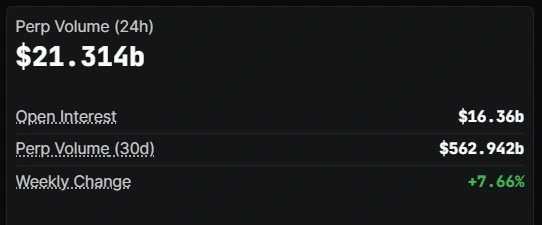
Centralized crypto exchanges cleared $86.2 trillion in perpetual futures volume last year while decentralized platforms handled roughly $6.7 trillion, up 346% year-over-year. In just the last 30 days alone, decentralized perpetual platforms added another $563 billion in volume.
According to DeFiLlama, on-chain perps volume was over $21 billion over the past day.
However, a nine-country study by Tiger Research found that traditional financial institutions are entering the market through familiar products like Bitcoin spot ETFs, and customers may follow, unfortunately for standalone crypto exchanges.
In South Korea, securities giant Mirae Asset is close to completing a takeover of Korbit, the country’s oldest Bitcoin exchange.
Up to 16 million South Koreans have traded crypto on domestic platforms, but average daily volumes and Korean won deposits have been falling. The country has just five licensed crypto exchanges, all of which started as tech startups.
At Consensus 2026 in Miami, panelists from Galaxy and FalconX argued that the line separating crypto derivatives from traditional finance has already dissolved. Mike Harvey, head of franchise trading at Galaxy, predicted that “within the next two or three years, the volume of offshore traded equity perps will be greater than crypto perps.”
Don’t just read crypto news. Understand it. Subscribe to our newsletter. It's free.
Recommended Articles


