


Balancer overhauls tokenomics after $116M hack, ending emissions to stabilize BAL and restore sustainability
Balancer will overhaul its tokenomics in response to the late 2025 hack. The DeFi protocol, one of the most long-lived platforms, will change its reward system to stabilize the BAL token and rely on sustainable growth.
Balancer has proposed a vote on a new reward system following the protocol’s difficulties after the November 2025 hack. As Cryptopolitan reported, Balancer was drained of $116M, with most of the funds targeting its wrapped ETH collaterals.
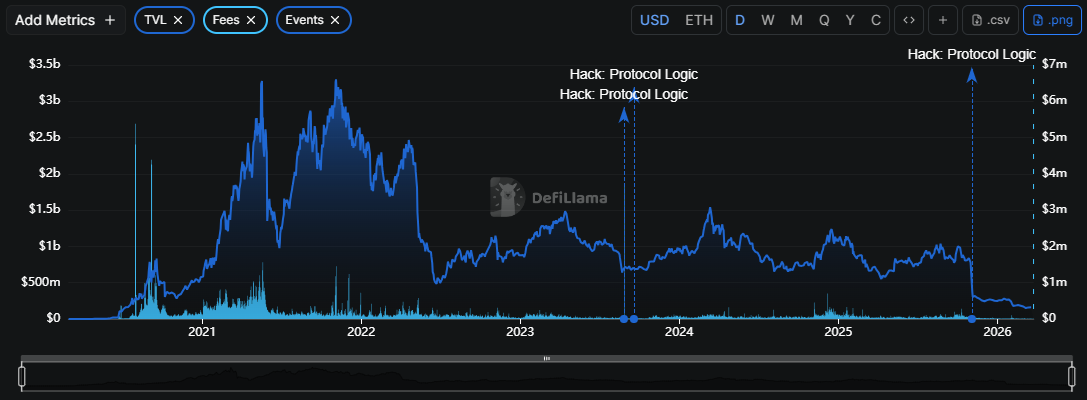
Marcus Hardt, the CEO of Balancer Labs, remarked the months since the hack were one of the most difficult in Balancer’s history. The protocol shrank its total value locked to just around $158M, down from a peak of over $3B in 2022.
‘We had the exploit, a long crisis response, a lot of difficult decisions, and some very painful conversations about what was and was not sustainable anymore. We also had to let go of people we deeply respect, not because they were not good enough, but because the structure around the protocol had stopped making sense,’ explained Hardt in an X post.
Balancer aims for more sustainable liquidity
Balancer is one of the few protocols to still rely on liquidity mining, with a long-term BAL unlock curve. Based on the current tokenomics, BAL production and unlocks were expected to continue on a gradual curve until 2034.
According to Hardt, the current model was too expensive for Balancer to attract liquidity. The protocol spent more on incentives than the revenue generated. Following the hack, daily Balancer fees fell below $15,000, making it harder for Balancer to survive in the DeFi space. Additionally, the protocol was diluting BAL holders, and the model no longer served the long-term survival of Balancer.
BAL holders to receive compensation
The new proposal aims to discontinue BAL emissions entirely, to be enforced immediately after the vote. Balancer will route 100% of fees to its treasury. Additionally, Balancer will move forward with a leaner operating structure and a smaller team.
Holders of locked veBAL tokens may lose the most, so Balancer will try to offset the loss with buybacks and a compensation campaign.
The proposal offers to reduce the V3 swap fee protocol share from 50% to 25%, so liquidity providers can retain a bigger share of fees, instead of receiving newly unlocked BAL.
The veBAL locking program will also end immediately, with compensation for the holders of $500K. For users who want to abandon their positions, there will be a buyback at 35% of Treasury value, or around $3.6M in total exit liquidity. The burn and compensation may retire up to 35% of the BAL circulating supply.
Balancer will also dismiss its DAO, which will stop receiving fee allocations. The day-to-day governance decisions will revert to the core team. Remaining veBAL and BAL holders will retain voting power on major decisions.
BAL traded near an all-time low of $0.15, following the steep decline from last year’s hack.
There’s a middle ground between leaving money in the bank and rolling the dice in crypto. Start with this free video on decentralized finance.
Recommended Articles


