


Bitcoin’s Recovery Faces a Wall: How a Surging Dollar Could Kill the Rally
In the first week of March, escalating military conflict has turned the US dollar into one of the few assets gaining value amid market volatility. Meanwhile, stocks in many countries and precious metals face downward pressure.
Analysts warn that if this situation continues, it could hinder capital flows into risk assets such as Bitcoin and altcoins.
US Dollar Rises as Safe-haven Demand Increases
The US dollar (USD) weakened significantly throughout 2025 and early 2026. The DXY index declined sharply, reaching a four-year low of around 96 in January 2026.
Analysts attribute this decline to expectations of Federal Reserve rate cuts, policy uncertainty under President Trump—such as challenges to the Fed’s independence and trade policies—and the global trend of diversifying away from the US dollar.
However, the USD has recently shown signs of strengthening again in early March 2026 amid escalating tensions in the Middle East. Data from TradingView shows that the DXY index rose from 97.8 points to above 99 within this week alone.
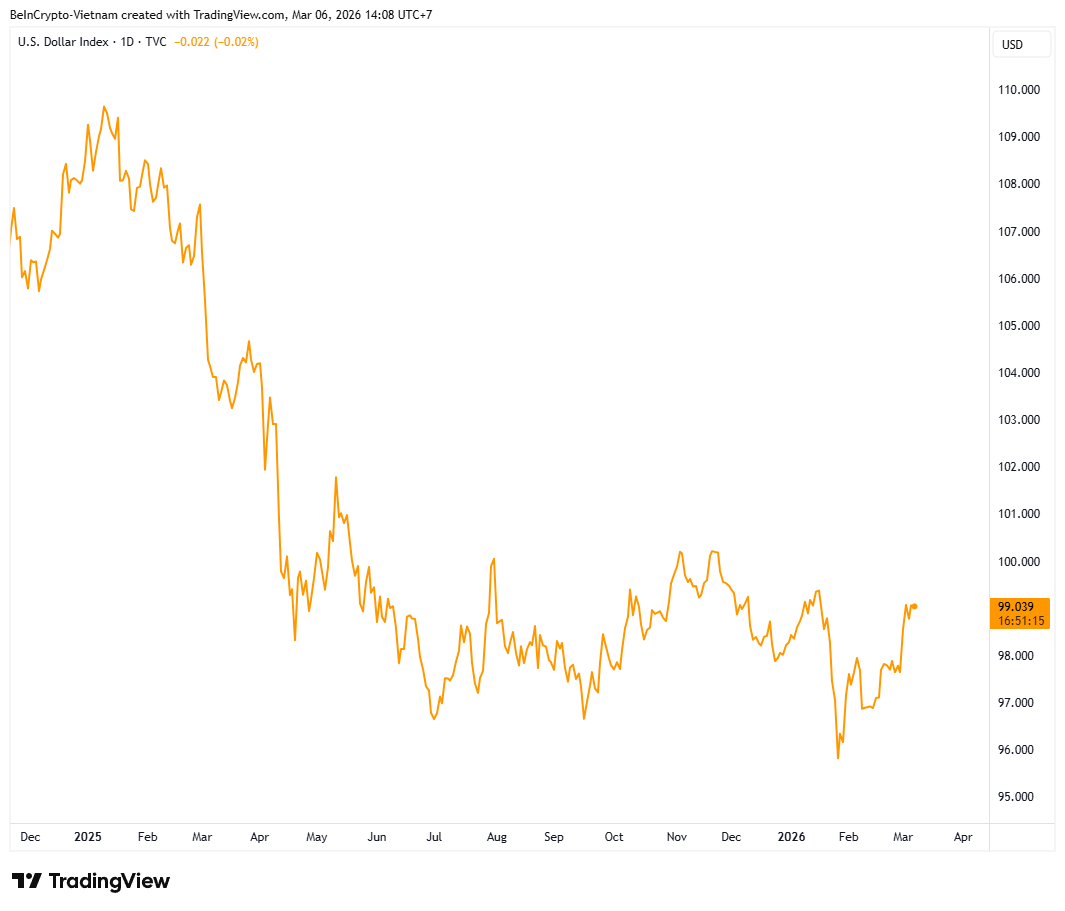 US Dollar Index (DXY). Source: TradingView
Reuters reports that escalating geopolitical conflict has triggered stronger demand for the US dollar. As a result, if the conflict continues, the DXY index could maintain its upward trend in the near term.
“If the Middle Eastern conflict continues at its current intensity, it’s likely to bring sustained higher inflation, a stronger US dollar, and a vastly reduced chance of Fed rate cuts,” IG market analyst Tony Sycamore predicted.
This environment raises major concerns for Bitcoin (BTC), which often shows an inverse correlation with the US dollar’s strength. When the USD strengthens, high-risk assets such as cryptocurrencies tend to face selling pressure.
Bitcoin has posted an impressive recovery amid escalating tensions. However, this rally now faces several warning signals.
A strong US dollar often closely aligns with expectations that the Federal Reserve will not cut interest rates. According to FedWatch, the Fed is almost certain to keep rates unchanged at the March 2026 meeting.
The probability of maintaining the current rate range (350–375 bps) stands at nearly 97.4%. Expectations of “no rate cuts” further reinforce USD strength and reduce capital flows into risk assets.
“Fed odds shifting show real caution in play.” – Lucky – a Bitcoin OG – stated.
In addition, selling pressure from large institutions remains present. Galaxy Digital, a major crypto investment firm, sold more than 3,100 BTC over the past few days. The firm may use the recent rebound to take profits.
This move suggests that some institutional investors remain cautious and do not fully trust the durability of the current rally.
According to a report from CryptoQuant, Bitcoin’s Bull Score Index remains at an extremely low level of 10/100. This reading indicates that the market environment remains strongly bearish.
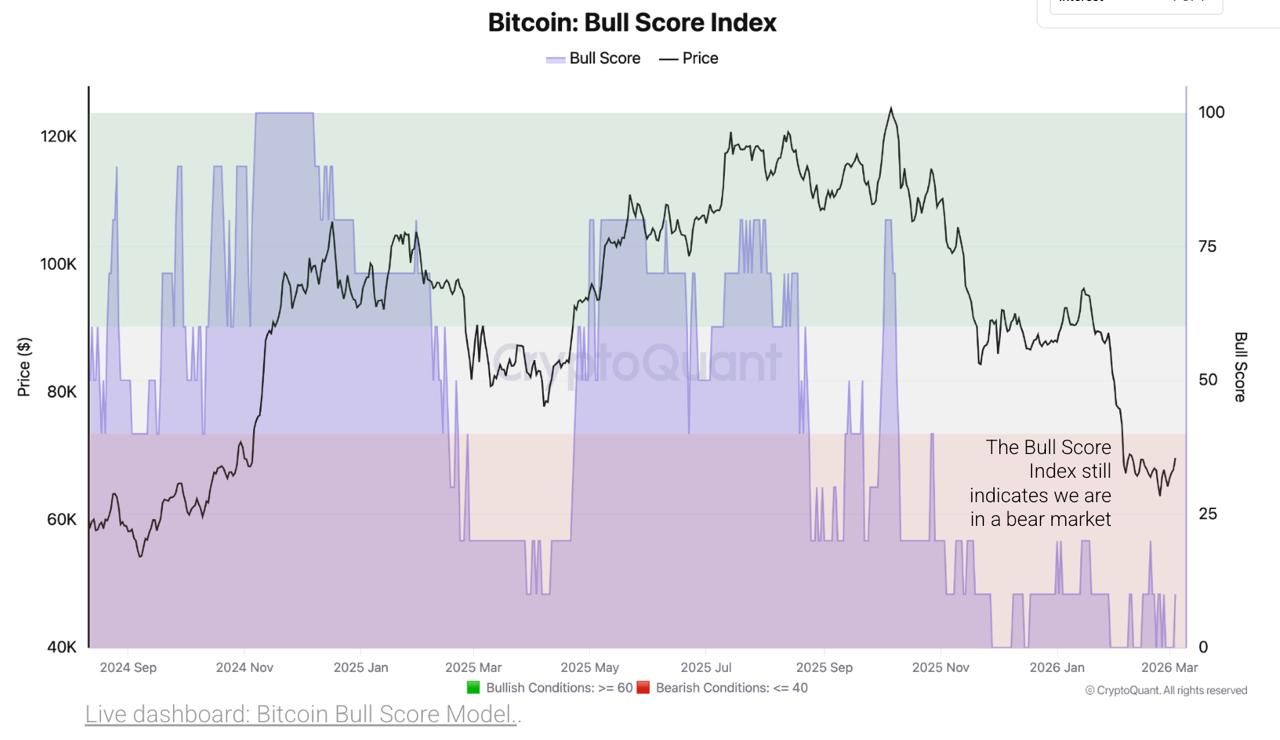 Bitcoin’s Bull Score Index. Source: CryptoQuant.
These factors have led many analysts to worry that Bitcoin could repeat a false breakout scenario similar to early 2026, when the price briefly broke higher before reversing sharply.
Overall, the renewed strength of the US dollar could outweigh Bitcoin’s internal market drivers. Any further escalation in Middle East geopolitical tensions could trigger a sudden breakdown in Bitcoin’s price trajectory.
Recommended Articles


