

Bitcoin reclaims $94,000 as Wall Street Opens Higher after Venezuela Shock
Bitcoin climbed back above $94,000 on Monday, ending nearly a month of range-bound trading, as US stocks opened higher following a dramatic escalation between Washington and Caracas over the weekend.
The move shows how closely crypto markets tracked equities once traditional markets reopened, despite the geopolitical shock.
Markets are Treating Venezuela’s Regime Change as a Risk-On Event
US stock indexes opened in the green as investors assessed the situation surrounding Venezuela and its leadership.
Rather than triggering panic, the episode reinforced a risk-on tone. Markets treated the event as contained, decisive, and unlikely to spill into global supply chains or financial plumbing.
That initial equity strength set the tone for digital assets. Bitcoin, which had spent weeks struggling to break out of a narrow range, responded quickly once Wall Street signaled confidence.
The move pushed BTC back toward levels last seen in late November, with broader crypto markets also posting modest gains.
The positive reaction in equities reflected several factors.
First, investors saw clarity rather than uncertainty. The US response appeared swift and one-sided, with no immediate signs of retaliation that could threaten trade routes, energy chokepoints, or global liquidity.
Second, energy markets framed the situation as potentially supply-positive over the medium term. Any scenario that hints at changes to Venezuela’s oil output carries implications for inflation expectations.
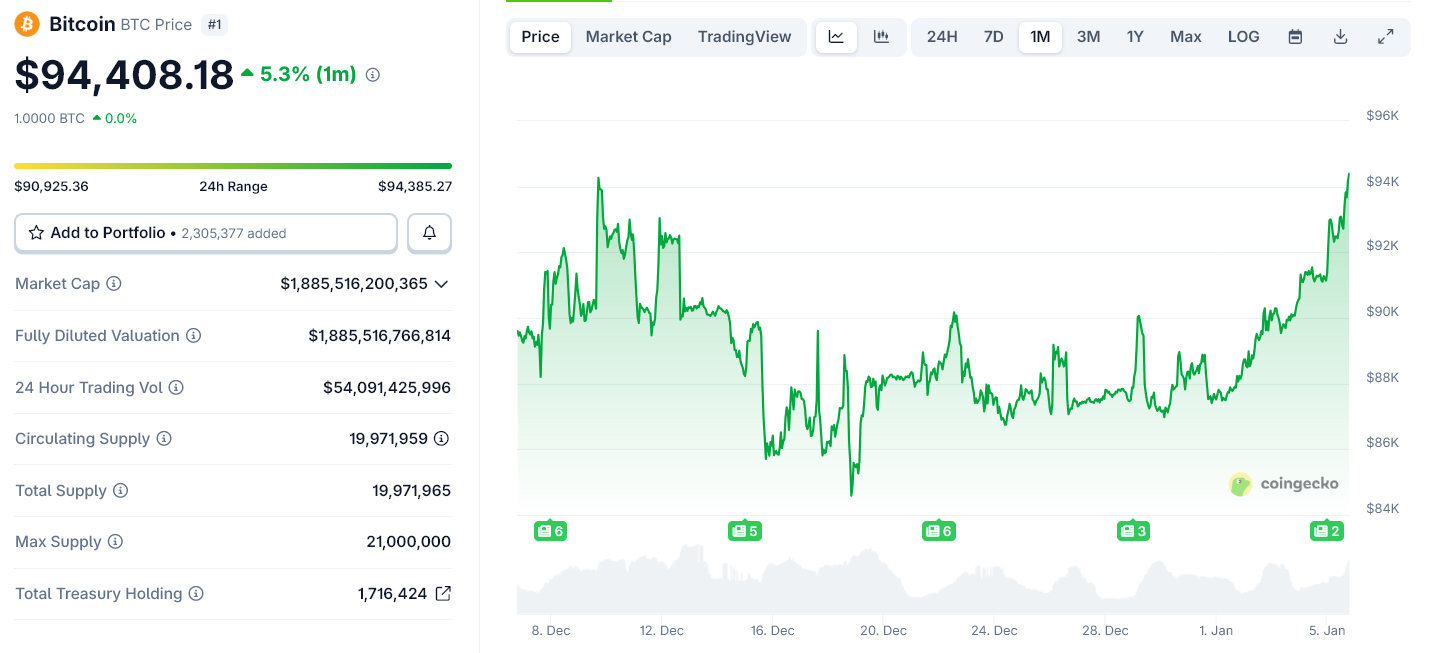 Bitcoin Monthly Price Chart. Source: CoinGecko
Lower long-term inflation risk supports equities, particularly at a time when markets remain sensitive to interest-rate outlooks.
Bitcoin Is Heavily Following US Stocks
Crypto followed stocks because the dominant narrative was risk repricing, not fear. Bitcoin did not behave like a safe haven.
Instead, it moved in line with equities, reflecting its growing role as a high-beta macro asset during periods of market confidence. There was no surge in exchange inflows or panic selling, suggesting traders were positioning, not fleeing.
Timing also mattered. This was the first full trading session after the weekend shock, and early-year positioning tends to amplify directional moves.
With equities opening strong, crypto traders extended that momentum rather than fading it.
Still, the correlation may not hold. Bitcoin’s rally relied on a broader assumption that the Venezuela episode remains contained.
Any signs of prolonged military involvement, regional spillover, or disruption to energy infrastructure could quickly reverse sentiment across risk assets.
For now, markets have drawn a clear conclusion. They view the episode as a localized geopolitical event rather than a systemic threat. That assessment lifted stocks, pulled Bitcoin out of its range, and reinforced the short-term alignment between crypto and traditional markets.
Whether Bitcoin can reclaim the $100,000 psychological level will depend less on Venezuela headlines and more on whether equity optimism persists.
As long as Wall Street stays calm, crypto appears willing to follow.
Recommended Articles


