


Silver Plunges 6% Erasing All Year-to-Date Gains. Global Liquidity Run Is Erupting
TradingKey - Spot silver plunged during Monday's Asian trading session, with intraday losses at one point extending beyond 6% as prices broke below the $64 mark, hitting a new year-to-date low. From a technical perspective, silver experienced a distinct 'waterfall' decline in a short period, signaling a swift shift in market sentiment.
Uncertainty in the Middle East continues to weigh on global assets; a global liquidity crunch erupted during the Asian session this week, causing stock markets worldwide to plummet.
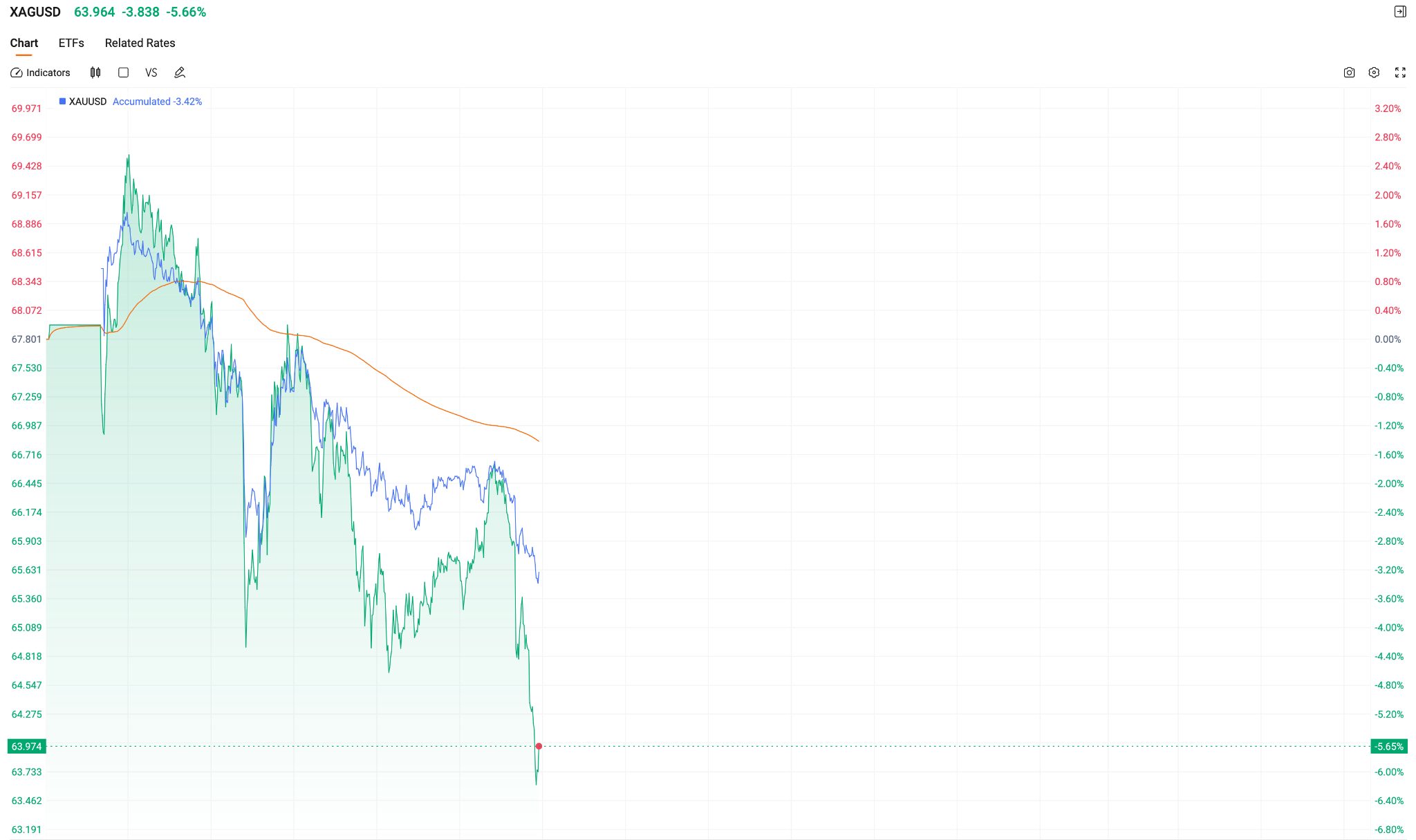
Structurally, this sell-off stems primarily from the pressure of a strengthening U.S. dollar. As the U.S. Dollar Index continues to climb amid persistent inflation and delayed expectations for rate cuts, capital is flowing back into dollar-denominated assets, creating systemic pressure on precious metals priced in dollars.
Furthermore, silver's asset profile differs from that of gold; the silver market is relatively smaller and lacks the stable support of long-term allocation capital such as central bank reserves. This means that once capital is withdrawn en masse, price volatility is easily magnified, potentially leading to 'stampede-like' market conditions.
At the same time, excessive gains in the previous period also set the stage for this correction. Driven by the resonance between inflation trades and safe-haven sentiment, silver had seen significant staged gains, allowing some short-term speculative capital to accumulate high unrealized profits. Against the backdrop of shifting marginal macro expectations, such capital is more inclined to exit quickly to lock in profits, thereby steepening the downward price trajectory.
From a trading perspective, silver possesses dual attributes of both a precious metal and an industrial metal; its risk profile is often repriced when market sentiment tightens. When the market enters a 'liquidity-first' phase, investors tend to favor holding cash or highly liquid assets, making silver one of the primary targets for position reduction.
In an environment where macro uncertainty remains high, silver is likely to maintain high volatility in the short term, with price elasticity significantly higher than that of gold. Investors need to pay closer attention to capital flows and changes in market sentiment.
Recommended Articles


