


WTI (USOIL) Is down 8.15% on Aug 2: What Is Driving the Move?
WTI (USOIL) is down 8.15% at Aug 2 18:15(ET), now at $78.932, with a 7-day down of 12.34%.
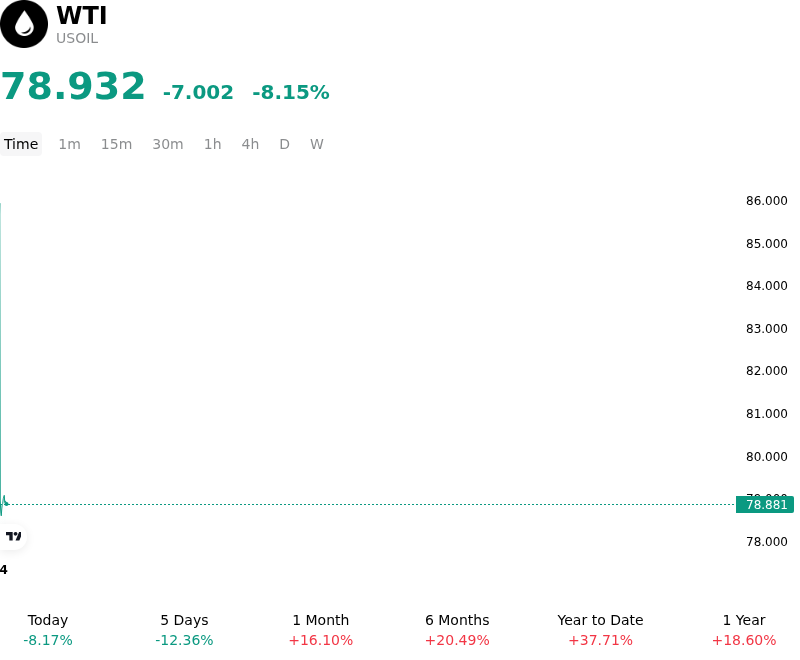
What is driving WTI (USOIL)’s stock price down today?
The sharp downward pressure on West Texas Intermediate (WTI) crude is primarily driven by a significant shift in OPEC+ production policy and a deteriorating demand outlook from major global consumers. The decision by the alliance to accelerate the phase-out of voluntary production cuts earlier than market participants anticipated has fundamentally altered the supply-demand balance for the second half of the year. This move suggests that the group is prioritizing market share over price stability, leading to expectations of a significant surplus in global inventories.
Compounding the supply-side pressure is a series of disappointing economic indicators from China and the United States, which have intensified concerns regarding demand destruction. Manufacturing Purchasing Managers' Index (PMI) data from both regions recently dropped below the expansionary threshold, signaling a broader slowdown in industrial activity and transportation fuel consumption. Institutional investors are repricing the likelihood of a global recession, leading to a substantial liquidation of long positions in the futures market.
The sudden removal of geopolitical risk premiums has also contributed to the bearish sentiment. Diplomatic breakthroughs in key oil-producing regions have reduced the probability of supply disruptions, prompting algorithmic trading models to exit hedges that were previously supporting prices. Furthermore, the strengthening of the U.S. dollar, fueled by a flight to safety and shifting Federal Reserve interest rate expectations, has increased the cost of dollar-denominated commodities for international buyers, further dampening demand.
Inventory data also indicates a larger-than-expected build in commercial crude stocks, particularly at the Cushing, Oklahoma delivery hub. This buildup suggests that domestic refinery utilization is not keeping pace with production levels, putting additional physical pressure on USOIL. As the market moves from a deficit to a perceived surplus, the forward curve has shifted toward contango, reflecting the bearish immediate-term outlook and incentivizing further selling by momentum-driven funds.
Investors are now focusing on whether these structural shifts in supply will be met by any proactive intervention from major producers or if the downward trend will persist as global growth continues to soften. The current price action reflects a systemic repricing of energy assets in the face of both a more aggressive supply posture and a significant erosion of the global demand buffer.
Technical Analysis of WTI (USOIL)
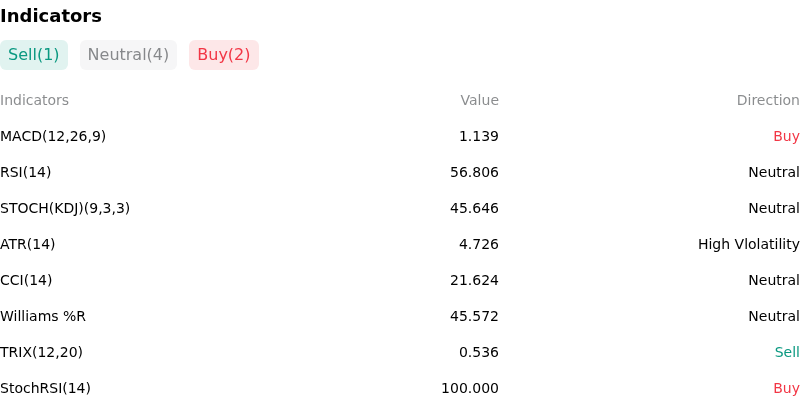
Technically, WTI (USOIL) shows a MACD (12,26,9) value of 1.139, indicating a buy signal. The RSI at 56.806 suggests neutral condition and the Williams %R at 45.572 suggests neutral condition. Please monitor closely.
More details about WTI (USOIL)
Recent Events and Risks:
- EIA Inventory Surpluses: Recent data from the Energy Information Administration reported an unexpected build in US commercial crude inventories alongside a significant rise in gasoline stocks, suggesting that domestic refined product demand is failing to meet seasonal expectations.
- China Economic Weakness: Disappointing manufacturing and industrial output data from China over the last 48 hours have intensified fears of a structural slowdown in the world’s largest oil importer, putting immediate pressure on global demand forecasts and refinery margins.
- Geopolitical Risk Premium Erosion: Reports of intensified diplomatic efforts and potential progress in Middle East ceasefire negotiations have led to a sharp reduction in the geopolitical risk premium, triggering intraday long liquidation as the threat of immediate supply disruptions fades.
- Monetary Policy and Dollar Strength: Renewed hawkish signaling from central bank officials has bolstered the US Dollar to a multi-week high, creating significant headwind for dollar-denominated USOIL futures and increasing the risk of a broader macro risk-off move in energy markets.
Recommended Articles


