


Coinbase Builds a “Universal Exchange” — Wall Street Shrugs. Can COIN Find Its Footing?

 Trending Articles
- Today’s Market Recap: US and Iran Signal Willingness to End Conflict, Three Major US Stock Indexes Surge, Dollar Ends Five-Day Winning Streak
- US-Iran Rift Persists, Will Gold Rise or Fall Next?
- Trump Withdrawal Intent Reshapes Liquidity, Bitcoin Breaks $68,000 Mark
- Gold rallies on hopes for US-Iran talks and falling US Treasury yields
- Gold Price Forecast: XAU/USD opens lower around $4,450 on fears of widening Iran conflicts
- USD/JPY Hits 160.00 Mark, Will Japanese Government Intervene? Will the Currency’s Rally Be Contained?

Coinbase is widening its product slate — stock trading, prediction markets and perpetual contracts — to position itself as a “universal exchange.”
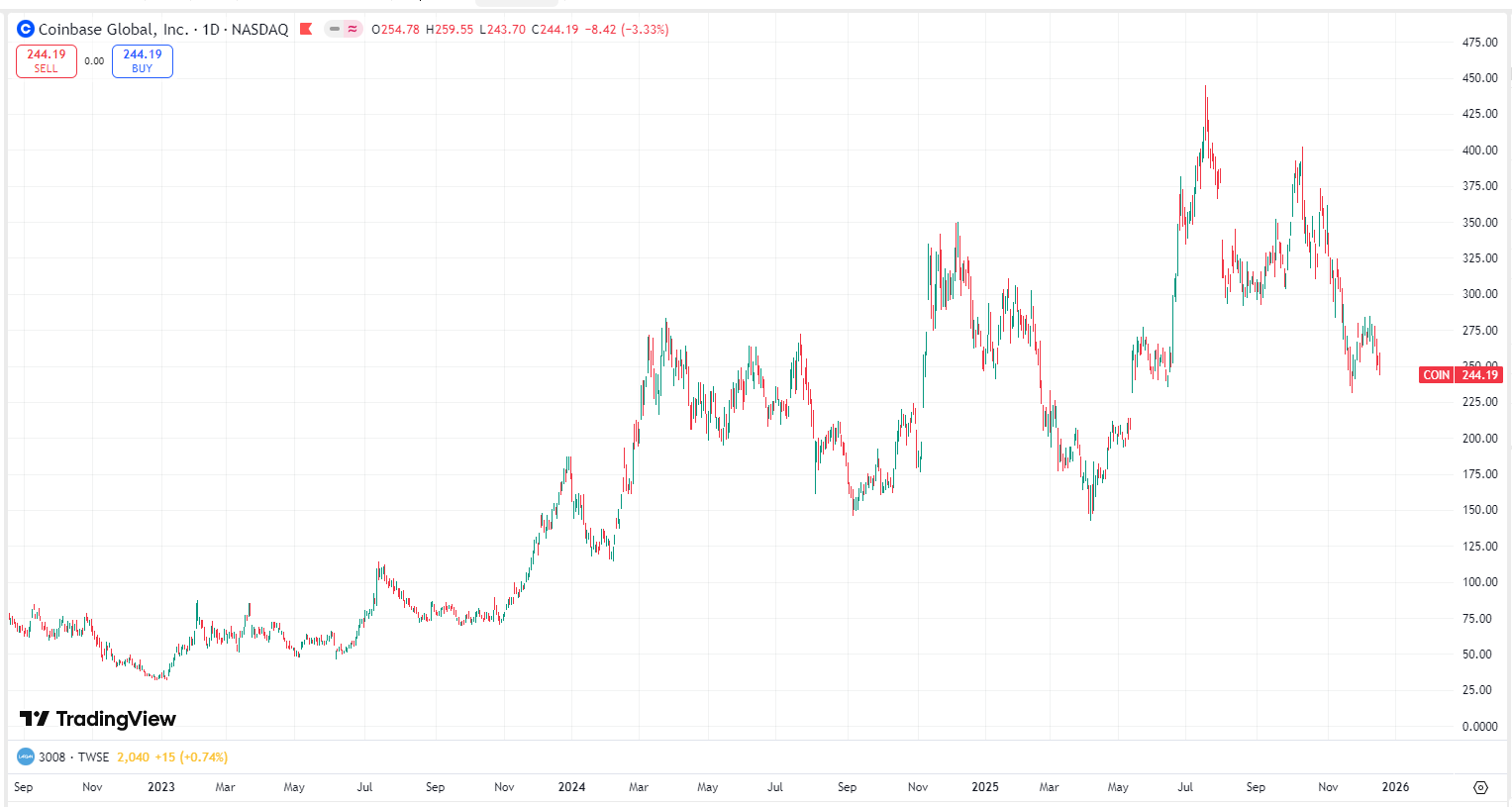
The market didn’t clap: COIN fell over 3% on Wednesday (Dec. 17), closing at $244, as Bitcoin wobbled near its 2025 low area around $85,000.
Deutsche Bank stays bullish, reiterating a Buy with a $340 target, but execution risk (and competition) is still doing push-ups in the background.
Coinbase is trying to outgrow the “just a spot crypto exchange” label — and, at least this week, the market responded with the financial equivalent of “cool story, bro.”
On Wednesday, December 17 (local time), Coinbase (NASDAQ: COIN) rolled out a batch of new products — including stock trading, prediction markets and perpetual contracts — a package meant to cement its push toward what it’s calling a “universal exchange.” The strategy is straightforward: widen the moat, capture more of the trading wallet, and diversify revenue beyond the usual crypto spot cycle.
But the stock didn’t play along. COIN slid more than 3% on the day, finishing at $244, slipping back toward its prior low even as the company pitched the expansion as a growth unlock.
A big part of the drag was macro-by-crypto standards: Bitcoin (BTC) rallied and then pulled back over the past 24 hours, hovering around its 2025 low area of $85,000. That matters for Coinbase in two ways. First, a weaker BTC tape can cool risk appetite and pressure exchange volumes, which hits revenue. Second, it dents the value of Coinbase’s own treasury exposure: CoinGecko data shows Coinbase holds 14,500 BTC, which ranks it 12th globally.
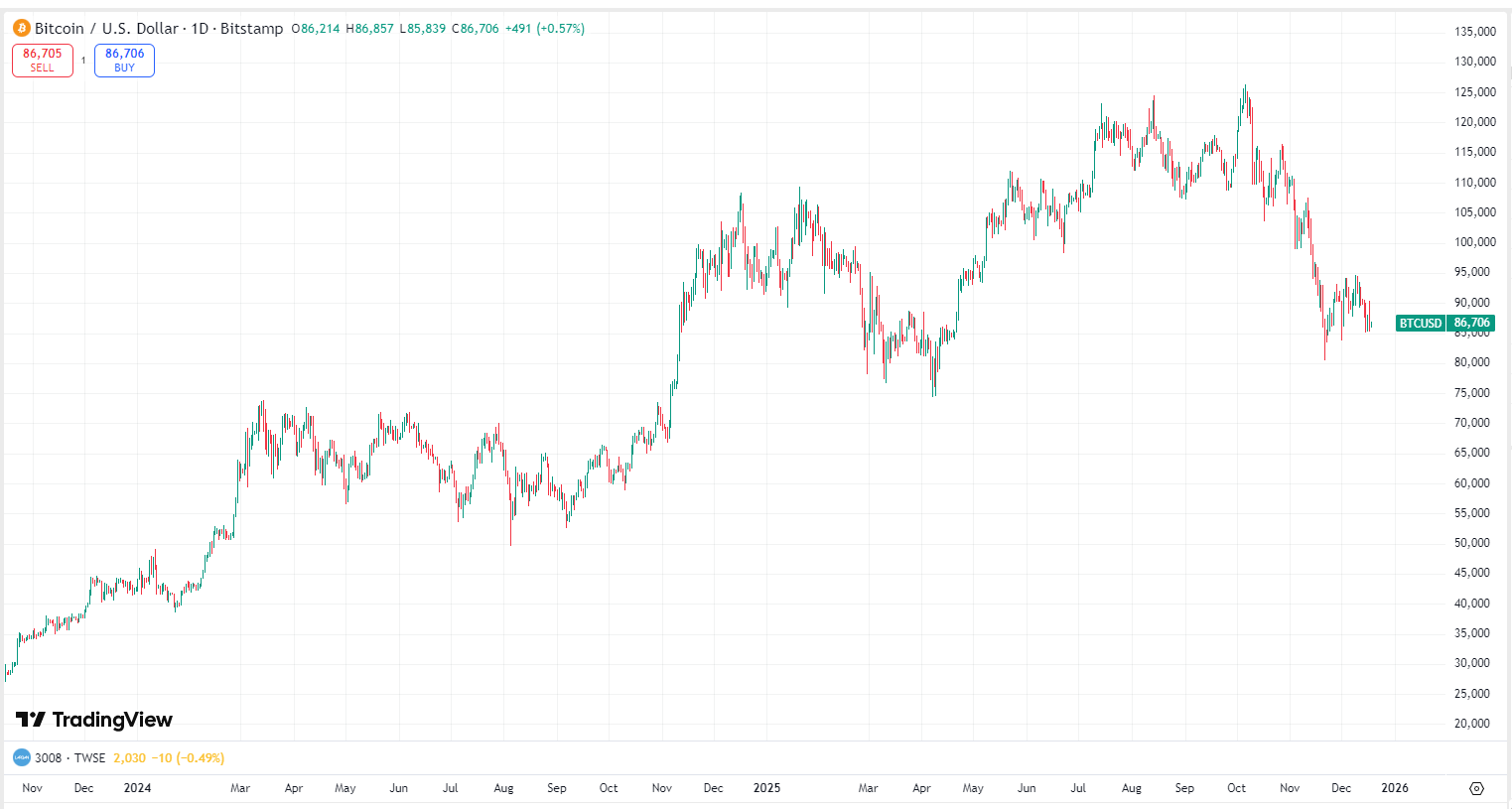
So the market’s message wasn’t “the roadmap is bad,” so much as “the timing is awkward — and BTC is still the boss.”
Still, not everyone is rolling their eyes. Even if the “universal exchange” pitch hasn’t shown up in the share price yet, Deutsche Bank is backing the approach, keeping a Buy rating and a $340 target. Their logic: the product expansion turns Coinbase from a single-lane spot venue into a broader platform, improving revenue diversification and strengthening competitiveness across multiple business lines — a setup that can support longer-term fundamentals.
Here’s the catch: the strategy reads great in a deck, but the battlefield is crowded. Coinbase is still up against heavyweights in core crypto trading — Binance (BNB) is the obvious shadow competitor — and the new lanes aren’t empty either. In areas like stock tokenization and prediction markets, Coinbase runs into familiar names with sharp elbows: Robinhood (HOOD), Kraken and Gemini.
That uncertainty is likely why the stock reaction has been muted. Expansion stories usually need proof — user adoption, meaningful volumes, and clean execution — not just product announcements. And even if Coinbase nails the rollout, it’s hard to ignore the other variable the market keeps pricing first: a sustained recovery in Bitcoin and broader crypto sentiment.
Bottom line: Coinbase is trying to become a one-stop trading hub, but COIN probably doesn’t sprint back to its $440 peak on product news alone. To get there, it likely needs both — solid execution on the “universal exchange” plan and a friendlier crypto tape.
Read more
The above content was completed with the assistance of AI and has been reviewed by an editor.


