


The 2026 Fed Consensus Debate: Not Hassett, It’s About Whether Powell Stays or Goes

 Trending Articles
- US-Iran Rift Persists, Will Gold Rise or Fall Next?
- Gold rallies on hopes for US-Iran talks and falling US Treasury yields
- Gold Price Forecast: XAU/USD opens lower around $4,450 on fears of widening Iran conflicts
- USD/JPY Hits 160.00 Mark, Will Japanese Government Intervene? Will the Currency’s Rally Be Contained?
- Seesaw Effect Continues. US Pre-Market Three Major Index Futures Weaken, Oil Prices Rise, Bitcoin Drops Below 68,000 Mark
- Brent: Forecast lifted with $150 risk – Societe Generale
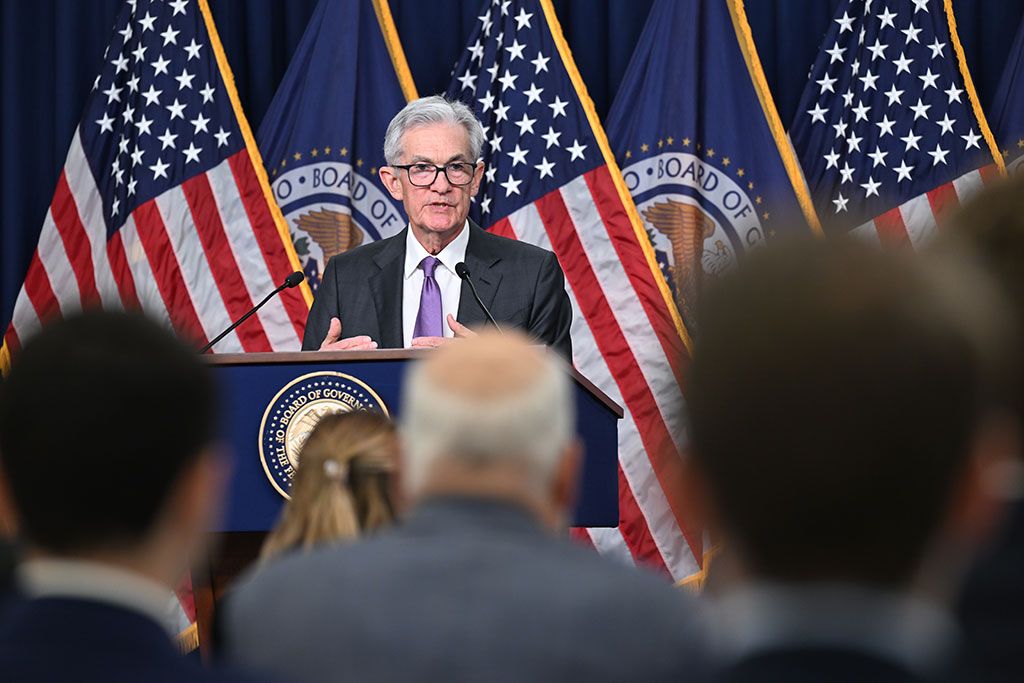
TradingKey - Kevin Hassett, White House National Economic Council Director, is poised to succeed Jerome Powell as the next Federal Reserve Chair. This development signals a potentially more dovish monetary policy. Beyond Wall Street's focus on this outlook, the Fed's independence is also under scrutiny, with a key variable being whether Powell remains a Fed Governor.
Polymarket indicates that as of December 4, investors' predicted probability of Hassett being elected Fed Chair in 2026 fell to 73% from 85% the previous day. However, this figure still significantly surpasses the probabilities for former Fed Governor Kevin Warsh and current Fed Governor Christopher Waller, among others.
It is well-known that U.S. President Trump selects his preferred next Fed Chair based on their willingness to pursue further interest rate cuts. This suggests an inevitable deeper penetration of presidential power into the independent Federal Reserve.
The question remains: to what extent will the Fed's power center, under a new chair, be constrained by White House political factors?
Earlier this year, Trump's threats to dismiss Powell and other interventions in personnel changes and rate-cutting processes damaged the Fed's reputation for independence. This sparked a trend to "Sell America," encompassing a sell-off in the dollar, U.S. equities, and Treasuries.
However, this time, even with Trump personally selecting Hassett for the chairmanship, some analysts' concerns about the Fed's independence are not as acute.
A key factor providing some reassurance to analysts is the possibility that Powell could remain a Fed Governor after his term as Chair concludes in May 2026, continuing in that role until January 2028.
Aditya Bhave, an economist at Bank of America, stated that whether new Federal Reserve governors weaken the institution's independence hinges on changes in the overall committee composition, rather than solely on the Chair himself.
If other governor seats remain unchanged (i.e., Powell does not resign as a governor and Cook is not dismissed due to mortgage fraud), then only Milan would be replaced, and the new Chair would be brought in. Bhave noted that if the new Chair's policy leans similarly to Milan's (favoring rate cuts), the Board's overall stance would not significantly shift.
Bank of America's analysis suggests that the question of whether the Federal Reserve will undergo a significant shift in its overall stance is far more critical than who serves as the next Chair. Furthermore, Bhave noted that Powell, a steadfast defender of the Fed's independence, has not yet made a clear statement regarding whether he will remain a governor.
Although there are no explicit indications, some analysts believe Powell, with his many years of service at the Federal Reserve, might remain on the Board of Governors to balance White House pressure with the Fed's core mission.
LH Meyer, a research firm led by former Fed Governor Larry Meyer, stated that Powell, even after stepping down as Chair, would remain on the committee to act as a buffer against Trump's attempts to exert control over the central bank. Following Trump's attempt to dismiss Cook, Powell's conviction to remain in his post might now be even stronger.
Deutsche Bank noted that among the past 15 Federal Reserve Chairs, only two remained governors after their term as Chair concluded. Charles Hamlin, the Fed's first Chair, continued as a governor for twenty years after his chairmanship ended in 1916. Similarly, Marriner Eccles, who served as Fed Chair during World War II, also chose to remain a governor after his term expired in 1948.
Deutsche Bank pointed out that Hamlin's retention as a governor stemmed from his loyalty to the institution and his commitment to its mission. Eccles' decision to remain, conversely, was a combined result of his strong market respect and the incumbent president's lack of authority to compel his dismissal.
The bank's analyst, Jim Reid, stated that if the political environment is perceived as threatening the Fed's independence in setting monetary policy, Powell might emulate Eccles' approach, defending the Fed's autonomy by retaining his FOMC voting rights.
TradingKey previously noted that even if Trump succeeds in selecting his "own people" to lead the Federal Reserve, the Trump administration's path to creating a truly "dovish Fed" will not be smooth. Among the five regional Fed officials with voting power at this year's FOMC meetings, Kansas City Fed President Jeffrey Schmid cast a dissenting vote against a rate cut at the October meeting. Furthermore, two other officials have indicated they will resist a third rate cut this year at the upcoming December policy meeting.
By 2026, the Presidents of the Cleveland, Dallas, Philadelphia, and Minneapolis Federal Reserve Banks will replace the current Presidents from Kansas City, Chicago, Boston, and St. Louis in terms of FOMC voting rights.
All four of this year's rotating chairs have recently communicated hawkish stances. Given that inflation has remained above the 2% target for a fifth consecutive year and the job market has not experienced a more concerning collapse, three Fed officials who will hold rotating voting power next year have also revealed an inclination against further rate cuts.
Minneapolis Fed President Neel Kashkari previously stated that the economy was not slowing as anticipated, and the resilience of the U.S. economy led him not to support an October rate cut.
Cleveland Fed President Beth Hammack stated in November that lowering interest rates to support the job market could potentially prolong the period of high inflation, further warning of the risk to financial stability.
Dallas Fed President Lorie Logan assessed that inflation is currently too high while the job market remains largely balanced. She expressed concern that the inflation rate might struggle to return to the 2% target, potentially reaching 2.7% over the next year.
Logan questioned the necessity of a September rate cut, deemed an October cut unreasonable, and advocated for maintaining current interest rates going forward.
EY-Parthenon posits that the 2026 FOMC landscape will feature regional Federal Reserve banks leaning hawkish, while the Board of Governors will lean dovish. However, a simplistic division into two distinct factions is not advisable.
If the Supreme Court ultimately rules in favor of the Trump administration in the Cook case, the most ideal scenario for next year's Board of Governors would be the most dovish voting bloc in decades, including Hassett, Warsh (replacing Cook), Waller, and Bowman.
Deutsche Bank's report stated that if Powell decides to remain a governor due to concerns about the Fed's independence, he would become a formidable obstacle to Hassett's push for aggressive easing measures.
A significant challenge for the next Federal Reserve Chair will be uniting committee members to achieve a consensus on policy decisions. Should the Fed's internal views become more fragmented, it could prompt capital markets to question the institution's stability and reputation, potentially triggering market panic.
Read more
* The content presented above, whether from a third party or not, is considered as general advice only. This article should not be construed as containing investment advice, investment recommendations, an offer of or solicitation for any transactions in financial instruments.


