


Trump’s Greenland Tariff Suspension: Crypto Prices Rebound as Investors Weigh Rally Longevity

 Trending Articles
- Gold jumps over 2% toward $5,400 after US, Israel attack Iran
- Strait of Hormuz Blockade: JPM Warns Crude Production May Halt After 25 Days. How Will US-Iran Conflict Trajectory Affect Global Oil Prices?
- Gold rises to near $5,200 amid US tariff uncertainty, US PPI data in focus
- Gold gains above $5,150 as US tariff uncertainty drive demand, eyes on US-Iran talks
- Oil prices rise as US and Iran extend talks into next week
- WTI Price Forecast: Retreats from seven-month top, still well bid near $71.00 mark
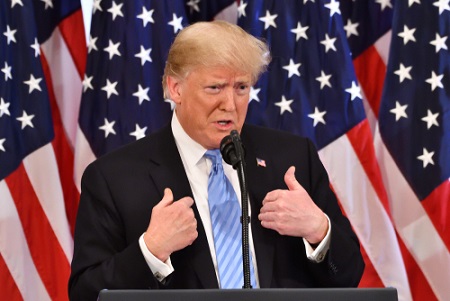
TradingKey - Trump declares Greenland tariffs void; crypto market quickly reverses losses to gains, with Bitcoin expected to continue its rebound higher.
During the early hours of Thursday (January 22) in Asia, bullish sentiment in the crypto market returned, with total market capitalization rising from a low of $2.96 trillion to $3.05 trillion, seeing an inflow of approximately $100 billion. Among these, Bitcoin ( BTC) rebounded by over 1%, temporarily reclaiming the $90,000 level, while other cryptocurrencies also generally saw varying degrees of gains.
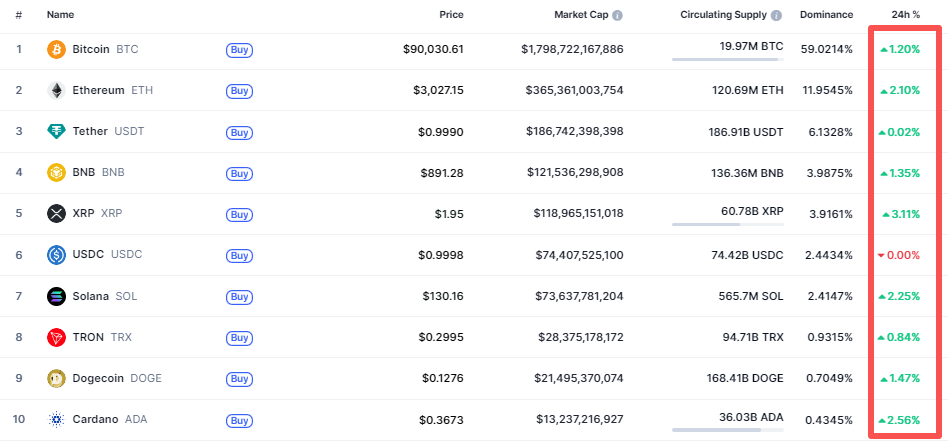 Price fluctuations of the top ten cryptocurrencies by market cap, Source: CoinMarketCap.
This rebound in the crypto market was primarily driven by the Greenland tariff situation. Recently, U.S. President Donald Trump announced the revocation of Greenland tariffs, posting on social media: "Based on a very productive meeting with NATO Secretary General Mark Rutte, we have established a preliminary framework for a future agreement regarding Greenland and the entire Arctic region. If this plan is finalized, it will be a major benefit for the U.S. and all NATO member states. Based on this understanding, I will not implement the tariffs originally scheduled to take effect on February 1."
Last Saturday (January 17), Trump announced an additional 10% tariff on eight European countries starting February 1 to punish them for opposing his acquisition of Greenland. Since then, the cryptocurrency market continued to decline, with Bitcoin falling below $95,000. On January 20, the European Parliament announced it would freeze the ratification process of trade agreements with the U.S. in response to the 10% tariffs on several European nations, triggering further downside in the crypto market and pushing Bitcoin below $90,000.
According to The New York Times, Denmark is willing to cede sovereignty of a small parcel of land in Greenland to the U.S. for the construction of a military base. It is evident that Trump has secured certain concessions regarding the Greenland issue; the trade war between the U.S. and Europe has been effectively resolved, and market panic has eased, Bitcoin prices held key support levels and flashed bullish signals once again. However, how long can the rally in Bitcoin and the broader crypto market be sustained?
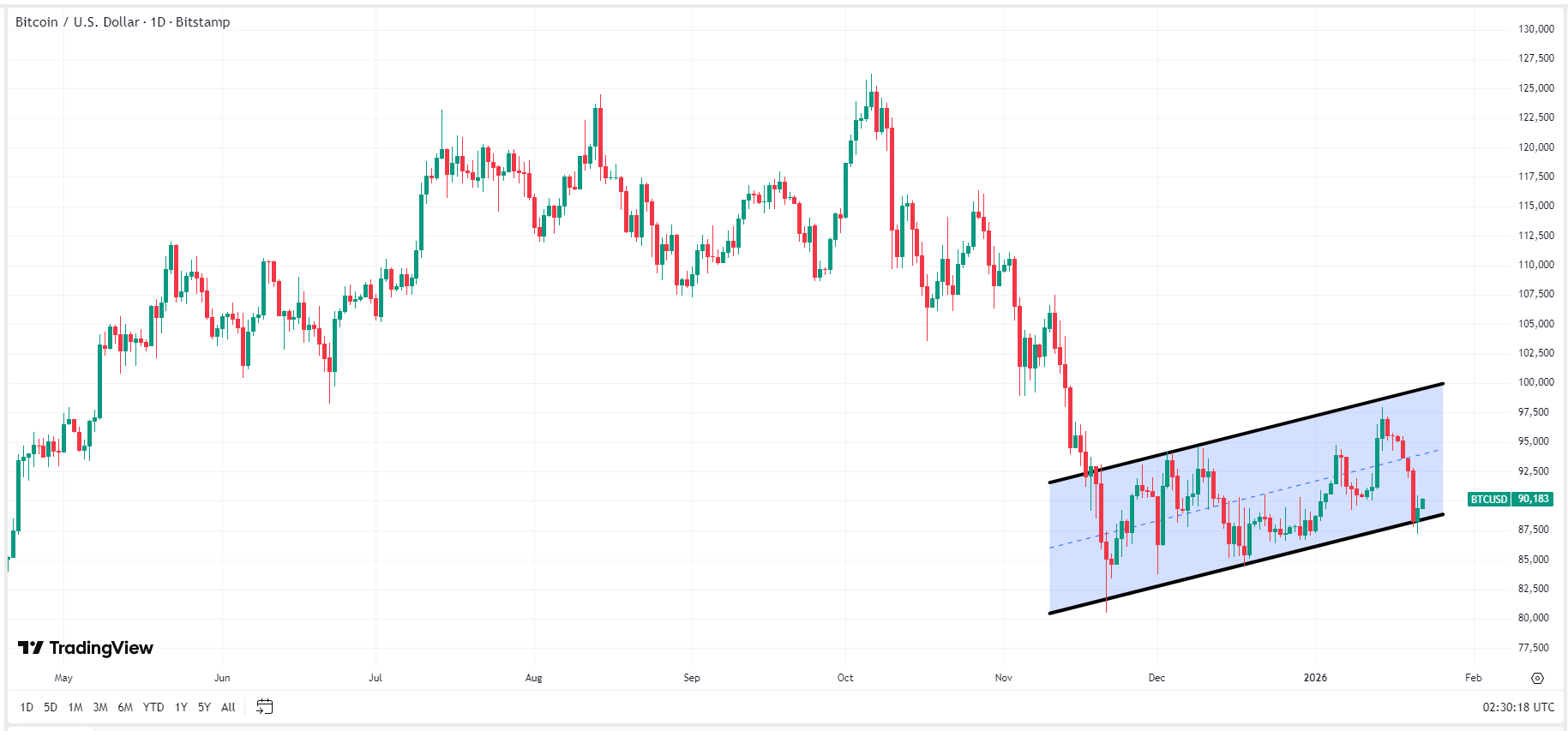 Bitcoin price chart, Source: TradingView.
In the first half of 2026, the market will focus on two major issues: interest rate cuts and the cryptocurrency market structure bill, with the second half potentially pivoting toward the U.S. midterm elections. While these three issues appear loosely related, from the perspective of current U.S. President Donald Trump, they are closely intertwined; the first two serve the third, and handling them appropriately will help boost satisfaction among crypto voters toward the Trump administration.
Based on Trump's current stance, he is inclined toward rate cuts and promoting positive crypto regulation, which is clearly beneficial for cryptocurrencies and is a key factor in determining whether the four-year cycle theory remains valid. If Trump continues to push for rate cuts and crypto development policies, Bitcoin is expected to break above $100,000 this year and could even return to its all-time highs.
Read more
* The content presented above, whether from a third party or not, is considered as general advice only. This article should not be construed as containing investment advice, investment recommendations, an offer of or solicitation for any transactions in financial instruments.


