




SpaceX Stock Soars After Volatile June Selloff: Is Now the Best Time to Buy in Australia? (2026 Guide)

SpaceX has quickly become one of the most talked-about stocks of 2026. Following its highly anticipated IPO, the company's share price surged to record highs as investors rushed to gain exposure to its rapidly growing Starlink business, dominant launch services division, and long-term ambitions in satellite communications, artificial intelligence infrastructure, and space exploration.
However, after reaching a post-IPO peak above US$225, SpaceX stock experienced a sharp correction in June 2026, falling more than 30% within days before rebounding strongly on June 23. The sudden volatility has left many Australian investors asking the same question: is this a warning sign, or a buying opportunity?
In this guide, we'll examine what caused SpaceX's dramatic June selloff, whether the stock is attractive after the correction, and how Australian investors can buy or trade SpaceX shares through regulated brokers and CFD platforms.
What Happened to SpaceX Stock in June 2026?
After one of the most anticipated IPOs in recent market history, SpaceX stock experienced a dramatic surge followed by a sharp correction in June 2026. While the company remains one of the world's most valuable technology and aerospace firms, the first few weeks of public trading demonstrated that even market-leading growth stocks are not immune to volatility.
For investors in Australia, June provided a textbook example of how sentiment, valuation concerns, and profit-taking can create significant short-term price swings—while also presenting potential trading opportunities.
SpaceX Stock Price Performance After IPO
IPO Pricing and First Trading Days
SpaceX officially debuted on public markets in early June 2026 at an IPO price of approximately US$120 per share, valuing the company at more than US$400 billion. Investor demand was exceptionally strong, driven by SpaceX's dominant position in commercial space launches, the rapid expansion of Starlink, and growing interest in space-related infrastructure investments.
During its first trading session, SpaceX shares surged more than 30% above the IPO price as institutional and retail investors rushed to gain exposure to the company. Trading volumes were among the highest recorded for a technology IPO in recent years.
The strong debut reflected investor confidence that SpaceX could become one of the defining growth stories of the next decade, alongside AI leaders and major technology giants.
Record Highs Reached Shortly After Listing
Momentum continued throughout the first two weeks of trading. Driven by bullish analyst coverage and strong retail participation, SpaceX stock climbed rapidly to an all-time high above US$225 per share, representing a gain of more than 85% from its IPO price.
At its peak, SpaceX briefly surpassed several established blue-chip companies in market capitalisation rankings and became one of the most actively traded stocks on U.S. exchanges.
The rally was fuelled by:
Strong Starlink subscriber growth forecasts
Expectations for increased government and defence contracts
Optimism surrounding AI-related infrastructure demand
Continued leadership in global satellite launches
Inclusion in growth-focused investment portfolios and ETFs
However, such a rapid rise also left the stock vulnerable to a correction.
Timeline of the June Correction
The turning point came during the third week of June, when investors began taking profits after the stock's explosive post-IPO run.
Key events during the selloff included:
From its peak to its lowest intraday level, SpaceX shares fell by more than 30%, wiping out hundreds of billions of dollars in market value in less than a week.
Despite the decline, the stock remained significantly above its IPO price, highlighting continued investor confidence in the company's long-term growth story.
June 23 Market Recap
SpaceX Stock Price Chart
Opening, Intraday Low, and Closing Price
June 23 marked one of the most closely watched trading sessions since the IPO.
Following continued selling pressure in pre-market trading, SpaceX shares opened near US$160 and quickly fell to an intraday low of approximately US$147, as investors reacted to concerns about valuation and rising short interest.
However, buyers returned aggressively during the afternoon session. The stock recovered a large portion of its losses and ultimately closed in the US$156–164 range, depending on exchange reporting and after-hours activity.
The sharp reversal suggested that many investors viewed the correction as a buying opportunity rather than a sign of deteriorating fundamentals.
Trading Volume Surge
Trading activity on June 23 reached some of the highest levels since SpaceX began trading publicly.
Several factors contributed to the volume spike:
Institutional portfolio rebalancing
Increased short-selling activity
Retail investors buying the dip
Options market hedging activity
Algorithmic trading triggered by heightened volatility
The surge in volume reflected the intense debate surrounding SpaceX's valuation and future growth prospects.
Historically, unusually high trading volume during a major correction can indicate that weak hands are exiting positions while long-term investors begin accumulating shares.
Performance Versus Nasdaq and Major AI Stocks
While the broader market also experienced volatility, SpaceX's price movements were significantly larger than those of most major technology companies.
The comparison highlights that SpaceX's decline was driven primarily by post-IPO dynamics rather than a broader market collapse.
For long-term investors, the key question is whether June's correction represents a temporary reset following an overheated rally—or the beginning of a more prolonged valuation adjustment. The answer will likely depend on upcoming earnings results, Starlink subscriber growth, future launch activity, and management's ability to justify the company's premium valuation.
“Trade SpaceX Stock with an ASIC-regulated broker. Fast AUD funding via PayID. ”
Why Did SpaceX Shares Fall More Than 30% From Their Peak?
After soaring to an all-time high above US$225 shortly after its IPO, SpaceX stock experienced a sharp correction in June 2026, falling more than 30% and briefly touching the US$147 level on June 23 before staging a rebound. While the decline surprised many retail investors, the selloff was driven by a combination of profit-taking, valuation concerns, rising short interest, and broader weakness in high-growth technology stocks.
Importantly, the correction appears to be more related to market sentiment and positioning than to any major deterioration in SpaceX's underlying business fundamentals.
1. Massive IPO Profit-Taking by Early Investors
One of the biggest drivers behind the June selloff was aggressive profit-taking following SpaceX's explosive IPO rally.
Shares nearly doubled within weeks of listing, generating substantial gains for institutional investors, pre-IPO shareholders, and early retail traders. Once the stock crossed the US$220 level, many investors chose to lock in profits, triggering a wave of selling pressure.
This type of correction is common among high-profile IPOs. Historically, companies such as Nvidia, Tesla, Meta, and Snowflake all experienced significant pullbacks after their initial post-listing rallies before resuming longer-term uptrends.
For many professional investors, the June decline represented a healthy reset rather than a sign of structural weakness.
2. Valuation Concerns Reached Extreme Levels
At its peak, SpaceX was trading at valuation multiples that many analysts considered difficult to justify in the short term.
The stock's rapid rise pushed its market capitalisation well above US$700 billion, making it one of the most valuable companies in the technology and aerospace sectors despite being a newly listed company.
3. Rising Short Interest Added Downward Pressure
Another factor contributing to the selloff was a sharp increase in short-selling activity.
Following the stock's rapid ascent, hedge funds and quantitative traders began betting that SpaceX had become overextended. As bearish positions increased, market sentiment weakened and volatility intensified.
The presence of large short positions often amplifies price movements because:
Negative news receives greater attention
Selling pressure increases during corrections
Algorithmic trading systems react to momentum signals
Retail investors become more cautious
Although short sellers helped push shares lower during the decline, they may also become a source of future buying pressure if the stock continues to recover and short positions are forced to cover.
4. Rotation Out of High-Growth Stocks
The SpaceX correction also occurred during a broader market rotation away from some of the year's strongest-performing growth stocks.
As a result, capital flowed from speculative growth names into more defensive sectors such as healthcare, utilities, and dividend-paying stocks.
Compared with the broader market, however, SpaceX's decline was significantly steeper because of its recent IPO status and exceptionally strong prior gains.
5. Concerns Over AI and Infrastructure Spending
Investors have been particularly excited about SpaceX's potential role in the next generation of AI infrastructure through satellite connectivity, data transmission, and global communications networks.
While most analysts still expect strong long-term revenue growth, some investors worried that profitability could take longer to materialise than initially anticipated.
6. Technical Selling Accelerated the Decline
Once SpaceX broke below several key technical support levels during the third week of June, automated trading systems and momentum-focused funds accelerated the move lower.
The stock quickly fell through major psychological price levels, triggering:
Stop-loss orders
Quantitative fund selling
Margin-related liquidations
Short-term trader exits
This created a self-reinforcing cycle that pushed shares down to approximately US$147 on June 23 before bargain hunters stepped in.
The strong rebound from those lows suggests that institutional investors still see value in the stock despite the recent volatility.
Is SpaceX Stock a Buy After the June Selloff?
The sharp correction in SpaceX stock during June 2026 has divided investors into two camps. Bears argue that the stock remains expensive even after falling more than 30% from its post-IPO peak, while bulls view the decline as a rare opportunity to buy one of the world's most disruptive companies at a discount.
For Australian investors, the key question is whether the June selloff represents a temporary valuation reset or the beginning of a longer-term downtrend.
Based on current fundamentals, SpaceX remains one of the most compelling growth stories in the market, but investors should be prepared for continued volatility.
Reasons to Consider Buying SpaceX Stock
1. SpaceX Remains the Global Leader in the Space Economy
SpaceX has built a dominant position in commercial space launches, accounting for a significant share of global orbital missions. Its reusable rocket technology has dramatically reduced launch costs and created a competitive advantage that few rivals can match.
As demand for satellites, communications infrastructure, defence technology, and space exploration continues to grow, SpaceX is well positioned to benefit from a multi-decade expansion of the global space economy.
Many analysts believe the company is becoming for aerospace what Nvidia became for AI chips.
2. Starlink Could Become an Even Bigger Business
While many investors focus on rockets and launches, Starlink may ultimately become SpaceX's most valuable asset.
The satellite internet network continues to expand globally, adding residential, enterprise, aviation, maritime, and government customers.
If Starlink continues to grow at current rates, recurring subscription revenue could become the primary engine driving SpaceX's long-term valuation.
3. The June Correction Reduced Some Valuation Risk
Before the selloff, SpaceX shares had surged nearly 90% from their IPO price, pushing valuation metrics to extremely aggressive levels.
The decline from above US$225 to around US$150–160 has helped cool investor enthusiasm and reset expectations.
While the stock is still not cheap by traditional valuation standards, it is arguably more attractive today than it was at the peak of the IPO frenzy.
For long-term investors, periods of fear and uncertainty often create better entry points than periods of excessive optimism.
4. Strong Long-Term Growth Catalysts Remain Intact
The factors that attracted investors to SpaceX before the correction have not disappeared.
Potential growth drivers include:
Continued Starlink subscriber expansion
Increased government and defence spending
Growth in satellite communications
Commercial lunar missions
Space tourism initiatives
Future Mars exploration projects
AI infrastructure and data connectivity opportunities
These opportunities could support revenue growth for many years, even if short-term market sentiment remains volatile.
Risks Investors Should Consider
1. The Valuation Is Still High
Despite the recent pullback, SpaceX remains one of the most highly valued companies in the market.
Investors are effectively paying today for growth that may not fully materialise for years.
2. Volatility Is Likely to Remain Elevated
As a newly listed company, SpaceX is still going through the price discovery phase.
Large daily price swings may continue as investors assess:
Quarterly earnings
Future growth projections
Competitive threats
Regulatory developments
Investors should expect volatility to remain significantly higher than that of mature companies such as Microsoft or Amazon.
3. Execution Risks Cannot Be Ignored
SpaceX's long-term valuation depends heavily on successful execution. Any major operational setback could weigh heavily on investor sentiment.
Analyst Outlook: Bullish but Cautious
Following the June correction, most analysts remain constructive on SpaceX's long-term prospects, although many have lowered short-term price targets to reflect the stock's volatility.
The general consensus is that:
The long-term growth story remains intact.
The selloff was primarily driven by valuation and profit-taking.
Earnings execution will become increasingly important.
Future gains are likely to be less explosive than the post-IPO rally.
In other words, the market is transitioning from a "hype-driven" phase to a "fundamentals-driven" phase.
For Australian investors who prefer short-term opportunities, trading SpaceX CFDs may provide a flexible way to benefit from both upward and downward price movements while managing capital more efficiently through leverage and risk controls.
“Trade SpaceX Stock with an ASIC-regulated broker. Fast AUD funding via PayID. ”
How to Profit From SpaceX's Volatile Share Price Using CFDs
For many Australian investors, the biggest challenge with SpaceX stock isn't identifying its long-term potential—it's dealing with the extreme volatility that comes with a newly listed growth company.
Since its IPO, SpaceX has experienced multiple double-digit price swings within days. While traditional investors can only benefit when the share price rises, CFD traders can potentially take advantage of both upward and downward movements.
This flexibility is one reason why SpaceX has quickly become one of the most actively traded CFD stocks in 2026.
1. Trade Rising Markets With Long Positions
If you believe the June correction has created a buying opportunity, you can open a Buy (Long) CFD position.
For example:
SpaceX trades at US$155
You expect the stock to recover to US$180
You open a long CFD position
If the stock rises, your profit is based on the price difference
This allows traders to speculate on a rebound without purchasing the underlying shares directly.
2. Profit From Falling Prices With Short Selling
One major advantage of CFDs is the ability to profit from market declines.
For example:
SpaceX rallies back to US$190
You believe the stock is overvalued
You open a Sell (Short) CFD position
If the share price falls, the position can generate a profit
This is particularly useful for highly volatile stocks like SpaceX, where sharp pullbacks can occur even during long-term bull markets.
3. Use Leverage to Increase Market Exposure
CFDs allow traders to control a larger position with a smaller amount of capital.
For example:
Deposit AU$1,000
Use leverage to gain exposure to a larger SpaceX position
Potential returns can be amplified if the trade moves in your favour
However, leverage also magnifies losses, making risk management essential.
4. Take Advantage of Short-Term Opportunities
SpaceX's rapid price movements create frequent trading opportunities around:
Earnings releases
Starlink subscriber updates
Space launch announcements
Government contract wins
Analyst upgrades and downgrades
Broader technology market trends
Instead of waiting years for long-term gains, CFD traders can potentially benefit from short-term market movements lasting days, hours, or even minutes.
5. Manage Risk With Stop-Loss Orders
Because SpaceX remains highly volatile, risk management is crucial.
Many professional traders use:
Stop-loss orders
Take-profit targets
Position sizing rules
Risk-to-reward ratios
These tools can help limit losses when the market moves unexpectedly.
Remember that CFD trading carries significant risk and is not suitable for all investors.
Why Many Australian Traders Choose Mitrade for SpaceX CFDs
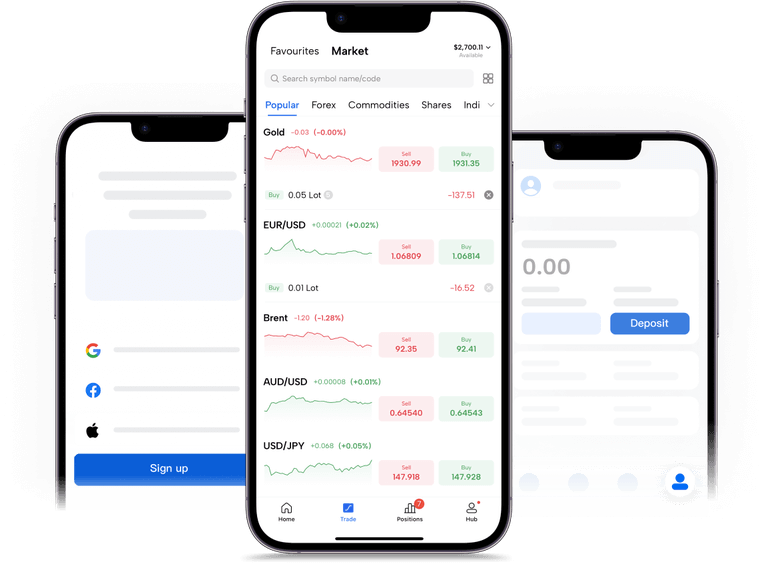
For traders looking to gain exposure to SpaceX's price movements, Mitrade Australia is one of the most popular CFD platforms available.
Key features include:
✅ Commission-free CFD trading
✅ User-friendly platform for beginners
✅ Competitive spreads
✅ Long and short trading opportunities
✅ Risk management tools including stop-loss orders
✅ Mobile and desktop trading platforms
✅ Free demo account with virtual funds
With SpaceX expected to remain one of the market's most volatile and closely watched stocks throughout 2026, having access to a platform that allows both bullish and bearish trading strategies can be a significant advantage.
Ready to Trade SpaceX Stock?
The June selloff demonstrated just how quickly sentiment can change in high-growth stocks. While long-term investors may see the correction as a buying opportunity, active traders can potentially benefit from both rallies and pullbacks using CFDs.
Whether you believe SpaceX is heading back toward its post-IPO highs or expect further volatility ahead, CFDs provide a flexible way to trade the stock without owning the underlying shares.
Start Trading SpaceX CFDs Today
Open a trading account with Mitrade Australia, practise with a free demo account, and explore opportunities to trade SpaceX's next major move—up or down.
* Capital is at risk. CFD trading involves leverage and can result in losses exceeding your initial deposit. Ensure you understand the risks before trading.


1. What is SpaceX stock trading at now?
As of the June 23, 2026 close, SpaceX shares were trading around the US$150–160 range after recovering from an intraday low near US$147. Investors should check live market prices, as stock values can change rapidly.
2. Why did SpaceX stock fall more than 30% in June 2026?
The selloff was largely driven by profit-taking following the stock's strong IPO rally, valuation concerns, rising short-selling activity, and broader weakness in high-growth technology stocks. Despite the decline, SpaceX remains well above its IPO price.
3. Is SpaceX stock a good investment in 2026?
That depends on your investment goals and risk tolerance. Investors who believe in the long-term growth of Starlink, satellite communications, commercial space launches, and the broader space economy may view the recent correction as an opportunity. However, SpaceX remains a high-growth stock with above-average volatility.
4. Can Australians buy SpaceX stock?
Yes. Australian investors can access SpaceX shares through brokers that offer U.S. stock trading. Alternatively, traders can gain exposure through SpaceX CFDs, which allow speculation on both rising and falling prices.
* The content presented above, whether from a third party or not, is considered as general advice only. This article should not be construed as containing investment advice, investment recommendations, an offer of or solicitation for any transactions in financial instruments.


