




Best Gold Investment Options in Australia (2026): ETFs, Bullion, or CFDs?

Finding the best way to invest in gold in Australia looks a lot different in 2026.
Gold has climbed over 13% in AUD terms since the start of the year, with prices pushing past AU$7,900 per ounce at their peak.
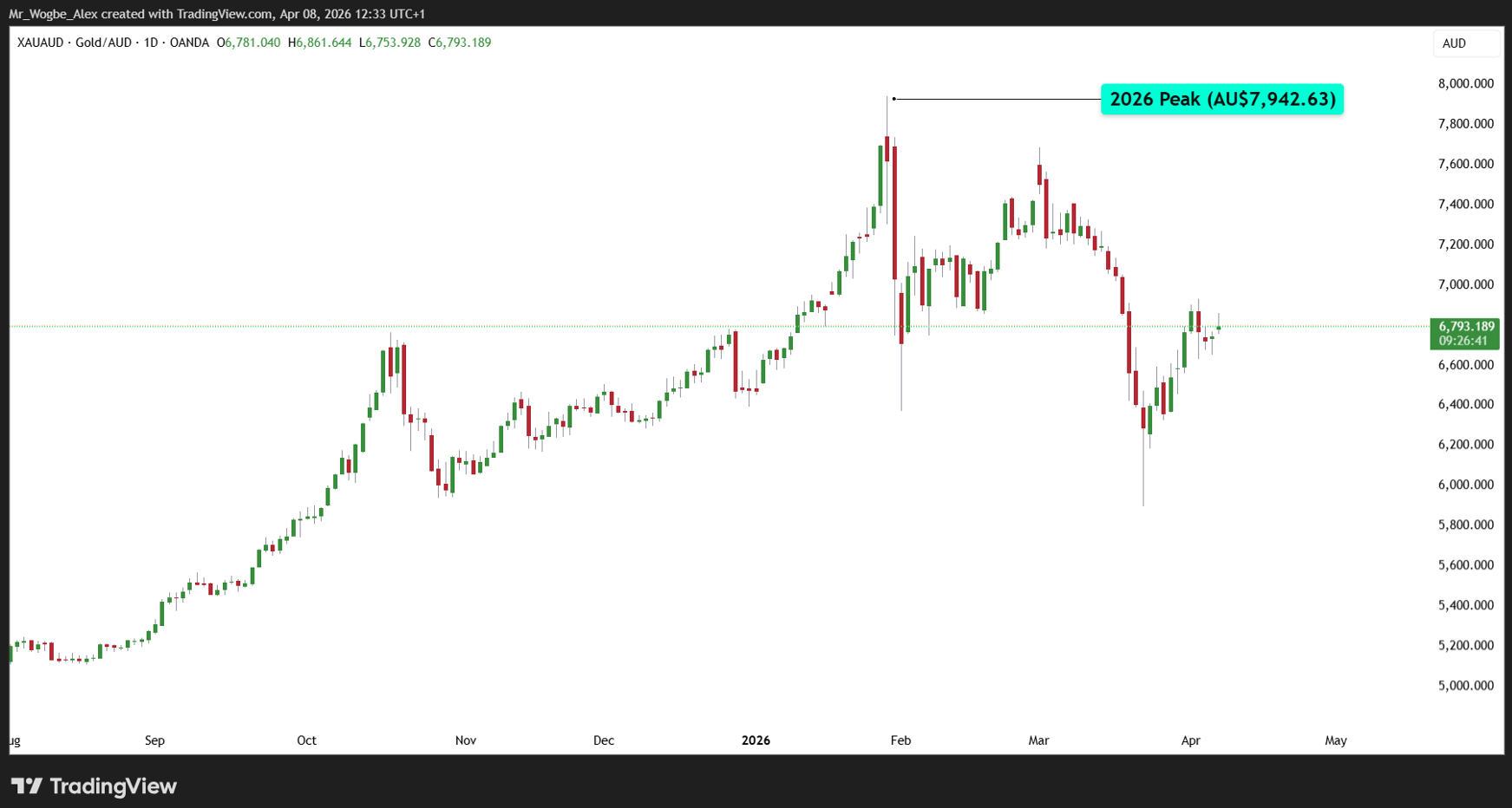
Image via TradingView: XAU/AUD Daily Chart
So it's no surprise more Australians are paying attention.
But here's the thing: physical bullion, gold ETFs, and CFDs are not all built the same.
Each one works differently, costs differently, and suits a different kind of investor. This guide walks you through all three so you can figure out the best way to invest in gold in Australia for your own goals.
Why Invest in Gold in Australia?
Gold has had a strong run. In USD terms, it climbed roughly 60% across 2025 and crossed US$4,000 per ounce for the first time in October.
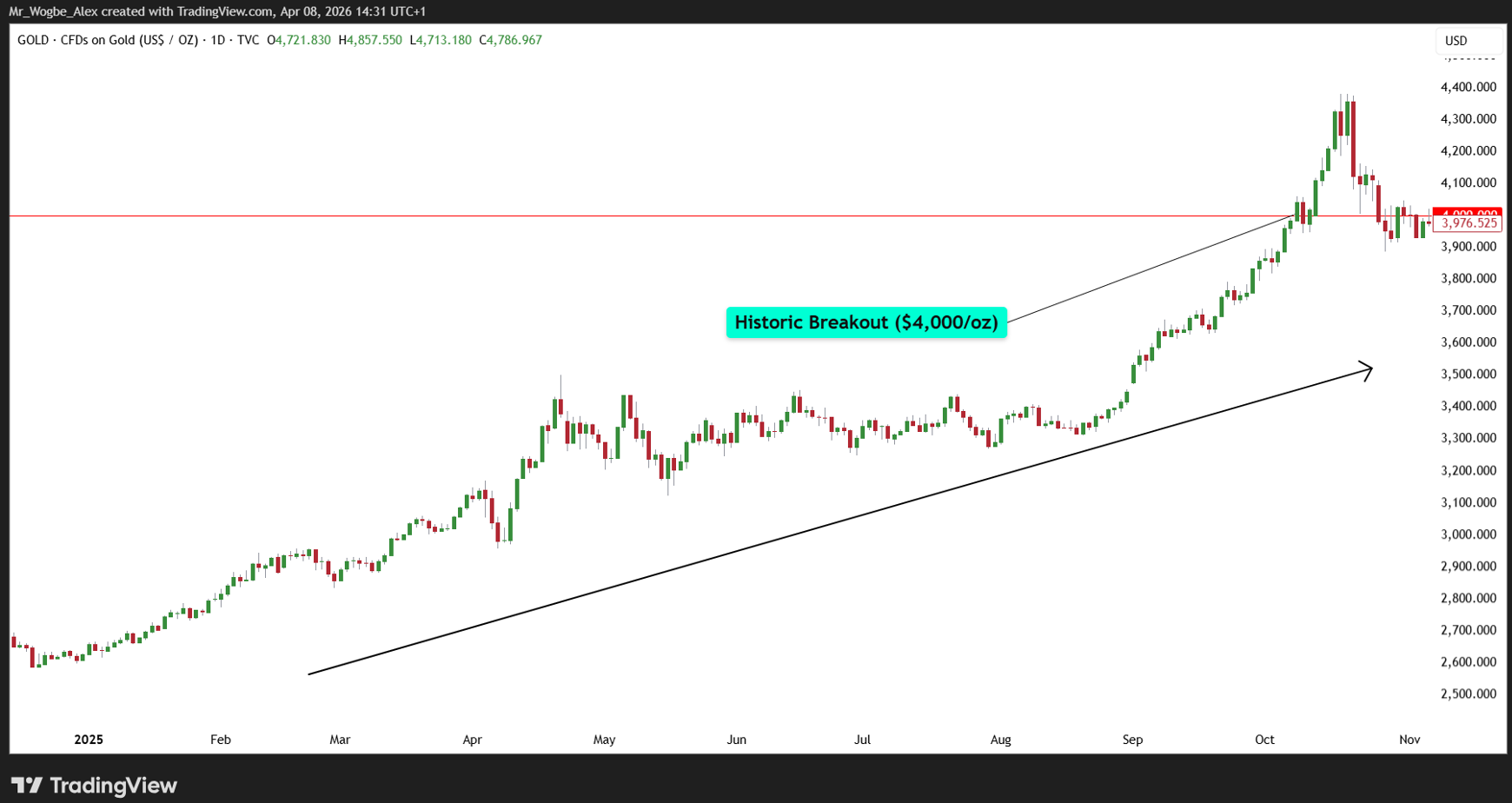
Image via TradingView: XAU/USD Daily Chart
For Australian investors, the returns looked even better. Because gold is priced in US dollars, a weaker Australian dollar tends to push local returns higher.
That's exactly what played out over the past year.
There's also a portfolio angle worth considering. The World Gold Council found that gold has maintained a consistently negative correlation with Australian equities over time.
In simple terms, gold has historically moved in the opposite direction to the ASX. That makes it a genuine diversifier, not just a bet on price going up.
And Australia has a direct connection to the metal. The country is one of the world's top gold producers, with the Department of Industry, Science and Resources projecting around 340 tonnes of output for 2025-2026.
Major institutions are also staying bullish. For instance, J.P. Morgan is targeting US$5,000 per ounce by late 2026, while Goldman Sachs predicts US$5,400.
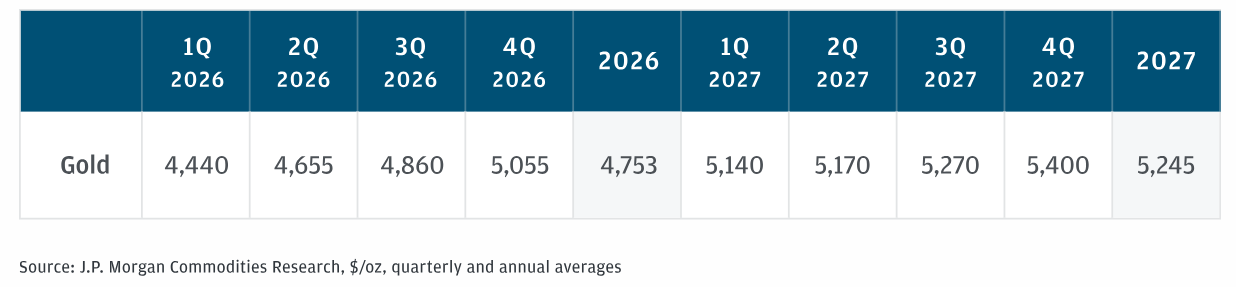
Image via J.P. Morgan
Whether those targets hold remains to be seen. But the case for gold in an Australian portfolio has rarely looked this solid.
“Trade gold CFDs with an ASIC-regulated broker. Fast AUD funding via PayID. ”
3 Main Ways to Invest in Gold in Australia
So how can you, as an Australian, take advantage of the positives around gold?
The truth is there's no single best way to invest in gold in Australia. The right approach depends on a few things:
What you're trying to do
How much involvement you want
And how much risk you're comfortable with
Some methods cost more to set up. While others demand more of your time.
So, here's a look at the three main options available to you and what each one actually involves.
1. Physical Gold (Bullion)
Physical gold is exactly what it sounds like. You buy gold bars or coins and own them outright.
In Australia, the two most well-known options are the Perth Mint and ABC Bullion.
The Perth Mint is government-owned and backed by the Western Australian government guarantee, making it one of the more secure routes for first-time buyers.
ABC Bullion is a Sydney-based dealer with an accredited refinery and storage facilities in Sydney and Perth.
Either way, you'll want to look for investment-grade gold, which means 99.5% purity or higher.
Keep in mind that you'll also pay a premium above the spot price to cover fabrication costs.
Pros
You own a tangible asset with no counterparty risk and no reliance on a platform or fund
Government-backed storage options exist through the Perth Mint Depository and PMGOLD on the ASX
Gold held for more than 12 months may qualify for a 50% CGT discount
Physical gold fits well within a self-managed super fund (SMSF) structure
It has a long track record as a wealth preservation tool across different economic conditions
Cons
Storage costs add up (allocated gold at the Perth Mint runs around 1% per annum, while ABC Bullion charges from AU$25 per quarter)
Delivery fees apply (ABC Bullion charges $30 flat for orders under $8,000 and a $100 minimum for larger orders)
Selling takes more steps than ETFs or CFDs, which makes it less liquid
Premiums above the spot price can eat into returns, especially over shorter timeframes
Best for: Long-term investors who want direct ownership of gold and are comfortable managing the storage and insurance side of things.
2. Gold ETFs
A gold ETF is a fund listed on the ASX that tracks the price of gold. You buy units through any brokerage account, the same way you'd buy shares.
Most ASX gold ETFs are physically backed, meaning the fund holds real gold bars on your behalf.
You don't have to worry about storage or insurance. That's handled for you.
Apparently, Australians have been piling in. Global X saw over AU$224 million in inflows across its gold ETFs in the first quarter of 2026 alone.
The main options worth knowing are:
Global X Physical Gold (ASX: GOLD), the largest and most liquid in Australia with over AU$6 billion in assets under management
Perth Mint Gold (ASX: PMGOLD), government-backed with one of the lowest fees at 0.15% and the option to convert units to physical gold
VanEck Gold Bullion ETF (ASX: NUGG), backed by Australian gold producers at 0.25%
BetaShares Gold Bullion ETF (ASX: QAU), a currency-hedged option for investors who want to reduce AUD/USD exposure
Pros
No storage, insurance, or delivery logistics to manage
Low minimum investment
Highly liquid and easy to trade during ASX hours
Low annual fees ranging from 0.15% to 0.57%
A straightforward way to get passive, long-term gold exposure
Cons
You don't own the physical gold directly
Unhedged ETFs are exposed to AUD/USD currency movements, which can work for or against you
Management fees compound quietly over time, which matters more the longer you hold
You can only go long, so there's no way to profit if gold prices fall
Best for: Passive investors who want low-cost, hands-off gold exposure without the hassle of owning physical metal.
3. Gold CFDs
A contract for difference (CFD) lets you speculate on gold's price movement without owning any physical gold.
You open a position, the price moves, and you profit or lose based on that difference. That's it.
Platforms like Mitrade, which is regulated by the Australian Securities and Investments Commission (ASIC), make it straightforward to trade gold CFDs in Australia.
One thing that sets CFDs apart from the other methods is flexibility. You can go long if you think gold prices will rise or go short if you think they'll fall. That works in both directions.
CFDs also use leverage, which means you control a larger position with a smaller amount of capital.
Under ASIC rules, the maximum leverage for retail clients trading gold CFDs is 20:1. So AU$1,000 in your account controls AU$20,000 worth of gold exposure.
ASIC also requires negative balance protection, meaning you can't lose more than what's in your account.
Pros
You can profit from both rising and falling gold prices, which no other method on this list allows
Lower capital needed to enter the market thanks to leverage
No storage, insurance, or delivery costs involved
Trades execute quickly with high liquidity
Useful for short-term traders and investors looking to hedge an existing portfolio
Cons
Leverage cuts both ways and can amplify losses just as fast as gains
Overnight holding fees (swap rates) apply to positions held past market close
Requires active monitoring and a clear risk management plan, including stop-loss orders
Not a good fit for passive or long-term investors
Best for: Active traders who understand how leverage works and want to trade gold price movements in both directions without owning the physical metal.

Trade XAU/USD with Tight Spreads
ETFs vs. Bullion vs. CFDs: Which Is the Best Way to Invest in Gold in Australia?
There's no universal answer here. The best way to invest in gold in Australia comes down to three things:
Your goals
Your time horizon
And how hands-on you want to be
If you're investing for the long term and want something tangible, physical bullion makes sense. The Perth Mint and PMGOLD on the ASX are practical starting points for Australian investors.
Just factor in storage costs, which run from around 0.15% to 1% per annum depending on the provider, and make sure you're comfortable with the extra steps involved in buying and selling.
If you want gold exposure without the hassle, ETFs are the cleaner option. Management fees sit between 0.15% and 0.57% per annum depending on the product, and you can buy and sell through any ASX brokerage account in minutes. It's a straightforward way to add gold to a portfolio without overthinking it.
If you're an active trader who follows the market closely, CFDs give you the most flexibility. You can go long or short and enter and exit quickly, and you don't need a large amount of capital to get started.
Some investors use a combination. An ETF for core long-term exposure and CFDs for shorter-term trading positions is one approach that gives you the best of both worlds without going all in on either.
Conclusion
Bullion, ETFs, and CFDs each give you a different way into the gold market.
Bullion is for those who want to own something real. ETFs are for those who want simple, low-cost exposure. CFDs are for those who want to trade actively and aren't afraid of risk.
The best way to invest in gold in Australia is whichever one lines up with your goals, your time horizon, and how much risk you're willing to take on.
If you're looking to start with gold CFDs, Mitrade is an ASIC-regulated platform worth exploring. You can open a demo account and get a feel for the market before committing any capital.


You might be interested in…
1. Is gold a good investment in Australia right now?
Gold has performed strongly through 2025 and into 2026. Major institutions like J.P. Morgan and Goldman Sachs remain bullish, with price targets up to US$6,300 per ounce. Whether it suits your portfolio depends on your goals and risk tolerance.
2. What is the cheapest way to buy gold in Australia?
ETFs like PMGOLD at 0.15% per annum are among the lowest-cost options. Physical bullion carries fabrication premiums and storage fees. CFDs have no storage costs but come with leverage risk and overnight holding fees that add up over time.
3. Is gold CFD trading legal in Australia?
Yes, it's completely legal. ASIC regulates all gold CFD brokers operating in Australia. Retail traders are subject to a maximum leverage of 20:1 and mandatory negative balance protection. Always verify a broker's ASIC license before opening an account.
4. Do I pay tax on gold investments in Australia?
Yes. Capital gains tax applies to gold investments. Holding gold for more than 12 months may qualify you for a 50% CGT discount. CFD profits are typically taxed as assessable income. Speak to a registered tax professional for advice tailored to your situation.
5. How do I start trading gold CFDs in Australia?
You'll need an account with an ASIC-regulated broker. Mitrade is one option worth considering. It's designed for retail traders and lets you trade gold CFDs with a demo account before committing real capital. From there, set your position size and manage your risk with stop-loss orders.
6. Can I invest in gold through my SMSF in Australia?
Yes. SMSFs can hold physical gold and ASX-listed gold ETFs, provided they meet ATO compliance requirements. Physical gold must be stored with an approved custodian and cannot be personally used by any fund member. Check with your SMSF adviser before proceeding.
Disclaimer: The content presented above, whether from a third party or not, is considered as general advice only. CFD trading involves significant risk of loss. Past performance does not guarantee future results. This article serves informational purposes only and does not constitute financial advice. Consider your risk tolerance before trading.


