




Kospi Index Triggers Circuit Breaker After 8% Plunge; SK Hynix Falls Over 11%, Samsung Electronics Drops Over 9%
TradingKey - During the Asian trading session on July 28, South Korean stock markets suffered a plunge. The KOSPI index's decline continued to widen, and after falling over 7%, the Korea Exchange activated its "Sidecar" mechanism, suspending programmed sell orders to curb market volatility. Subsequently, the index's decline further widened to 8%, triggering circuit breakers and halting trading for 20 minutes.
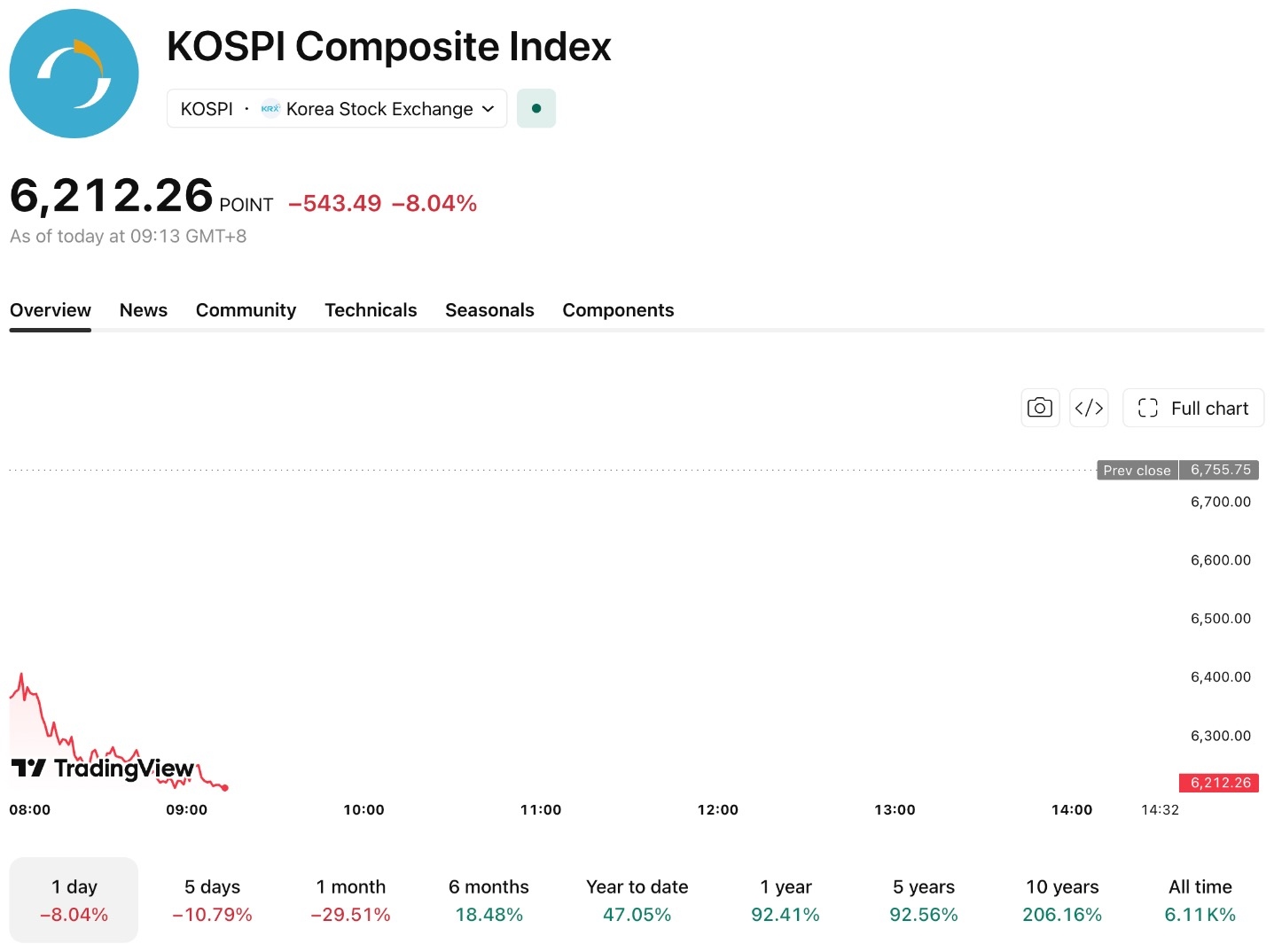
[Source: TradingView]
The semiconductor sector became the hardest-hit area in this plunge. The market's two leading chipmakers both suffered panic selling, with SK Hynix plunging over 11% intraday and Samsung Electronics falling more than 9%. Overnight in the US stock market, SK Hynix's ( SKHY) ADR broke below its IPO price of $149, closing at $143.02, becoming one of the first stocks to fall below their offer prices among this year's mega IPOs in the US.
The trigger for this decline was the collective slump of the semiconductor sector in US stocks overnight. The Philadelphia Semiconductor Index closed down over 2%, and Nvidia ( NVDA) tumbled nearly 5%, surrendering its crown as the world's most valuable company to Apple ( AAPL ). Market skepticism over Nvidia's "circular financing" model flared up again, which, coupled with the sentiment shock of SK Hynix breaking its IPO price, quickly transmitted anxiety to the South Korean market.
Meanwhile, progress in China's semiconductor industry has also exacerbated market anxieties. Reports indicate that Chinese enterprises, with government support, have initiated production of DUV lithography equipment. This, combined with ChangXin Memory Technologies surging over 400% on its debut day on the STAR Market, has further heightened market worries over the deterioration of the global memory chip competitive landscape, accelerating the flight of capital from the South Korean chip sector.
Recommended Articles


