




Kevin Warsh Just Vowed to Bring a "Regime Change" to the Fed. It Could Rattle Wall Street.
Key Points
Fed Chair Kevin Warsh has indicated a firm focus on inflation control since taking over for Jerome Powell.
His policies, if enacted, would likely bring less transparency to Fed operations.
His leadership could result in greater volatility for bonds while putting pressure on riskier equities.
- These 10 stocks could mint the next wave of millionaires ›
Federal Reserve Chair Kevin Warsh used his first appearance before Congress this month to draw a hard line on inflation. Testifying before the House Financial Services Committee and the Senate Banking Committee, Warsh told lawmakers: "The 63 months of inflation above target has been an unfair burden and has been a tax on the American people and businesses. We plan on getting rid of that tax. That means we need a regime change in policy."
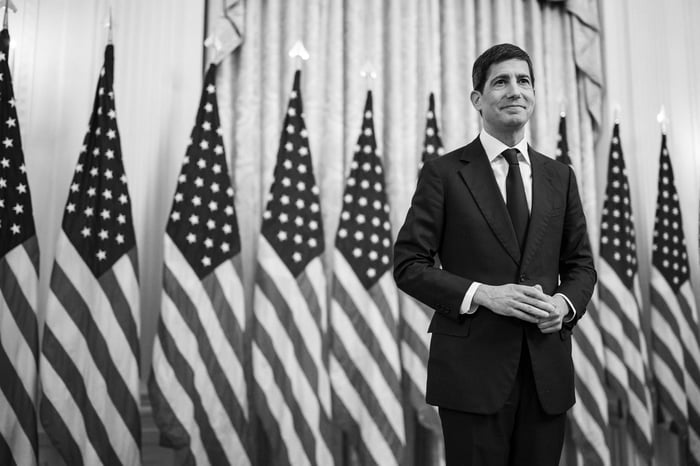
Kevin Warsh. Image source: Official White House Photo by Daniel Torok.
Missed Nvidia in 2009? This Rare Signal Is Flashing Again. In 2009, a "Double Down" signal flashed for a little-known chipmaker called Nvidia. For the first time in years, that same "Total Conviction" signal is flashing for a company 1/100th the size of Nvidia. Continue »
In June, the Consumer Price Index (CPI) rose 3.5% year over year. That's down from May's 4.2% rate but still well above the Fed's 2% target. In Warsh's first meeting as chair, the Fed adopted a wait-and-see approach, holding its benchmark rate steady at 3.5%-3.75%.
Warsh clearly wants to approach things from a fresh point of view. He's already launched five internal task forces designed to rethink how the Fed communicates and define how it thinks about inflation. His decision to pass on submitting an economic projection at the last meeting would be evidence of this.
Indications from Warsh would suggest two things moving forward: a more hawkish stance for the foreseeable future based on recent comments and a high degree of uncertainty about where policy might be headed next.
That could lead to greater volatility in the bond market and a potential headwind for growth and tech stocks.
Where to invest $1,000 right now
When our analyst team has a stock tip, it can pay to listen. After all, Stock Advisor’s total average return is 892%* — a market-crushing outperformance compared to 206% for the S&P 500.
They just revealed what they believe are the 10 best stocks for investors to buy right now, available when you join Stock Advisor.
See the stocks »
*Stock Advisor returns as of July 24, 2026.
The Motley Fool has a disclosure policy.
Recommended Articles


