




Whales Dump Over $6 Million in AAVE as KelpDAO Exploit Triggers 20% Aave Price Drop
Aave (AAVE) fell over 20% on April 19 after the KelpDAO rsETH exploit triggered a wave of whale selling and a record spike in ETH utilization across the lending protocol.
The token dropped from roughly $115 to below $92 in hours as large holders rushed to exit positions. Aave’s ETH pool hit 100% utilization, effectively locking remaining depositors out of withdrawals.
Whales Offload Millions in AAVE
As of this writing, AAVE was trading for $91.89, down by 20.44% in the last 24 hours. With this, the altcoin has retested levels last seen on April 13.
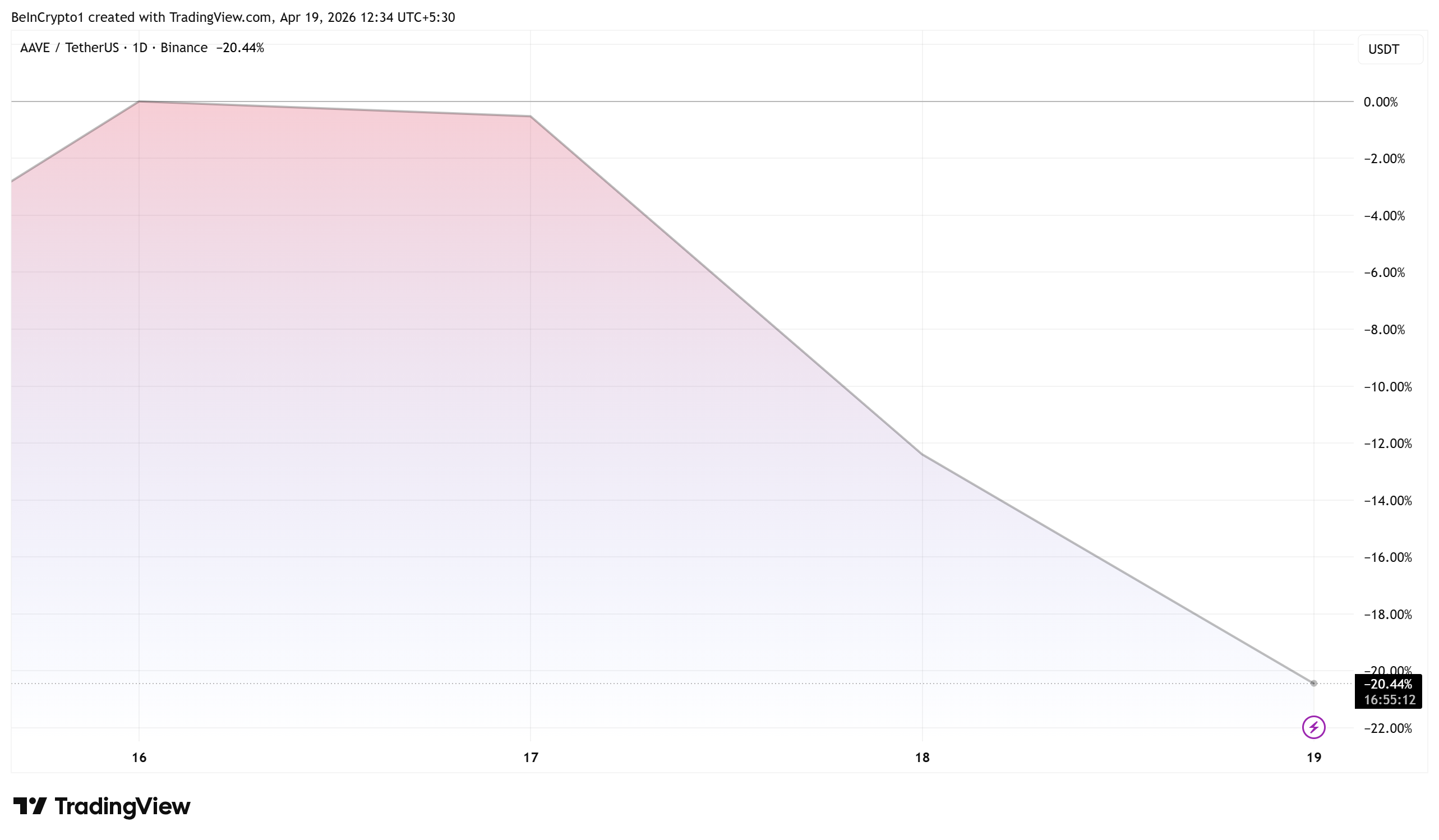 AAVE Price Performance. Source: TradingView
On-chain data tracked by Lookonchain showed three major wallets selling AAVE within hours of the exploit becoming public.
- A wallet identified as smaugvision sold 20,015 AAVE for 2.06 million USDC at an average of $103 per token.
- A second whale at address 0xFC56 offloaded another 20,000 AAVE for 2.05 million USDC at the same average.
- A third wallet, 0xA2E4, sold 19,666 AAVE worth $1.95 million, converting the proceeds into 505.65 ETH and 10.11 WBTC at a lower $99 average.
Combined, the three wallets dumped nearly 60,000 AAVE tokens worth over $6 million.
$5.4 Billion ETH Exodus
Beyond the AAVE sell-off, suppliers began pulling ether (ETH) from Aave at scale. Over $5.4 billion in ETH reportedly left the protocol within hours.
Tron founder Justin Sun withdrew 65,584 ETH worth approximately $154 million, adding to the liquidity drain.
The mass withdrawal pushed Aave’s ETH utilization rate to 100%, meaning the pool had no remaining liquidity for new withdrawals.
Borrowing rates are expected to spike sharply as the protocol’s interest rate curve penalizes high utilization.
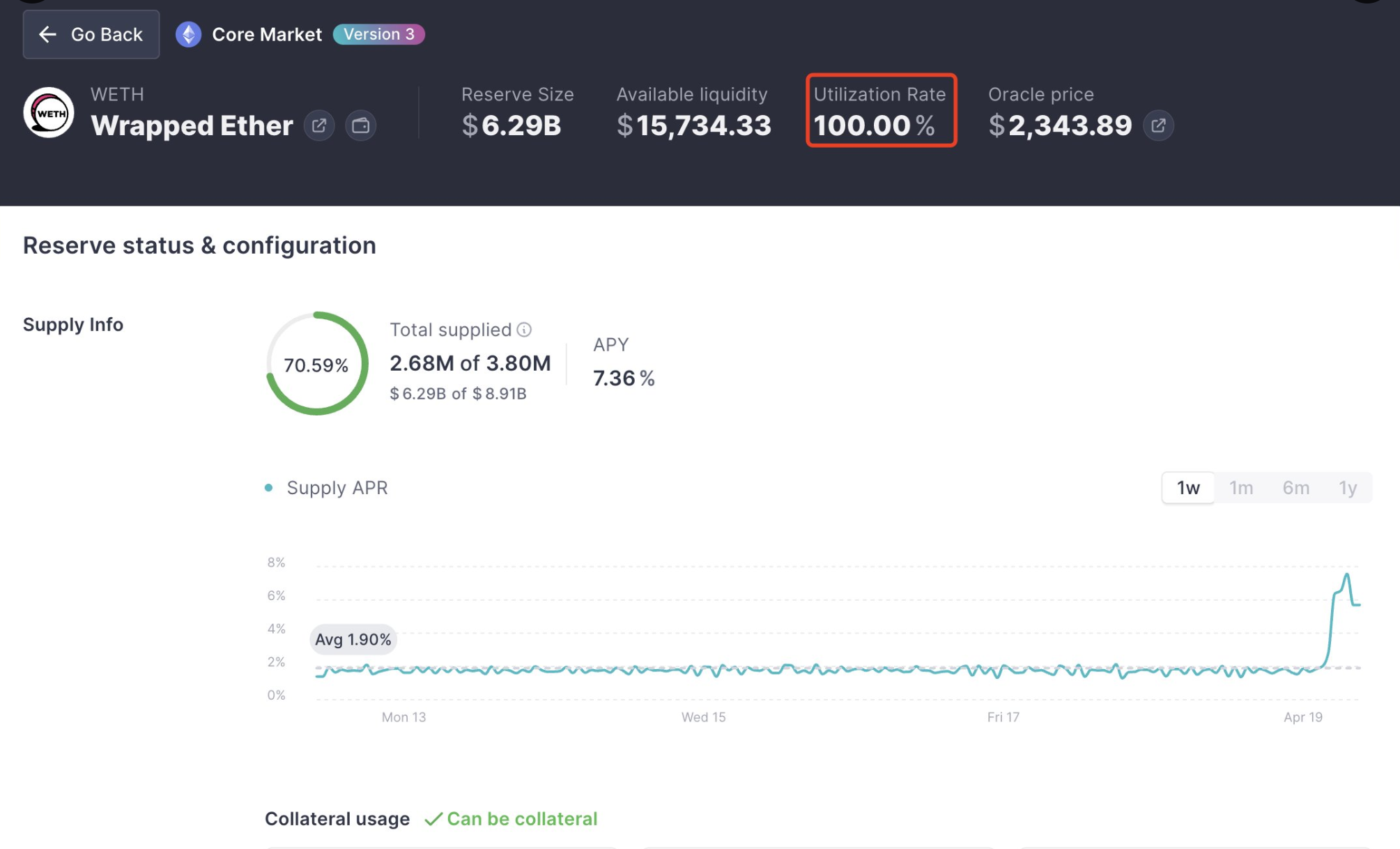 Aave’s ETH Utilization at 100%
Whether Aave’s Umbrella backstop and the rsETH market freeze can stabilize confidence remains the central question for depositors still locked in the pool.
Aave Says Impact Limited to V3 ETH Market
Aave told BeInCrypto that the situation is contained to the V3 ETH market only, with V4 completely unaffected.
“On Aave’s side, the situation is contained to the V3 ETH market only. V4 is completely unaffected,” the Aave team said in an email shared exclusively with BeInCrypto.
The team said it moved quickly with precautionary measures, freezing the rsETH reserve, removing its borrowing power, and temporarily reducing the loan-to-value ratio on ETH to zero.
Stablecoin reserves and all other assets are operating normally with no exposure to the event.
Recommended Articles


