




The Japanese yen has hit a 40-year low - Here’s why traders are watching closely

The Japanese yen has fallen to its weakest level against the US dollar in four decades. One US dollar now buys more than 162 yen, putting global currency markets firmly back in the spotlight. Traders are once again watching for signs that Japanese authorities could step into the market to support the currency after previous intervention efforts failed to halt its decline.
Unlike many short-lived market moves, the yen’s weakness has been building for months. A widening gap between US and Japanese interest rates, persistent demand for US dollar assets, and uncertainty over how aggressively the Bank of Japan will continue tightening policy have all combined to push the currency to levels not seen in almost four decades.
For Australian traders, the focus is no longer simply on how far the yen has fallen. The bigger question is whether widening interest rate differences and the threat of official intervention will continue driving volatility in the weeks ahead.
What’s driving the yen’s weakness?
Japan has finally begun raising interest rates, ending years of ultra-loose monetary policy. Under normal circumstances, that should strengthen a currency. Instead, the opposite has happened.
Despite the Bank of Japan’s gradual tightening, US interest rates remain substantially higher, leaving one of the widest yield gaps between the two economies in decades. Investors continue borrowing cheaply in yen to purchase higher-yielding US assets, keeping persistent downward pressure on the Japanese currency.
The interest rate gap is only part of the picture. Several other forces continue shaping the outlook for the yen:
Consequently, Japanese exporters stand to benefit from a cheaper currency, while rising import costs continue adding inflationary pressure across the domestic economy. At the same time, investors are increasingly debating whether Japanese authorities will intervene again if the currency weakens much further.
For global markets, the implications extend even further. A weaker yen encourages investors to continue funding carry trades, supporting demand for higher-yielding assets around the world while increasing the potential for sharp reversals if policy expectations suddenly change.
For Australian traders, opportunities like these no longer require specialist foreign exchange accounts or physically exchanging currencies. Contracts for Difference (CFDs) make it possible to trade movements in major currency pairs directly, whether markets are rising or falling.
“Trade USDJPY with an ASIC-regulated broker. Fast AUD funding via PayID. ”
What makes the yen so important?
The yen is far more than Japan’s national currency. It is one of the world’s most actively traded currencies and plays an important role in global financial markets. Changes in the yen can influence everything from multinational company earnings and international trade to commodity prices and broader investor sentiment.
Currency markets also react almost instantly to new economic information. Interest rate decisions, inflation data, employment reports, and central bank commentary can all trigger significant moves within minutes.
That constant flow of macroeconomic news is one of the reasons many active traders closely monitor major currency pairs.
The challenge of trading the yen
The yen’s collapse to levels not seen since the 1980s has once again put the foreign exchange market in the spotlight. For Australian traders, however, responding to moves like these isn’t always as simple as opening a trade.
Several practical challenges often stand in the way.
Markets move around the clock. The biggest swings in USD/JPY frequently occur during Bank of Japan announcements or US economic releases, many of which take place overnight Australian time.
Macroeconomic news can move the yen within minutes. Inflation reports, central bank decisions, and employment data can rapidly reshape interest rate expectations, triggering sharp moves in USD/JPY.
Traditional currency exchange isn’t designed for trading. Banks and foreign exchange providers are built for international payments and travel, not for responding to rapidly changing exchange rates or taking advantage of short-term market moves.
For traders looking to respond quickly when market conditions change, these practical limitations can make timely execution more difficult.
How Mitrade helps remove these barriers
Mitrade uses CFDs to give traders direct exposure to movements in major currency pairs without needing to exchange or own the underlying currencies.
That means many of the practical challenges of trading global currencies can be managed more efficiently:
Respond to markets in either direction. Exchange rates don’t need to be rising to create opportunities. CFDs allow traders to take both long and short positions, making it possible to respond whether the yen strengthens or weakens.
Use capital more efficiently. Rather than funding the full value of a currency position upfront, forex CFDs use margin, allowing traders to gain market exposure while keeping more capital available for other opportunities (subject to ASIC leverage limits).
Stay in control around the clock. Major moves in USD/JPY often occur overnight following Bank of Japan announcements or US economic data. Entry orders, stop-losses, and take-profit levels can all be set in advance, allowing trades to execute automatically if target prices are reached.
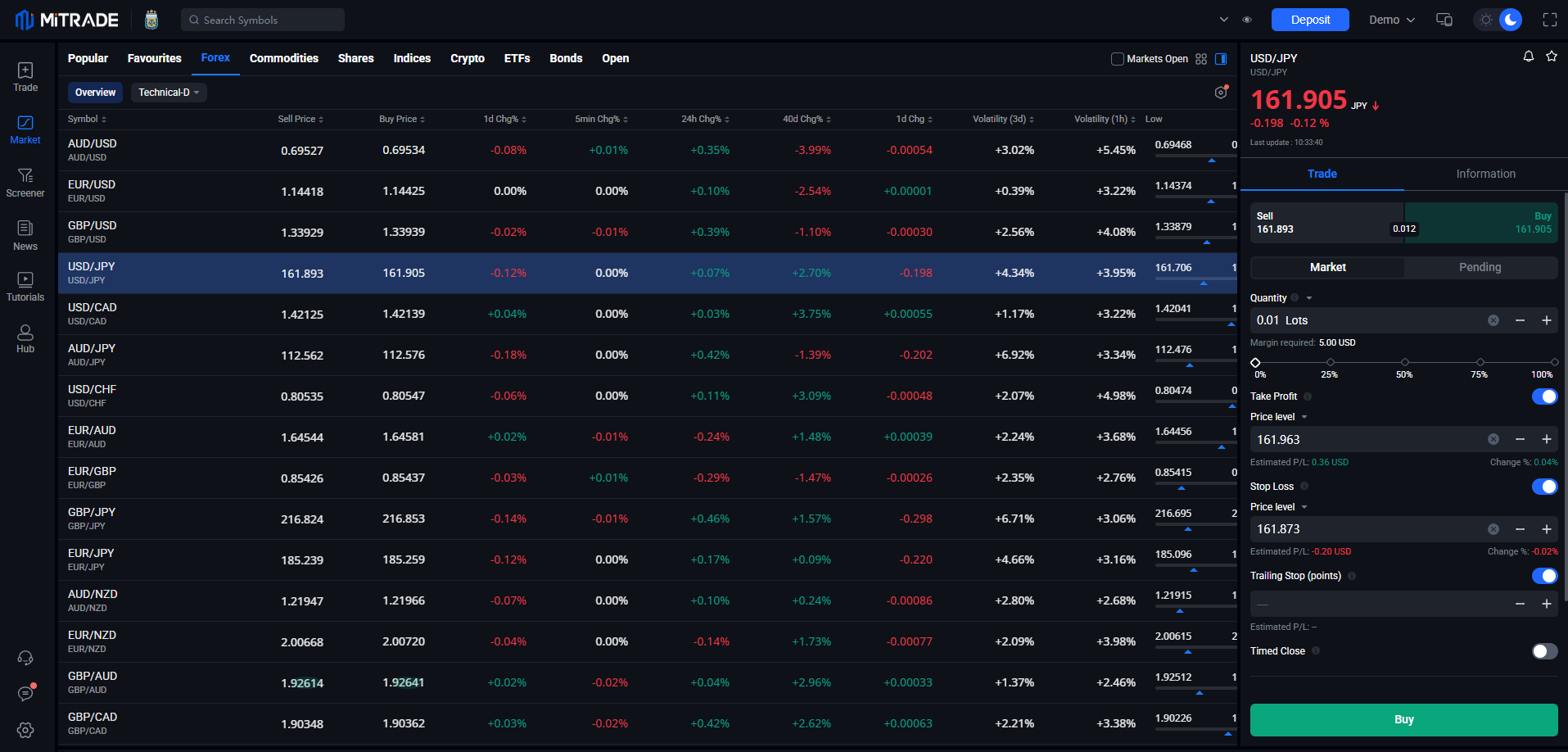
Trading the yen is ultimately about staying ahead of changing macroeconomic conditions. With markets now debating the next move from both the Federal Reserve and the Bank of Japan, attention has already shifted to the catalysts that could determine where USD/JPY heads next.
“Trade USDJPY with an ASIC-regulated broker. Fast AUD funding via PayID. ”
What could shift the yen next?
The interest rate gap between Japan and the United States remains the dominant driver of the yen. But after falling to its weakest level in four decades, traders are now watching several developments that could quickly change sentiment.
Federal Reserve policy: Recent US economic data has reduced expectations for further interest rate hikes, but upcoming inflation data, Federal Reserve commentary, and policy meetings remain critical. Any shift in the expected path of US rates could quickly alter the yield advantage supporting the US dollar.
Japanese government intervention: Tokyo has repeatedly warned it stands ready to support the yen if moves become excessive. Following previous interventions worth almost ¥12 trillion earlier this year, traders are increasingly debating whether another round of official buying could occur if the currency weakens further. Even rumours of intervention have been enough to trigger sharp intraday moves.
Bank of Japan policy: Although the Bank of Japan has begun raising interest rates, markets remain focused on whether it will tighten policy further. Faster-than-expected rate increases would narrow the interest rate gap with the United States and could provide meaningful support for the yen.
Carry trade positioning: Years of ultra-low Japanese interest rates have encouraged investors to borrow in yen to buy higher-yielding assets overseas. If expectations around interest rates change—or intervention forces traders to unwind these positions—the resulting moves in USD/JPY can be swift and volatile.
The next move is likely to depend on whether policymakers allow the currency to keep weakening—or decide the time has come to step in. Either outcome has the potential to generate significant volatility across one of the world’s most heavily traded currency pairs.
Be ready for what comes next
With markets now watching every Bank of Japan comment, inflation release, and rumour of government intervention, the next major move in the yen could come with little warning. Mitrade helps Australian traders stay prepared with:
AUD-based accounts.
0% commission trading, with costs incorporated into competitive spreads.
Advanced charting and risk management tools.
A mobile trading app for global markets.
ASIC regulation, with retail client funds held in segregated trust accounts.
A free $50,000 demo account to practise trading strategies.
Start Trading Forex CFDs in Three Simple Steps
Getting started takes only a few minutes.
Open an Account: Register manually via the Mitrade homepage, or use the fast sign-up process by linking your existing Google or Facebook credentials.
Fund Your Account: Deposit your initial margin using secure Australian payment methods, including POLi or Visa/Mastercard.
Trade CFDs: Access the platform, analyze your preferred currency pairs, define your risk parameters, and execute your long or short position.
The Japanese yen is back at the centre of global markets. Open your account today and be ready for whatever comes next.


1. Why is the Japanese yen so weak right now?
The yen has weakened primarily because US interest rates remain much higher than those in Japan. This encourages investors to favour US dollar assets while borrowing cheaply in yen, increasing selling pressure on the Japanese currency.
2. What is the USD/JPY currency pair?
USD/JPY measures how many Japanese yen are required to buy one US dollar. It is one of the world’s most actively traded currency pairs.
3. Can I trade forex without exchanging currencies?
Yes. Forex CFDs allow traders to speculate on movements in currency pairs without physically buying or selling the underlying currencies.
Disclaimer: The content presented above, whether from a third party or not, is considered as general advice only. CFD trading involves significant risk of loss. Past performance does not guarantee future results. This article serves informational purposes only and does not constitute financial advice. Consider your risk tolerance before trading.


