




WTI Crude Oil Price Forecast: Can Oil Hold $100 After OPEC+ Decision and Ahead of US Midterms?
WTI crude Oil prices fell sharply on Monday, 2 November 2026, as renewed hopes for a diplomatic breakthrough between the United States and Iran reduced immediate concerns about global oil supply disruptions.
US West Texas Intermediate (WTI) crude futures declined 3.3% to approximately US$100.69 per barrel by 04:07 GMT, while Brent crude futures fell 3.2% to US$109.75.
The sell-off followed OPEC+'s decision on Sunday to maintain December oil production targets unchanged, alongside continued diplomatic discussions involving Iran and Qatar.
Despite the latest decline, the broader oil price outlook remains uncertain. The upcoming US midterm elections on 3 November, unresolved Middle Eastern supply disruptions and the possibility of further military escalation could continue to support crude oil prices.
For traders, the key question is whether WTI crude oil can hold the psychological US$100 level or extend its correction towards US$95.
OPEC+ Keeps December Oil Production Unchanged
OPEC+ announced on Sunday, 1 November, that seven participating oil-producing countries would maintain their existing production targets for December 2026.
The countries involved were Saudi Arabia, Russia, Iraq, Kuwait, Kazakhstan, Algeria and Oman.
According to the official OPEC statement, the participating countries agreed to maintain their September 2026 required production levels through December.
The decision was widely anticipated, reflecting the group's cautious approach to balancing global oil supply and demand amid persistent geopolitical uncertainty.
Earlier in 2026, OPEC+ had gradually reversed voluntary production cuts totalling approximately 1.65 million barrels per day, completing the phased rollback in September.
However, another layer of production cuts of approximately 2 million barrels per day remains in place through the end of 2026.
This suggests that OPEC+ still retains some flexibility to adjust production targets in future meetings.
Why does the OPEC+ decision matter for oil prices?
Holding production targets steady can help prevent additional supply from entering the market, potentially supporting prices.
However, production targets and actual oil output are not the same.
Several Gulf producers have struggled to reach their targets because of disruptions associated with the Iran conflict.
As a result, the market may be more sensitive to the recovery of actual oil exports than to changes in announced production quotas.
The next major OPEC+ meeting is scheduled for 29 November, when the wider group is expected to discuss its 2027 production framework.
US-Iran Diplomatic Talks Reduce Oil Supply Fears
The immediate catalyst behind Monday's oil price decline was renewed optimism surrounding diplomatic efforts to end the US-Israeli conflict with Iran.
Iranian and Qatari officials held discussions for a third consecutive day, raising hopes that negotiations could eventually reduce tensions and improve conditions for oil transportation through the Strait of Hormuz.
Iranian officials have discussed a proposal involving the possible reopening of the waterway, subject to conditions and responses from Washington.
US President Donald Trump has also signalled a willingness to allow more time for diplomacy before considering renewed military operations.
These developments have encouraged some traders to reassess the geopolitical risk premium embedded in crude oil prices.
Following strong gains during October, the absence of a major new military escalation over the weekend provided an opportunity for profit-taking.
However, negotiations have not yet produced a comprehensive agreement.
The possibility of renewed conflict remains, while maritime security risks in the Strait of Hormuz continue to create uncertainty.
For oil markets, diplomatic progress could pressure prices lower, but an unexpected breakdown in negotiations could quickly reverse the decline.
US Midterm Elections: Could Oil Prices Rise Again After 3 November?
The US midterm elections on Tuesday, 3 November, represent another major event for financial markets.
Investors are monitoring whether the elections will change the balance of power in Congress and influence President Trump's ability to implement his domestic and foreign policy agenda.
A divided Congress could create additional obstacles for some legislative priorities.
However, the relationship between election results and Middle Eastern military policy is not straightforward.
Foreign policy decisions, including potential military operations, depend on multiple political, diplomatic and security considerations.
Market participants are particularly focused on reports suggesting that Washington has considered additional military options against Iran following the elections.
If diplomatic negotiations deteriorate or military tensions intensify, crude oil prices could recover as traders reassess supply disruption risks.
Conversely, sustained diplomatic progress could reduce the geopolitical risk premium and place further downward pressure on WTI.
The election itself does not guarantee either outcome.
Why the Strait of Hormuz Remains Critical
The Strait of Hormuz is one of the world's most strategically important energy transportation routes.
Disruptions to tanker movements can affect crude oil availability, freight costs and global energy market sentiment.
Recent attacks and security incidents involving commercial vessels have demonstrated that risks to maritime transportation remain elevated.
Even if oil production increases, transportation constraints could prevent additional barrels from reaching international buyers.
This distinction is particularly important when assessing whether OPEC+ production policy can effectively ease supply pressures.
For Australian investors, continued instability could also influence domestic fuel prices, inflation expectations and energy-related shares.
WTI Crude Oil Technical Analysis: Can the $100 Support Level Hold?
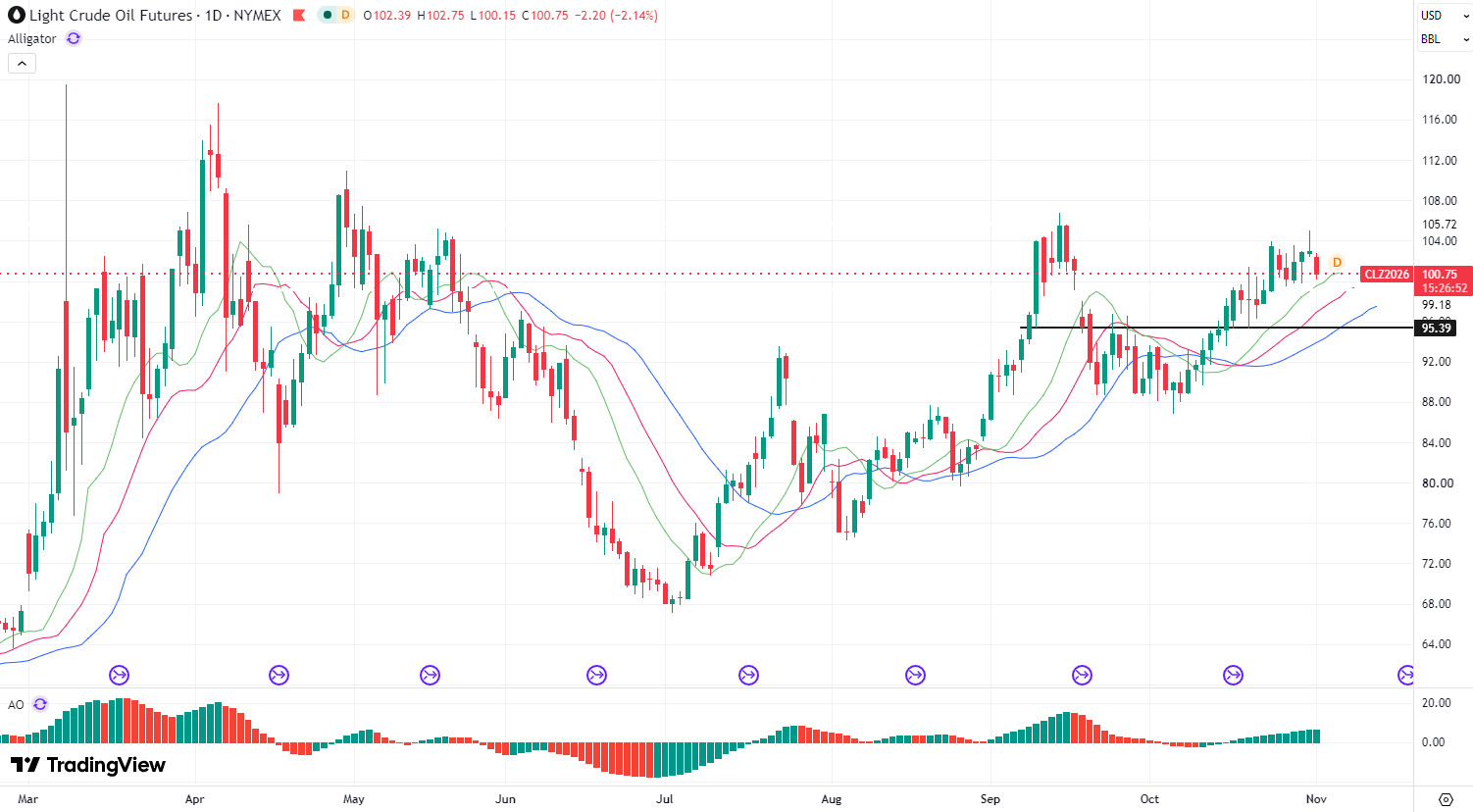
WTI crude oil has returned to the psychologically important US$100-per-barrel level after its latest pullback.
The decline suggests that short-term bullish momentum has weakened, but it does not necessarily confirm a broader bearish reversal.
From a technical perspective, the US$95–US$105 region remains a useful reference range for assessing the next potential market move.
WTI Crude Oil Daily Chart Analysis
Source: Tradingview
WTI is testing the US$100 area following a sharp decline from recent highs.
If prices stabilise above US$100, buyers may attempt another recovery towards US$105.
However, failure to maintain this psychological level could increase selling pressure and expose the next support area around US$95.
The US$95 level is particularly important for the medium-term outlook.
A sustained move below US$95 could suggest that the recent high-level consolidation is breaking down.
Under that scenario, the next downside levels to monitor would be US$90 and potentially US$80 over a longer horizon.
On the upside, US$105 remains the immediate major resistance.
A convincing breakout above US$105 could indicate that bullish momentum is returning, potentially opening the way towards US$110.
Further gains would likely require stronger evidence of tightening supply or renewed geopolitical escalation.
How to Trade WTI Crude Oil CFDs in Australia
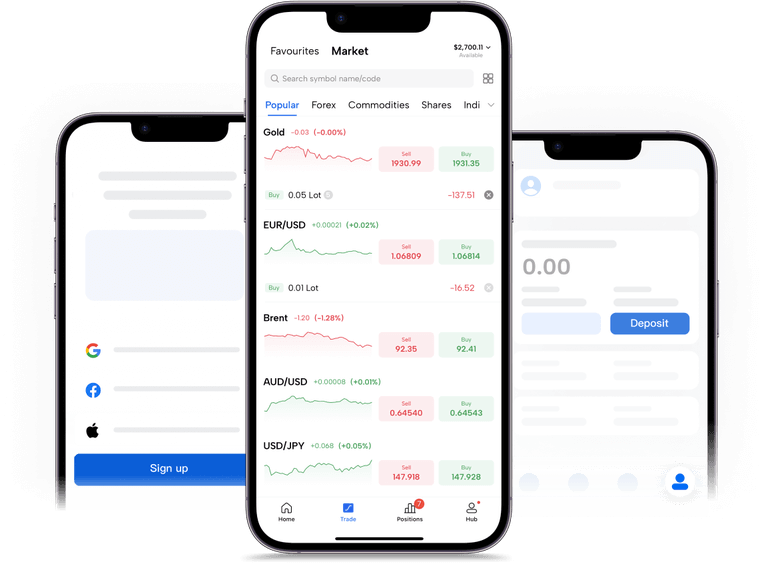
WTI crude oil CFDs allow eligible traders to take positions based on oil price movements.
A trader expecting WTI prices to rise may consider a long position, while a trader anticipating a decline may consider a short position.
For example, a trader analysing the US$100 level might monitor whether WTI stabilises above that area or breaks below it.
However, neither outcome is guaranteed, and short-term oil prices can react sharply to unexpected geopolitical developments.
Before trading, it is important to understand several key risks:
Leverage: Both potential gains and losses are magnified.
Market volatility: Geopolitical news can cause sudden price movements.
Trading costs: Spreads, overnight financing and other applicable charges can affect returns.
Execution risk: Stop-loss orders may be executed at a different price during fast-moving markets.
Contract specifications: CFD prices and trading conditions may differ from exchange-traded oil futures.


What Does the Oil Price Outlook Mean for Australian Traders?
For Australian investors, WTI crude oil movements can influence several markets beyond oil futures.
Australian petrol prices
Changes in global crude oil and refined petroleum prices can eventually influence domestic petrol and diesel costs.
However, local fuel prices also depend on the AUD/USD exchange rate, refining margins, taxes and distribution costs.
Companies exposed to oil and gas production may benefit from higher realised energy prices.
Nevertheless, individual share performance also depends on operating costs, production volumes, capital expenditure and broader equity market sentiment.
Oil price movements can influence global inflation expectations and risk sentiment, which may indirectly affect the Australian dollar.
However, AUD/USD also responds to interest rate expectations, Chinese economic activity and other commodity markets.
Oil CFD trading
For traders seeking exposure to short-term crude oil price movements, oil CFDs provide a way to speculate on rising or falling prices without owning physical crude oil.
However, CFDs are leveraged derivatives, and adverse price movements can result in rapid losses.
You might be interested in…
Disclaimer: The content presented above, whether from a third party or not, is considered as general advice only. CFD trading involves significant risk of loss. Past performance does not guarantee future results. This article serves informational purposes only and does not constitute financial advice. Consider your risk tolerance before trading.


