


South Korea Stocks Hit Circuit Breakers for Second Day; Kospi Drops 6%, 40% From June High; SK Hynix, Kioxia Tumble
TradingKey - On July 29, Japanese and South Korean stock markets extended their declines, with the South Korean market once again becoming the hardest-hit area in Asian equities. Samsung Electronics fell over 5%, SK Hynix dropped nearly 10%, Kioxia slid nearly 14%, and SoftBank fell nearly 7%.
The Korea Composite Stock Price Index (KOSPI) closed down 5.98% at 5,663.24 points, marking its lowest closing level since April 7, representing a cumulative decline of about 40% from its record high set in June.
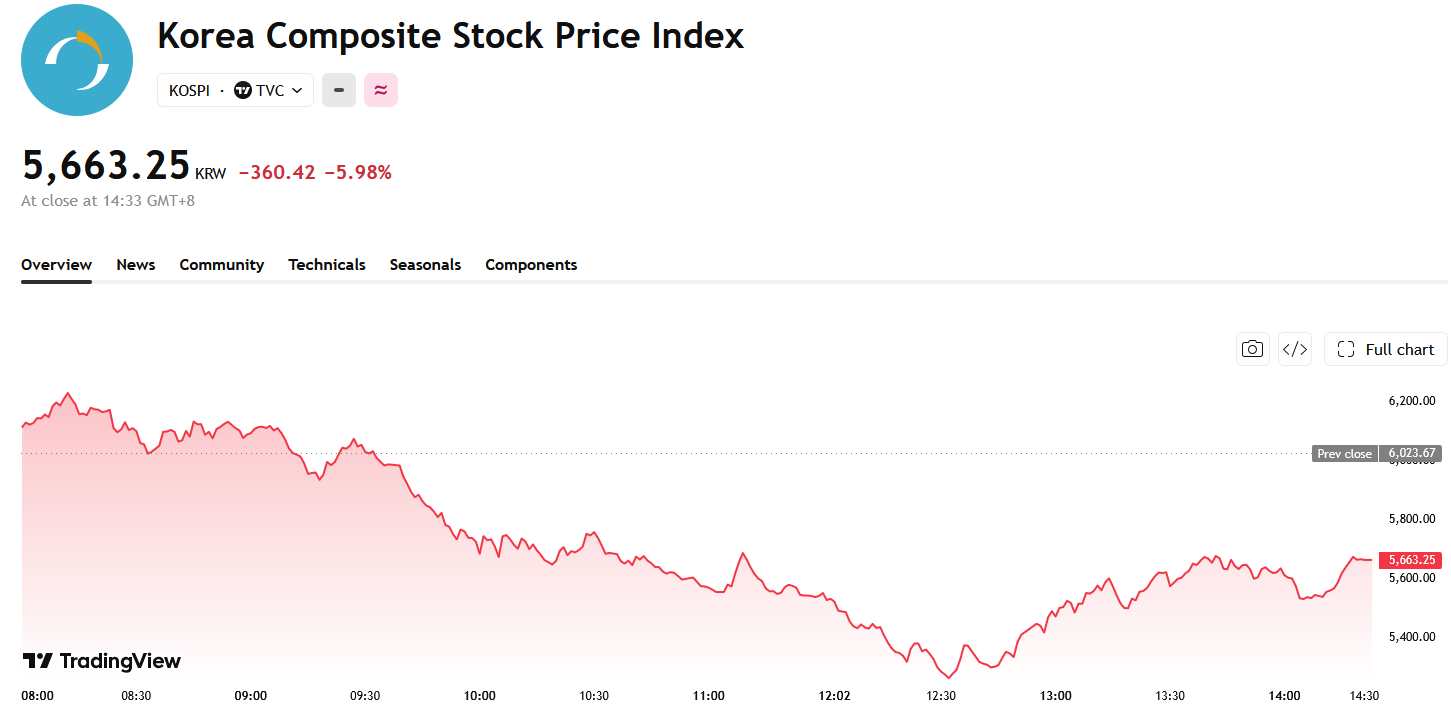
Source: TradingView
Japan's Nikkei 225 Index closed down 1.49% at 61,434.19 points, after briefly hitting a near two-month low during intraday trading.
Tech stocks continued to face concentrated sell-offs, with SK Hynix falling 9.61% to close at 1,401,000 won (about $967), and Samsung Electronics dropping 5.23% to close at 208,500 won.
Japanese chip stocks were also under pressure, with Kioxia plunging 13.85% to close at 38,380 yen (about $235), and SoftBank Group falling 6.95% to close at 4,741 yen.
During intraday trading, the South Korean market witnessed panic selling, with the KOSPI's losses widening to over 12% and the KOSDAQ index falling more than 10%. Consequently, the Korea Exchange triggered circuit breakers for both markets simultaneously, halting trading for 20 minutes.
This marks the ninth time this year that South Korea's stock market has triggered circuit breakers, and the first time in KOSPI's history that they were triggered for two consecutive trading days, signaling a further escalation in market volatility.
South Korean semiconductor giant SK Hynix reported record-high operating profit for the second quarter and raised its full-year capital expenditure to over 40 trillion won. However, the results still fell short of market expectations, while management failed to provide further details on shareholder return policies or the pricing mechanism for long-term supply contracts, sparking concerns among some investors.
In morning trading, SK Hynix plunged over 18% at one point, while Samsung Electronics also saw its intraday decline exceed 13%, with the semiconductor sector serving as the primary drag on the index.
Josh Gilbert, Chief Market Analyst for Asia-Pacific and the Middle East at eToro, pointed out that given the extremely high combined weighting of SK Hynix and Samsung Electronics in the KOSPI, the simultaneous plunge in their stock prices made it nearly impossible for index investors to avoid market risk.
Recommended Articles


