


XRP Plunges Over 40% This Year as Price Nears $1 Mark: Is It Worth Buying Now?
XRP 2026 Price Trend
TradingKey - In 2026, Ripple (XRP) experienced dramatic volatility in its overall price trend, characterized by an early-year surge and retreat, mid-year oscillations, and late-year blows from macroeconomic headwinds, falling more than 40% during the year and currently nearing the psychological $1 mark. From January to August, XRP initially continued the previous year's recovery, surging to an intra-year high of $2.41 early in the year before steadily weakening amid volatility, breaking below the key $1 mark in mid-August to hit a low of $0.98, setting a fresh low since November 2024.
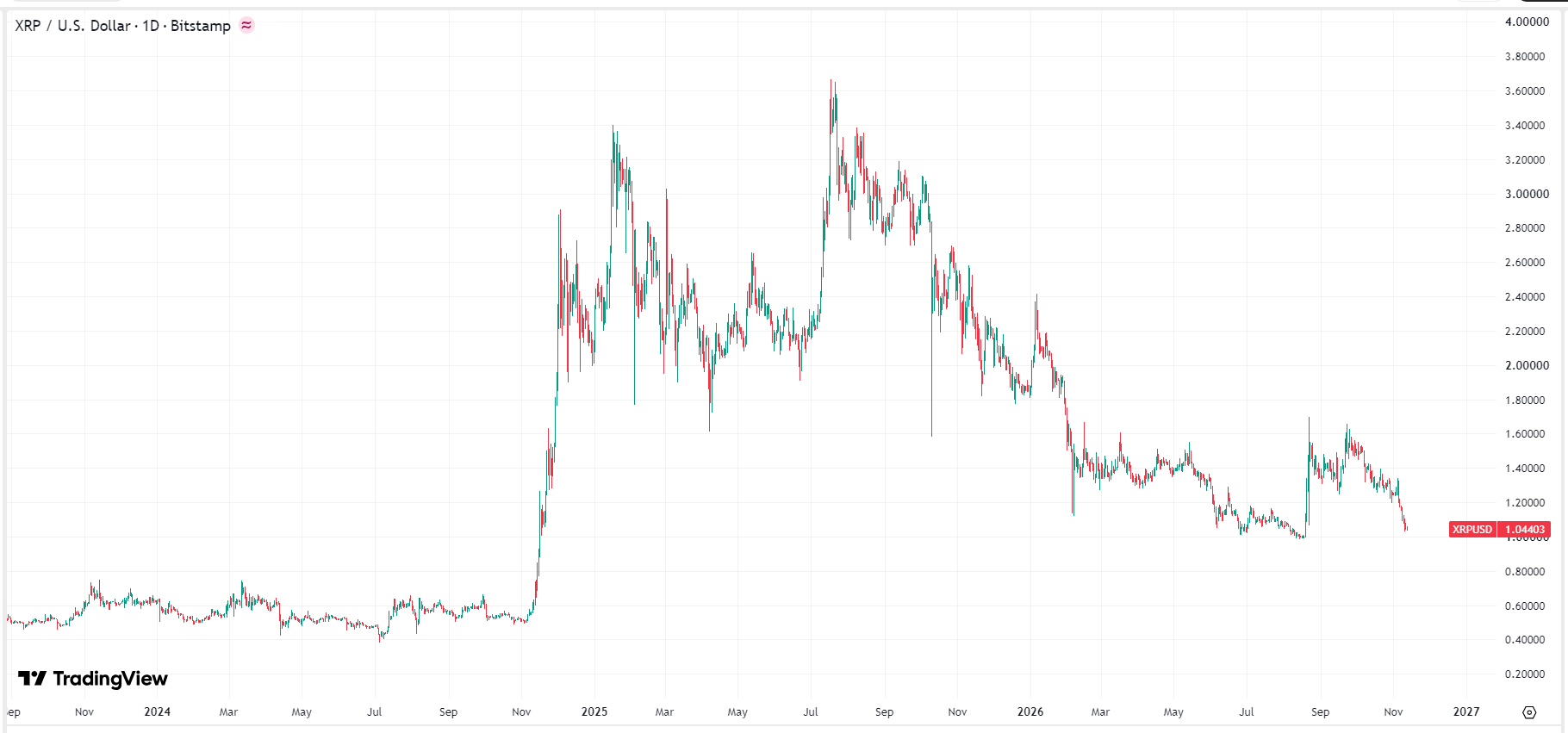 Ripple price chart, Source: TradingView
In mid-to-late August, XRP staged a bottoming rebound, surging approximately 70% in just one week to around $1.70. Following a brief downward correction, XRP mounted another rally in late September to reach $1.65, but ultimately failed to break above its previous high and subsequently drifted steadily lower. Currently, the price of XRP is hovering near $1.
Why Is XRP Price Falling?
XRP experienced a significant decline in 2026, driven not by a single factor, but rather by the combined impact of macroeconomic monetary tightening, regulatory and legislative setbacks, and XRP's own fundamentals.
Ripple Labs unlocks a fixed amount of approximately 1 billion XRP into the circulating market each month. In the absence of strong retail and institutional buying to absorb this volume, it exerts persistent supply overhang pressure on secondary market prices. In addition, the gap between enterprise partnerships and actual token demand makes it difficult for positive partnership developments to translate 100% into spot buying demand for XRP.
Although Ripple established a regulatory compliance foundation after concluding its protracted lawsuit with the SEC, the U.S. Congressional Clarity Act, on which the market had pinned high hopes, suffered setbacks in the Senate. Following the November 2026 U.S. midterm elections in which Democrats gained control of both chambers of Congress, lawmakers are set to launch rigorous investigations into the nexus of political, business, and crypto interests, exacerbating institutional investors' wait-and-see stance regarding crypto asset compliance.
The latest U.S. October CPI data broadly exceeded market expectations, highlighting strong inflation stickiness. Rising inflation prompted hawkish remarks from several Federal Reserve officials, including Christopher Waller and Lorie Logan, who even advocated resuming rate hikes in December or keeping interest rates elevated. The U.S. 2-year Treasury yield surged to around 4.69%, significantly tightening global market liquidity and directly weighing on high-beta virtual assets, including XRP.
Is XRP Worth Buying Now?
From a fundamental perspective, Ripple's core technology centers on enhancing cross-border settlement efficiency among global financial institutions. Its strategic footprint in institutional-grade digital asset settlement and central bank digital currency (CBDC) technology continues to provide a solid foundation for real-world adoption. In addition, the steady expansion of its USD stablecoin, RLUSD, within the ecosystem unlocks further growth potential for on-chain activity and transaction fee revenue.
From technical and psychological standpoints, $1 is a critical round-number threshold defended by bulls, and with the price down over 70% from its 2025 peak of $3.60, valuations have returned to historical norms. Therefore, for long-term value investors who remain constructive on the multi-year crypto cycle and build positions in tranches on the left side of the trend, the risk-reward profile here is significantly more attractive than at prior highs. However, the market may face near-term risks, such as tightening macroeconomic liquidity, a hawkish pivot by the Federal Reserve, and political and regulatory uncertainties. These factors could drive XRP to retest this year's low of $0.90 or even slide toward the major bottom of the previous bear market near $0.50.
Recommended Articles


