


Should You Buy Nvidia After Its Sharp Decline? Warren Buffett’s Long-Held Investment Philosophy Provides a Clear Answer
Key Points
Nvidia has faced multiple setbacks over the last few weeks, but earnings remain strong.
Buffett's 1994 letter to shareholders explained a key factor he looks for in investments.
The legendary investor picked a different AI stock over Nvidia before he left Berkshire Hathaway.
- Motley Fool Issues Rare "Total Conviction" Buy Alert ›
The past six weeks have been tough for Nvidia (NASDAQ:NVDA) and its shareholders. In October, growing concerns about how businesses will finance future build-outs for artificial intelligence (AI) started weighing on semiconductor stocks.
In early November, the mid-term election results showed a clear rebuke of massive data centers and the potential for increased regulations to slow development. And, of course, Jensen Huang's affairs with an alleged Chinese spy and two employees ultimately led to his temporary resignation, leaving Nvidia without a permanent CEO for 11 days.
Missed Nvidia in 2009? This Rare Signal Is Flashing Again. In 2009, a "Double Down" signal flashed for a little-known chipmaker called Nvidia. For the first time in years, that same "Total Conviction" signal is flashing for a company 1/100th the size of Nvidia. Continue »
The end result is a stock well off its all-time high, despite having just reported third-quarter revenue and earnings growth that both exceeded 100%. CFO and interim-CEO Colette Kress said it's "business as usual" at Nvidia, painting an optimistic picture on the company's earnings call. So, with the stock trading at a level rarely seen in the past year, should investors consider buying the stock? Warren Buffett's long-held investment philosophy can provide the answer to that question.
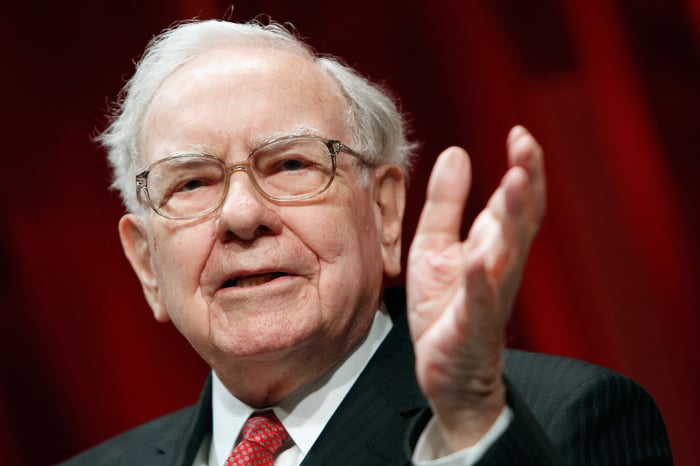
Warren Buffett. Image source: Getty Images.
Is it time to get greedy with Nvidia?
Many investors might look at Nvidia's drop and think, "The market is fearful; I should get greedy." After all, Kress just increased her guidance for fiscal 2028 revenue growth from 70% to 75%. Wall Street analysts see Nvidia's earnings per share climbing above $16 next year. The stock trades at ridiculously low multiples.
While it's true that Buffett has long noted that one of the keys to his success as an investor is "to be greedy only when others are fearful," that's not the only requirement for a good investment. Buffett also only invested in stocks when he had a high degree of confidence in their future. If a company was deemed too difficult to understand or forecast, he stayed away.
"Investors should remember that their scorecard is not computed using Olympic-diving methods: Degree-of-difficulty doesn't count," Buffett wrote in his 1994 letter to Berkshire Hathaway (NYSE:BRKA) (NYSE:BRKB) shareholders. "If you are right about a business whose value is largely dependent on a single key factor that is both easy to understand and enduring, the payoff is the same as if you had correctly analyzed an investment alternative characterized by many constantly shifting and complex variables."
At this point, Nvidia's business is more like the latter than the former. Huang's actions and the potential repercussions leave many unanswered questions for investors. The high level of uncertainty about Nvidia's future explains why it trades at such a low multiple. It's not fear; it's a rational response to the recent events impacting the company.
Other AI stocks look more attractive
There are a couple of alternatives to Nvidia stock trading at earnings multiples that aren't much higher than the chip leader.
Buffett himself initiated a position in Alphabet (NASDAQ:GOOG) (NASDAQ:GOOGL) in 2025. His thesis was based on the company's ability to deploy huge sums of capital with a high return on investment. Specifically, Buffett was talking about its Google Cloud Platform and its data centers full of GPUs and custom silicon.
Alphabet is well-positioned to deliver high returns on invested capital in Google Cloud because of its full-stack approach to AI. It designs the systems and chips in its data centers; it offers a full cloud platform for developers (not just infrastructure); it develops a frontier large language model; and it integrates AI capabilities across its products.
Google Cloud CEO Thomas Kurian said that its payback period for the average server in its data centers is just two years, and its custom Tensor Processing Unit (TPU) systems break even within half that time. With a useful life of six years and a good operating margin, that's an exceptional return on invested capital. That return on invested capital is set to climb as more spending shifts from data center shells to revenue-generating servers.
Another company positioned to grow based on a single key factor is Broadcom (NASDAQ:AVGO). Broadcom is the leading custom AI accelerator design partner, the one Alphabet uses for most of its TPUs. Growing demand for custom silicon, which costs less up front than GPUs and offers better price-performance, should result in its AI chip revenue climbing faster than the competition's for years to come. Its lead is protected by its intellectual property and its close relationship with its foundry partner, Taiwan Semiconductor Manufacturing.
While Nvidia currently trades around 16 times earnings expectations, Broadcom's stock price isn't much higher at 17 times forward earnings. Alphabet is more expensive at 21 times forward earnings, but it's arguably the least risky of the group, considering its digital advertising business remains a huge cash cow funding its growth.
Should you buy stock in Nvidia right now?
Before you buy stock in Nvidia, consider this:
The Motley Fool Stock Advisor analyst team just identified what they believe are the 10 best stocks for investors to buy now… and Nvidia wasn’t one of them. The 10 stocks that made the cut could produce monster returns in the coming years.
Consider when Netflix made this list on December 17, 2004... if you invested $1,000 at the time of our recommendation, you’d have $320,394!* Or when Nvidia made this list on April 15, 2005... if you invested $1,000 at the time of our recommendation, you’d have $917,381!*
Now, it’s worth noting Stock Advisor’s total average return is 776% — a market-crushing outperformance compared to 199% for the S&P 500. Don't miss the latest top 10 list, available with Stock Advisor, and join an investing community built by individual investors for individual investors.
See the 10 stocks »
*Stock Advisor returns as of November 26, 2026.
Adam Levy has positions in Alphabet, Broadcom, and Taiwan Semiconductor Manufacturing. The Motley Fool has positions in and recommends Alphabet, Berkshire Hathaway, Broadcom, Nvidia, and Taiwan Semiconductor Manufacturing. The Motley Fool has a disclosure policy.
Recommended Articles


