


The Strait of Hormuz is Now Open! Or Is It? Here's How President Trump's Blockade Could Continue to Impact the Energy Markets.
Key Points
Iran has declared that the Strait of Hormuz is fully open to commercial traffic.
The U.S. Navy continues to enforce its blockade.
Oil needs to start flowing soon to avoid damage to the global economy.
- These 10 stocks could mint the next wave of millionaires ›
For more than a month, Iran has effectively closed the Strait of Hormuz to commercial traffic by attacking ships attempting to pass through that narrow waterway. However, with Israel and Lebanon reaching a ceasefire deal yesterday, Iran's foreign minister stated in a social media post that: "The passage for all commercial vessels through the Strait of Hormuz is declared completely open."
President Trump responded on social media, first thanking Iran for announcing the full reopening of the Strait. However, he followed that up with a subsequent post stating that the U.S. Naval blockade remains in full force. Here's a look at what's happening and how it could impact the energy markets.
Will AI create the world's first trillionaire? Our team just released a report on the one little-known company, called an "Indispensable Monopoly" providing the critical technology Nvidia and Intel both need. Continue »
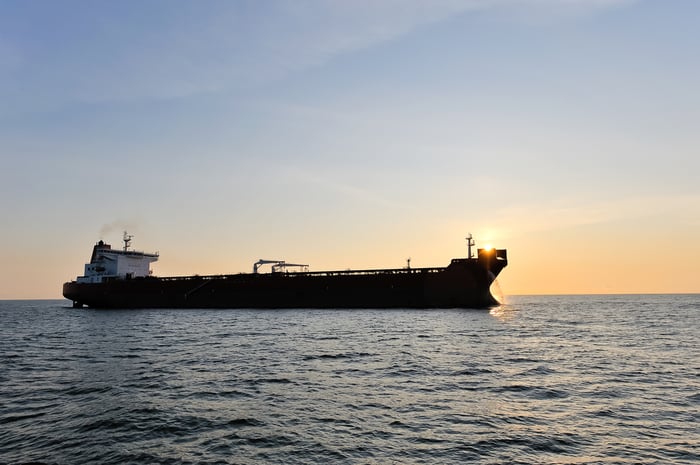
Image source: Getty Images.
A ceasefire upon a ceasefire with a blockade
On April 7, the U.S. agreed to a two-week ceasefire with Iran in exchange for a complete reopening of the Strait of Hormuz to commercial traffic. While the U.S. and Israel stopped bombing Iran, which ceased retaliatory strikes against military and energy industry targets across the Middle East, the Strait has remained closed to traffic due to Israel's military campaign against Hezbollah in Lebanon, which Iran believed violated the ceasefire agreement.
However, with Israel and Lebanon agreeing to a 10-day ceasefire on Thursday, Iran is now reopening the Strait to commercial traffic. Vessels must transit through a coordinated route to avoid any potential sea mines in the Strait.
While Iran won't attack ships moving through the Strait, the U.S. Navy will still enforce its blockade against Iran until it reaches a peace deal. According to the U.S. Central Command, the Navy is blocking "all vessels of all nations entering or leaving coastal areas or ports in Iran." It has turned back several ships since imposing the blockade in the Gulf of Oman, just outside the Strait of Hormuz. It will allow the free passage of all other ships.
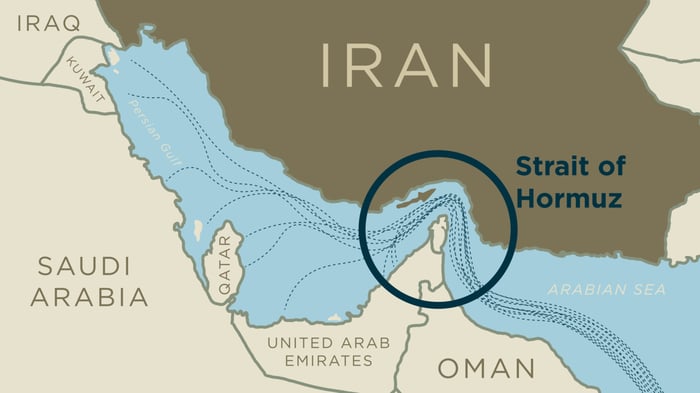
Image source: Getty Images.
How will this impact the energy market?
Oil prices tumbled after news that Iran reopened the Strait of Hormuz. Brent crude, the global oil benchmark, fell more than 10% by the early afternoon to under $89 per barrel, while WTI, the primary U.S. benchmark, slumped around 12% to $83 a barrel. Both oil benchmarks are now well off their peaks of more than $119 following Iranian attacks on energy infrastructure in the Persian Gulf.
While oil prices are falling on the belief that crude will start to freely flow out of the Persian Gulf again, it's not yet clear if ship owners are willing to risk the voyage. Further, the current ceasefire between the U.S. and Iran will expire next week if the two sides don't agree to an extension or sign a peace deal. Given the fragile situation, crude oil prices could be very volatile in the coming week.
The longer it takes oil to flow out of the Persian Gulf, the worse the global energy situation could become. According to a report by El País, it will take the oil market three to five months to normalize, even after the Strait reopens, due to the time required to transport and refine oil, repair damaged facilities, and restart shut-in wells. As a result, the world could face fuel shortages in the coming weeks, with the International Energy Agency recently warning that Europe could face jet fuel shortages in the next six weeks.
What to watch
While the market is breathing a sigh of relief today, the situation in the energy market isn't over yet. Unless the U.S. and Iran sign a peace agreement soon, the Strait could close again, causing another oil price spike. Investors need to monitor this risk and brace for the potential for more volatility in the coming week.
Where to invest $1,000 right now
When our analyst team has a stock tip, it can pay to listen. After all, Stock Advisor’s total average return is 1,016%* — a market-crushing outperformance compared to 197% for the S&P 500.
They just revealed what they believe are the 10 best stocks for investors to buy right now, available when you join Stock Advisor.
See the stocks »
*Stock Advisor returns as of April 17, 2026.
The Motley Fool has a disclosure policy.
Recommended Articles


