


5 Ripple Effects From the Strait of Hormuz Blockade Affecting Energy Stocks
Key Points
The lack of crude oil and LNG flows through the Strait is severely affecting global energy markets.
Refining crack spreads are soaring as gasoline prices rise.
Fertilizer prices and shipping rates continue to rise.
- 10 stocks we like better than Devon Energy ›
The price of oil is clearly being heavily influenced by speculation about developments in the Persian Gulf, specifically the closure of the Strait of Hormuz to commercial traffic. It's important to remember that this isn't simply a question of the U.S. ceasing attacks on Iran. It's Iran that is refusing to allow traffic through, and the threat to energy infrastructure in the Persian Gulf remains, so even if it's reopened, it's unclear when energy flows will return to pre-conflict levels.
In this context, here are some ways the closure will affect energy-related companies and how to protect a portfolio against these risks. This is not the place to discuss geopolitics, but it is the place for retail investors to discuss the growing risk posed by recent hostilities and the stocks that can help navigate risk.
Will AI create the world's first trillionaire? Our team just released a report on the one little-known company, called an "Indispensable Monopoly" providing the critical technology Nvidia and Intel both need. Continue »

Image source: Getty Images.
1. Crude oil supplies
According to the International Energy Agency (IEA), 25% of the world's seaborne oil flows through the Strait, and the prospect of its loss has sent oil prices soaring. The obvious place to start in this context is to buy U.S.-focused exploration and production companies. Devon Energy (NYSE: DVN) and Diamondback Energy (NASDAQ: FANG) are great stocks to play this theme. Both produce in the U.S. and have shareholder-friendly capital return polices.
2. Liquefied natural gas (LNG) shipments
It's not just crude oil that typically flows through the Strait. About 20% of global LNG trade flows through it. In addition, Iran has hit and specifically threatens to hit energy infrastructure in the region, so even if the Strait is reopened, it's not clear when LNG trade will normalize.
While 90% of LNG that goes through the Strait typically ends up in Asia, a shortage will create a gap, resulting in higher prices worldwide. That's an acute problem for Europe, which has voluntarily reduced its LNG purchases from Russia. One answer to the problem is to buy crude oil and LNG from Norwegian energy giant Equinor (NYSE: EQNR).
Norwegian energy exports to the European Union (Norway is not a member) boomed following the Russian invasion of Ukraine, and the country -- and its largest energy company, Equinor -- are primed to benefit in the current environment.
In a similar vein, Australian energy company Woodside Energy (NYSE: WDS) has an opportunity to fill the LNG gap by supplying it to Asian countries.
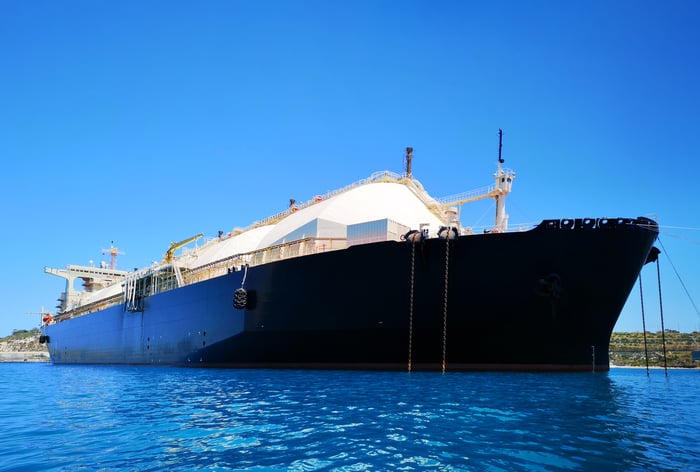
Image source: Getty Images.
3. The refining crack spread is soaring
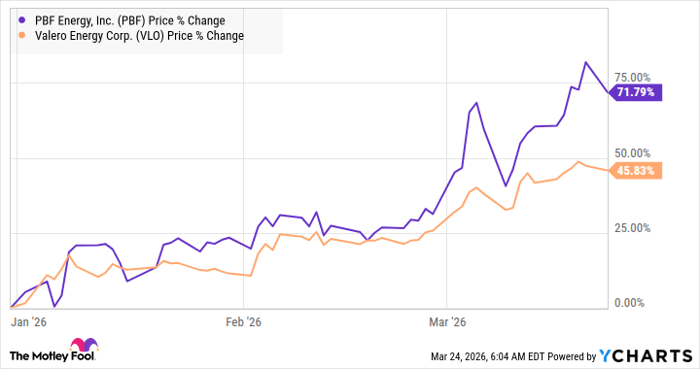
Refining stocks such as PBF Energy (NYSE: PBF) and Valero Energy (NYSE: VLO) are up significantly in 2026. Those moves might seem surprising, given that they buy crude oil to refine into gasoline and other refined products. That said, the key metric for refiners is the crack spread -- the spread between the price of oil per barrel and what it's able to sell as a finished product.
PBF data by YCharts.
The most widely followed crack spread is the 3-2-1 spread. This isn't an impenetrable riddle. It measures the theoretical spread between the price of two barrels of gasoline and one barrel of diesel compared to three barrels of crude oil. Having started the year at around $20, the 3-2-1 spread is currently above $58, as a lack of refined product from the Persian Gulf and a lack of crude oil supply have left Asian refiners holding the booby prize.
4. Fertilizer prices are soaring
The blockade of the Strait has also left many fertilizer-laden ships stranded, and prices for chemical fertilizers (made from natural gas) have soared. That's a major problem for Asian and African countries reliant on fertilizer from Gulf countries. With fertilizer prices rising, investors are turning their attention to U.S. producers like CF Industries (NYSE: CF), which have manufacturing plants in the U.S., Canada, and the U.K. and source gas from North America.
5. LNG shipping rates
The lack of LNG shipping through the Strait is forcing a significant readjustment in LNG shipping routes, which is a major benefit for LNG shipping company FLEX LNG (NYSE: FLNG). The company's near-10% dividend yield makes it one of three high-yield stocks benefiting from the realignment of the energy supply chain caused by the blockade.
If Asian countries can no longer source LNG from the Gulf, LNG shipping routes will inevitably lengthen, as LNG will need to come in through different routes. That will extend ships' days at sea and keep ship utilization high. That's a positive for FLEX LNG, and particularly so given its modern, more efficient fleet of ships.
Should you buy stock in Devon Energy right now?
Before you buy stock in Devon Energy, consider this:
The Motley Fool Stock Advisor analyst team just identified what they believe are the 10 best stocks for investors to buy now… and Devon Energy wasn’t one of them. The 10 stocks that made the cut could produce monster returns in the coming years.
Consider when Netflix made this list on December 17, 2004... if you invested $1,000 at the time of our recommendation, you’d have $490,325!* Or when Nvidia made this list on April 15, 2005... if you invested $1,000 at the time of our recommendation, you’d have $1,074,070!*
Now, it’s worth noting Stock Advisor’s total average return is 900% — a market-crushing outperformance compared to 184% for the S&P 500. Don't miss the latest top 10 list, available with Stock Advisor, and join an investing community built by individual investors for individual investors.
See the 10 stocks »
*Stock Advisor returns as of March 25, 2026.
Lee Samaha has no position in any of the stocks mentioned. The Motley Fool recommends Equinor Asa. The Motley Fool has a disclosure policy.
Recommended Articles


