


Nvidia Stock Is Outperforming the Market in 2026. Is It a Buy?
Key Points
The AI chip company reports fiscal Q4 results on Wednesday.
Nvidia's revenue growth reaccelerated in fiscal Q3 as data center demand continued to climb.
The stock isn't cheap, but it may not be grossly overvalued either.
- 10 stocks we like better than Nvidia ›
Shares of artificial intelligence (AI) chip leader Nvidia (NASDAQ: NVDA) have held up well in early 2026, edging ahead of the broader market even as several other megacap tech companies have seen their share prices get hit hard. With the stock starting off 2026 outperforming the broader market, could this trend persist over the long haul?
It's a good time to take a look at the growth stock. Nvidia reports earnings on Wednesday, and it will likely also provide its first look at fiscal 2027 guidance in the update. Of course, no one can know how the stock will react to that update; even a strong quarter can trigger a sell-off if the numbers don't meet market expectations.
Will AI create the world's first trillionaire? Our team just released a report on the one little-known company, called an "Indispensable Monopoly" providing the critical technology Nvidia and Intel both need. Continue »
So, the better question is whether the underlying fundamentals justify starting a position today -- and what risks would make a more cautious investor wait.
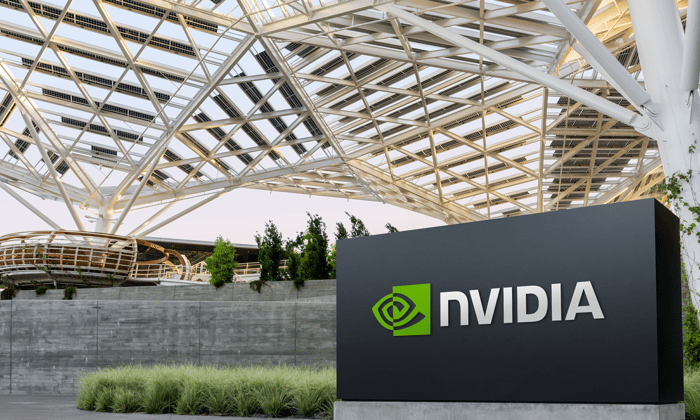
Image source: Nvidia.
The AI boom is driving Nvidia's sales through the roof
Demand for AI chips -- Nvidia's bread and butter -- has solidified the chipmaker's position among the world's biggest tech companies. And the AI boom driving this growth doesn't seem to be slowing down.
Revenue in Nvidia's most recent quarter, which was its third quarter of fiscal 2026 (the period ended Oct. 26), rose 62% year over year to $57.0 billion, accelerating from 56% growth in fiscal Q2. And the sequential change was even more striking: revenue climbed 22% from fiscal Q2's $46.7 billion.
The main story for Nvidia remains its data center segment, which houses the company's AI accelerators and related platform sales. Data center revenue in fiscal Q3 was $51.2 billion, up 66% year over year and up 25% from the prior quarter. In other words, Nvidia's biggest growth driver not only stayed hot -- it sped up again.
Gross margin has been a key variable to watch as Nvidia ramps new products and sells more complex systems, and it continues to be exceptional on this front. In fiscal Q3, the company reported a generally accepted accounting principles (GAAP) gross margin of 73.4%, up from 72.4% in fiscal Q2. That is still below the mid-70% level Nvidia has targeted longer term, but the direction is favorable.
And Nvidia's cash flow remains a strong point for the company. Its operating cash flow in fiscal Q3 was $23.8 billion, up from $15.4 billion in the prior quarter. Enhancing the bull case for the stock, cash flow like this lets the company continue to invest in its business while aggressively returning capital to shareholders. In its most recent quarter, for instance, Nvidia returned $12.7 billion to shareholders -- $12.5 billion in share repurchases and $243 million in dividends.
Is Nvidia stock a buy ahead of earnings?
Going into its earnings report on Wednesday, Nvidia's own guidance for fiscal Q4 sets a high bar. The company guided for fiscal fourth-quarter revenue of $65 billion, plus or minus 2%, and for GAAP gross margin of 74.8%, plus or minus 50 basis points. The company's top-line revenue implies a year-over-year growth rate of about 65% year over year. If Nvidia delivers around those levels, it would represent another quarter of enormous scale and very high profitability.
But this incredible momentum is also the basis for one of the stock's biggest risks: high expectations.
At today's stock price (shares trade at a price-to-earnings ratio of 47), investors are not just paying for strong AI demand in the next quarter or two. They are paying for a multi-year run in which quarterly revenue keeps climbing at a very high rate and gross margins stay in the mid-70% range even as the product mix likely shifts over time and competition inevitably gets tougher.
None of this means Nvidia is overvalued. The company is producing $57 billion top-line quarters and growing at a 60%-plus pace. It deserves its valuation. But there's no margin of safety built into the current price, so any slip-ups could take the stock down.
Overall, however, the stock looks decent -- but only for the right investors. If you want exposure to the AI infrastructure build-out, I think Nvidia can make sense as a small position (small because there's always a risk that Nvidia's exceptional growth story begins softening earlier than expected). More cautious investors, however, may want to wait for Wednesday's financial update. It could validate the current expectations. But it could also create a better entry point if the stock sells off even while the fundamentals remain strong.
Should you buy stock in Nvidia right now?
Before you buy stock in Nvidia, consider this:
The Motley Fool Stock Advisor analyst team just identified what they believe are the 10 best stocks for investors to buy now… and Nvidia wasn’t one of them. The 10 stocks that made the cut could produce monster returns in the coming years.
Consider when Netflix made this list on December 17, 2004... if you invested $1,000 at the time of our recommendation, you’d have $409,970!* Or when Nvidia made this list on April 15, 2005... if you invested $1,000 at the time of our recommendation, you’d have $1,174,241!*
Now, it’s worth noting Stock Advisor’s total average return is 889% — a market-crushing outperformance compared to 192% for the S&P 500. Don't miss the latest top 10 list, available with Stock Advisor, and join an investing community built by individual investors for individual investors.
See the 10 stocks »
*Stock Advisor returns as of February 24, 2026.
Daniel Sparks and his clients have no position in any of the stocks mentioned. The Motley Fool has positions in and recommends Nvidia. The Motley Fool has a disclosure policy.
Recommended Articles


