

This Was the Best Performing "Magnificent Seven" Stock in 2025 (Hint: Not Nvidia)
Key Points
Nvidia has been among the biggest gainers over the past few years, thanks to strong demand for AI.
While Alphabet has lagged its "Magnificent Seven" counterpart, it turned the tables in 2025, outpacing Nvidia.
The resolution of the antitrust overhang, a strong AI showing, and a reasonable valuation make Alphabet a compelling choice heading into 2026.
- 10 stocks we like better than Alphabet ›
The past few years have been a rocket ride for Nvidia (NASDAQ: NVDA) investors. The chipmaker's graphics processing units (GPUs) assumed the pole position as the gold standard for powering artificial intelligence (AI) applications. In fact, since the rapid adoption of AI kicked off in early 2023, Nvidia has been the best performing of the vaunted "Magnificent Seven" stocks, soaring 1,190%.
Given that information, investors might be surprised to learn that -- despite generating market-beating returns last year -- Nvidia was not the best-performing stock among the Magnificent Seven. That honor belongs to Alphabet (NASDAQ: GOOGL) (NASDAQ: GOOG), as shares surged 65% in 2025, compared to just 39% for Nvidia.
Where to invest $1,000 right now? Our analyst team just revealed what they believe are the 10 best stocks to buy right now, when you join Stock Advisor. See the stocks »
Let's review the circumstances that led to Alphabet's outperformance and why the Google parent could be poised for another banner year.
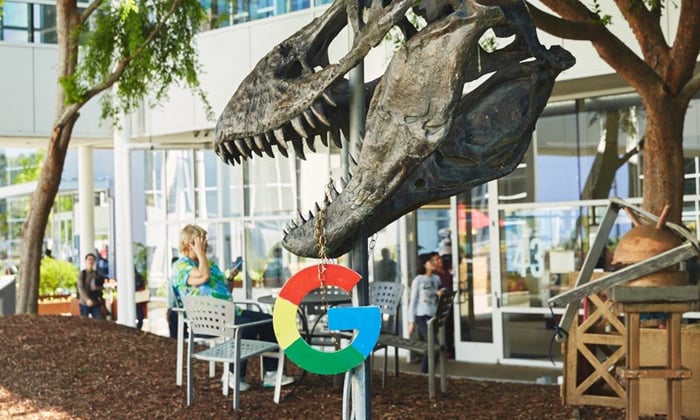
Image source: Alphabet.
A tough year for Nvidia
To appreciate how Alphabet bested its Magnificent Seven rival in 2025, it helps to review the challenges Nvidia faced last year.
The introduction of China's DeepSeek R1 "reasoning" model interjected a measure of uncertainty into the future of AI, as some industry watchers were concerned it might reduce demand for Nvidia's GPUs. Within months, additional concerns arose that tariffs would also weigh on demand. Finally, in early April, the Trump administration issued a ban on the sale of Nvidia's H20 chips, which were specifically developed to meet export restrictions for customers in China.
Despite these challenges, demand for Nvidia's AI chips remained robust. After plunging more than 36% early in the year, the stock ultimately rebounded, gaining 39% in 2025.
Victory in the face of uncertainty
Alphabet spent much of the past several years embroiled in an antitrust case brought by the U.S. Department of Justice. In mid-2024, the company was found guilty of exploiting its internet search dominance and engaging in monopolistic competition. Some investors feared the company could be broken up or hobbled by severe remedies.
Furthermore, there were concerns that Google's core search business -- which fuels the company's massive advertising revenue -- could be supplanted by competitors' AI-powered options.
The combination of antitrust uncertainty and AI-related fears weighed on Alphabet, pushing its valuation into bargain-basement territory. To close out 2024, the stock traded for less than 24x trailing-12-month earnings, making it the cheapest of the Magnificent Seven stocks.
Turn the page
However, as the page turned in 2025, so did Alphabet's fortunes. U.S. District Judge Amit Mehta ruled against the more draconian antitrust remedies -- which included a breakup of the company or divestiture of its Chrome internet browser or Android operating system -- but barred Google from exclusive contracts and required the company to share certain search data with rivals. Investors viewed this as a win for the search giant.
Moreover, Google sidestepped the AI competition by embedding the search findings from its homegrown Gemini large language model (LLM) directly into the company's standard results page. Rather than losing ground to its rivals, Alphabet actually helped secure its internet search lead before the competition could gain any traction.
Gemini was so good, in fact, that it outperformed upstart OpenAI's latest models on nearly every industry benchmark. The results prompted OpenAI CEO Sam Altman to issue a "code red," warning the company was being outflanked by its larger rival. Gemini's success also helped reignite Google's Cloud growth, as revenue jumped 34% year over year in Q3.
These developments energized investors, who piled into Alphabet, breaking the stock out of its rut and pushing it to a new all-time high.
The future looks bright
There could be more to come. Analysts' consensus estimates are calling for revenue growth of 14% in 2026, comparable to Alphabet's year-over-year growth rate in 2025. Even more intriguing is that Wall Street expects the company to grow its revenue by 13%, on average, over the next five years. Furthermore, of the 67 analysts who have offered an opinion, 58 rate Alphabet stock a buy or strong buy, and not one recommends selling.
Google's unique combination of search dominance, its position as one of the Big Three cloud infrastructure providers, and its increasing AI acumen make the stock a solid buy for 2026. In addition, at 28 times forward earnings, it's stock is still reasonably priced.
Should you buy stock in Alphabet right now?
Before you buy stock in Alphabet, consider this:
The Motley Fool Stock Advisor analyst team just identified what they believe are the 10 best stocks for investors to buy now… and Alphabet wasn’t one of them. The 10 stocks that made the cut could produce monster returns in the coming years.
Consider when Netflix made this list on December 17, 2004... if you invested $1,000 at the time of our recommendation, you’d have $493,290!* Or when Nvidia made this list on April 15, 2005... if you invested $1,000 at the time of our recommendation, you’d have $1,153,214!*
Now, it’s worth noting Stock Advisor’s total average return is 973% — a market-crushing outperformance compared to 195% for the S&P 500. Don't miss the latest top 10 list, available with Stock Advisor, and join an investing community built by individual investors for individual investors.
See the 10 stocks »
*Stock Advisor returns as of January 7, 2026.
Danny Vena, CPA has positions in Alphabet and Nvidia. The Motley Fool has positions in and recommends Alphabet and Nvidia. The Motley Fool has a disclosure policy.
Recommended Articles


