


Paris Blockchain Week 2026: Where the New Financial Order Took Shape
Paris Blockchain Week has earned its reputation as the event where the real decisions get made. Not the announcements rehearsed for press releases, but the conversations between people who are actually building the infrastructure of the next financial system. This year, BeInCrypto attended as an official media partner, with Global Head of News Brian McGleenon and Editor-in-Chief and EU Lead Correspondent Phil Haunhorst on the ground.
What followed was two days of fireside chats, on-camera interviews, and floor conversations that cut across custody architecture, MiCA strategy, RWA liquidity, stablecoin infrastructure, and the shifting relationship between traditional finance and decentralized systems. Here is what we took away.
The Setting Said Everything
Before a single panel began, the opening night framed the week’s central tension perfectly.
Three busloads of attendees – TradFi executives, DeFi builders, and everyone in between – were escorted through Paris by the Gendarmerie, blue lights flashing, bound for a reception with government ministers at the Palace of Versailles.
The irony was not lost on those in the room. As Blockstream CEO Adam Back noted, Versailles itself was born from sovereign debt and a desperate experiment in fiat money creation. John Law’s paper money scheme, launched to paper over Louis XIV’s 3 billion livres in debts, was one of the earliest recorded monetary collapses. Standing in those halls to celebrate a protocol built on hard supply limits and cryptographic immutability made for a pointed contrast.
The anxiety that has followed TradFi capital into the space – that Wall Street’s entry would dilute what the technology was built to do – was present throughout the week. What the conversations actually showed, from Adam Back’s counter-narrative to the technical roadmaps presented by Morgan Stanley, Mastercard, and Citi on T+0 settlement and RWA liquidity, is that the direction of influence is not running cleanly from the incumbents inward. The properties of the underlying protocols are placing constraints on how traditional finance can engage. That is a different story than absorption.
The French state’s engagement this year went beyond ceremony. The French Minister Delegate of the Interior Jean-Didier Berger opened proceedings by treating blockchain not as a financial novelty but as a pillar of national security and economic strategy.

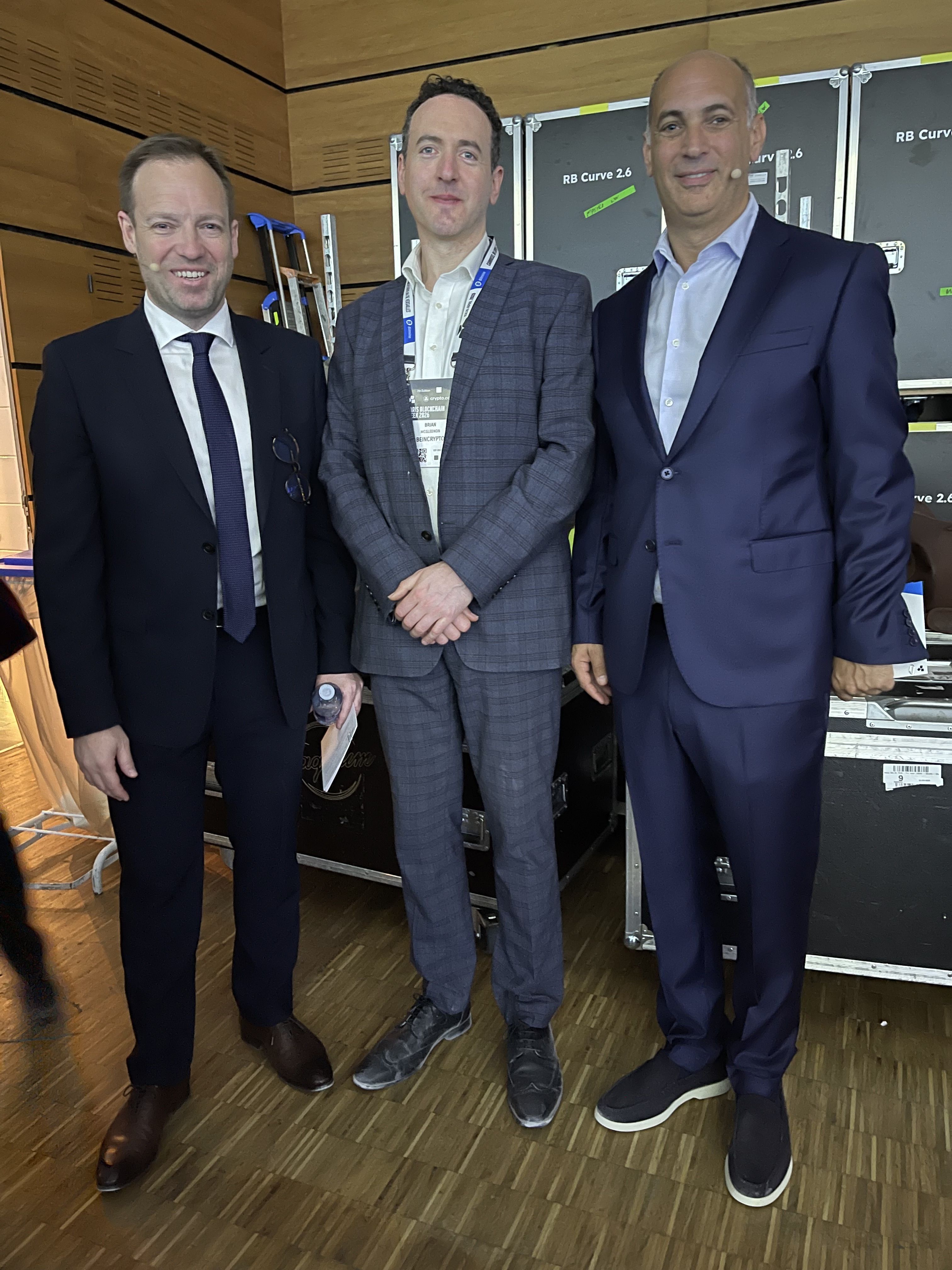
On the Master Stage: Brian McGleenon as Host
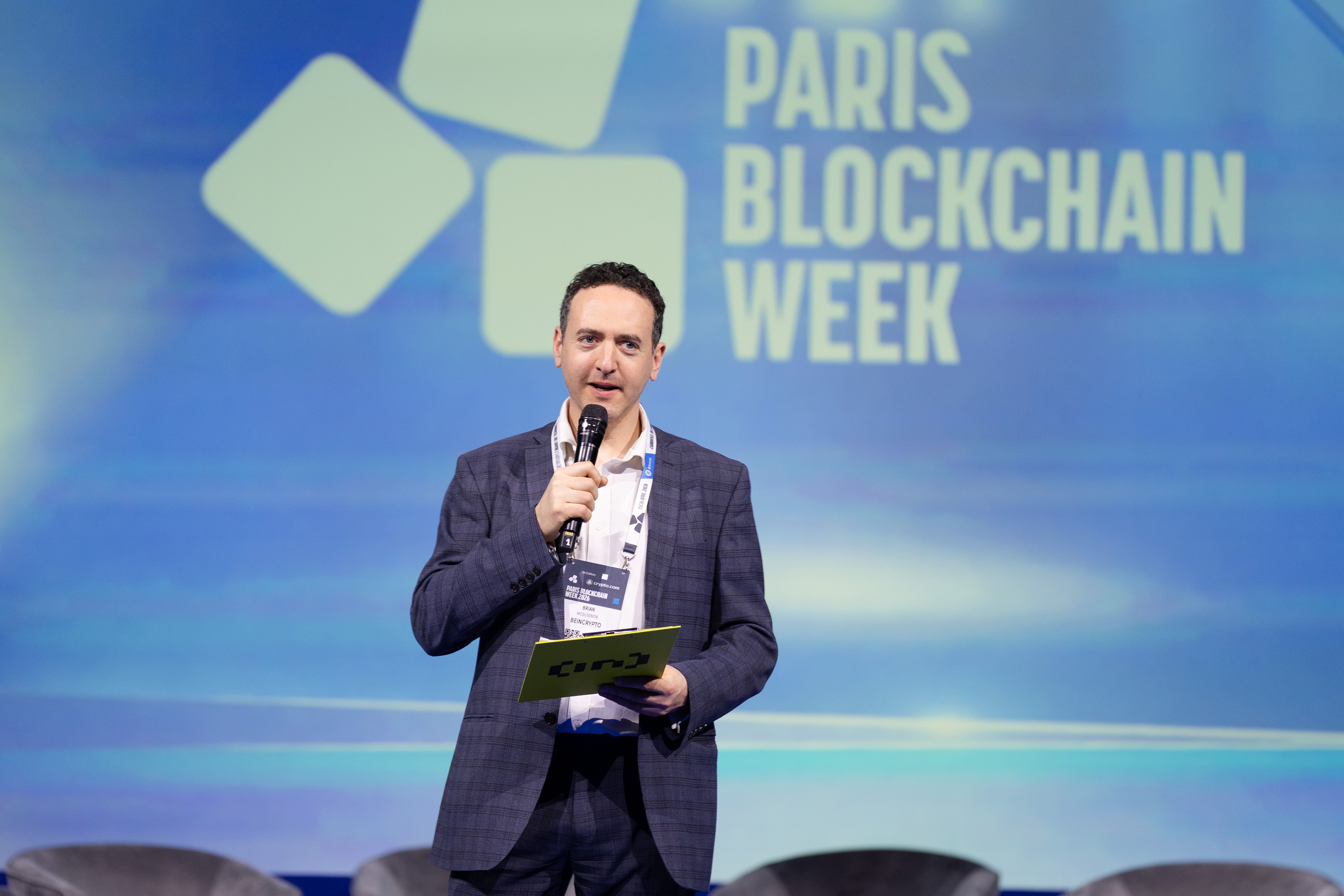
Brian moderated two fireside chats on the master stage, hosted the full second day, and moderated a separate fireside at the RippleX Roadshow side event. The guests reflected where the industry actually sits in 2026: exchanges being evaluated as long-term infrastructure partners, European platforms redefining what a crypto firm looks like to a Tier-1 bank, and regulators treated as strategic variables rather than obstacles.
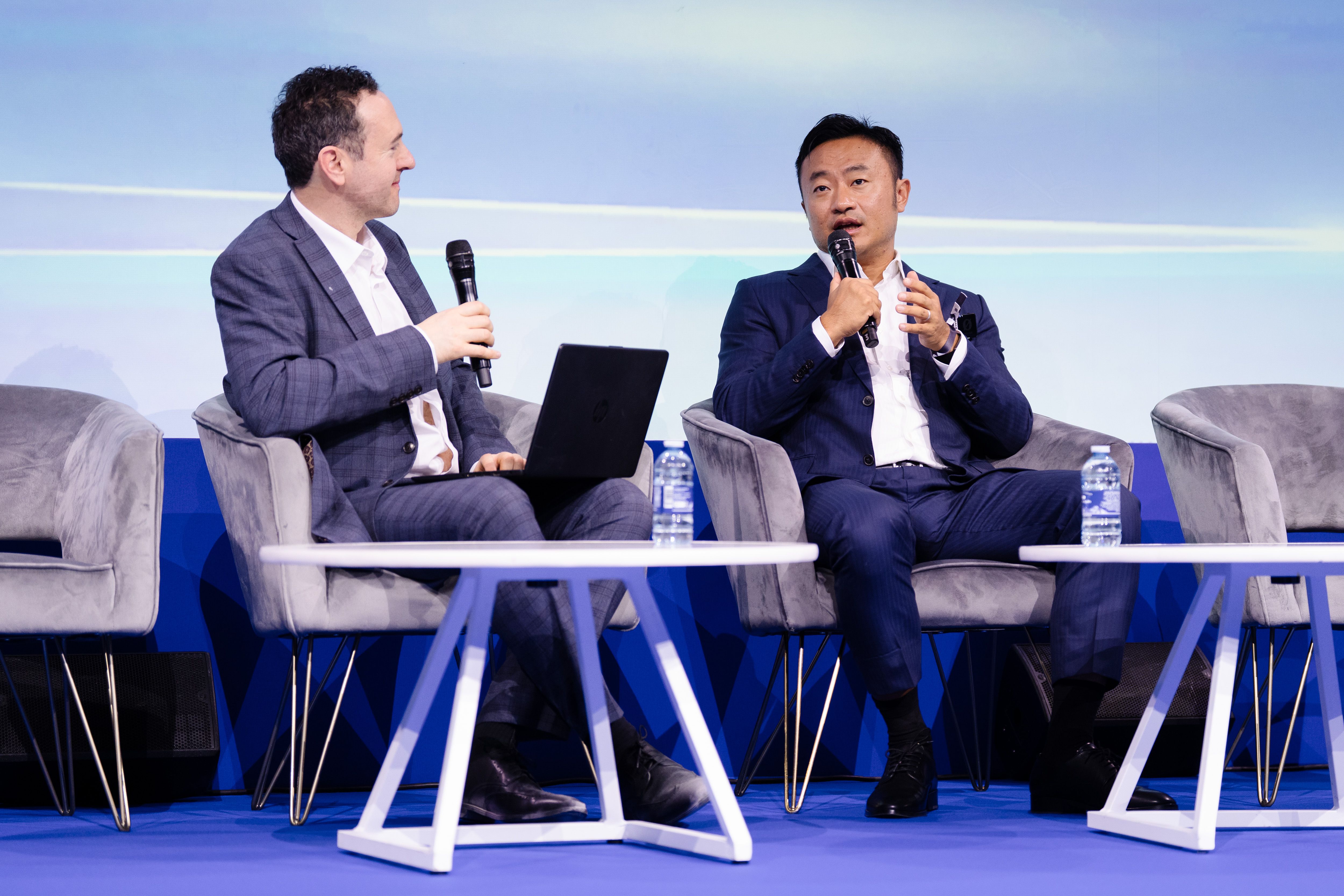
Bybit’s Case for Full-Stack Infrastructure: Ben Zhou
The central question: what does “New Financial Platform” actually mean when institutional capital is deciding where to settle?
Moving beyond the traditional exchange narrative, Brian and Ben framed Bybit as a core pillar of the industry’s architectural pivot toward ‘Agentic Finance,’ where intelligence supersedes the user interface. The Bybit CEO introduced the concept of “Agentic Finance” to the conversation, explaining that the future of financial platforms is one where the user interface effectively disappears. In this vision, AI agent accounts utilise tools like Openclaw to navigate liquidity pools and manage sub-accounts autonomously, rendering traditional manual trading obsolete.
In this 2026 reality, custody is no longer a differentiator as bank-grade standards have become the universal entry point. Security has shifted from a product feature to baseline infrastructure, with AI serving as a digital immune system for real-time compliance and AML. As exchanges are increasingly assessed as the primary liquidity layer, Bybit differentiates itself through full-stack depth. Zhou argued that while TradFi giants like BlackRock and Fidelity use tokenisation to fix their own clunky settlement rails, Bybit provides the connective tissue, a unified liquidity layer, that prevents market fragmentation as Real World Assets approach scale. Ultimately, the rivalry has shifted; the goal is now to provide the high-velocity infrastructure that Tier-1 banks must inevitably plug into to remain efficient.
Europe’s Compliance Play: Lukas Enzersdorfer-Konrad, Bitpanda
The Bitpanda conversation was Europe’s domestic story told without spin. Eleven years of building inside the regulatory framework rather than around it, and 2026 is where that compounds.
The session with Lukas Enzersdorfer-Konrad focused on the end of the “crypto versus bank” era. The Bitpanda CEO expanded on this narrative of total infrastructure convergence between the incumbents of traditional finance and the innovators from the cryptocurrency sector. The primary takeaway was that the regulatory friction of the last decade has effectively become Bitpanda’s “moat” in 2026. By building within the rules since 2014, the platform has transitioned from a retail broker into the primary regulatory safety net for Tier-1 banks. Lukas made it clear that institutions like Société Générale aren’t just looking for a tech vendor, they are outsourcing the regulatory risk of MiCA to a partner that has already spent eleven years solving for it.
A significant insight emerged regarding the “liquidity island” problem in Europe. Through the launch of Bitpanda Fusion, the conversation shifted from simple asset access to deep liquidity aggregation. Lukas argued that the new battlefield for retail and B2B finance is the erosion of asset silos, where 10,000+ stocks, ETFs, and crypto assets are no longer treated as separate financial species but as interchangeable entries on a single ledger.
The discussion also highlighted a stark divergence in how digital wealth is being utilised across Bitpanda’s global footprint. While Europe remains a “Fortress” of compliance focused on retail wealth preservation under MiCA, the UAE and LATAM are emerging as the engines for high-velocity B2B settlement. Lukas noted that the future of the platform is “Agentic,” preparing for a world where AI agents execute cross-border stablecoin payments and trades autonomously. This shift suggests that Bitpanda’s 2026 valuation isn’t just a reward for following the rules, but for building the high-speed rails that allow traditional capital markets to finally merge with decentralized liquidity.
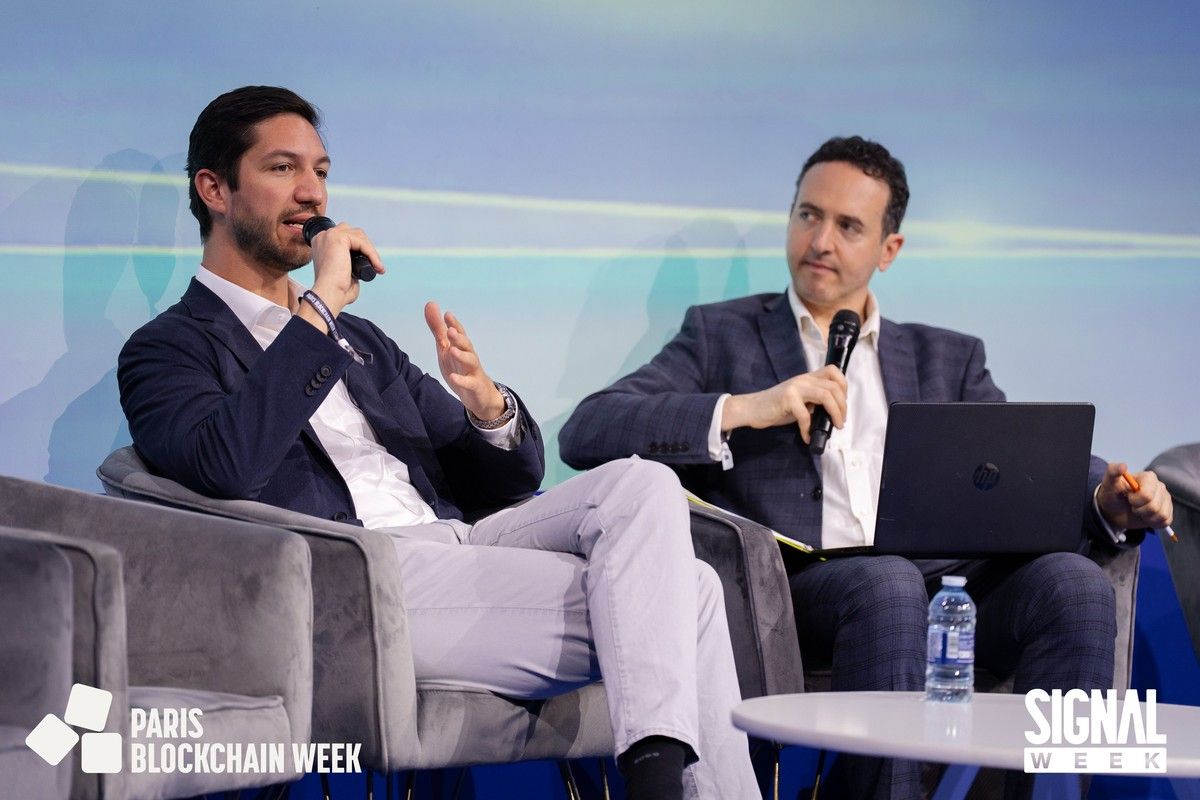
Markus Infanger, RippleX: From Crypto Markets to Financial Rails
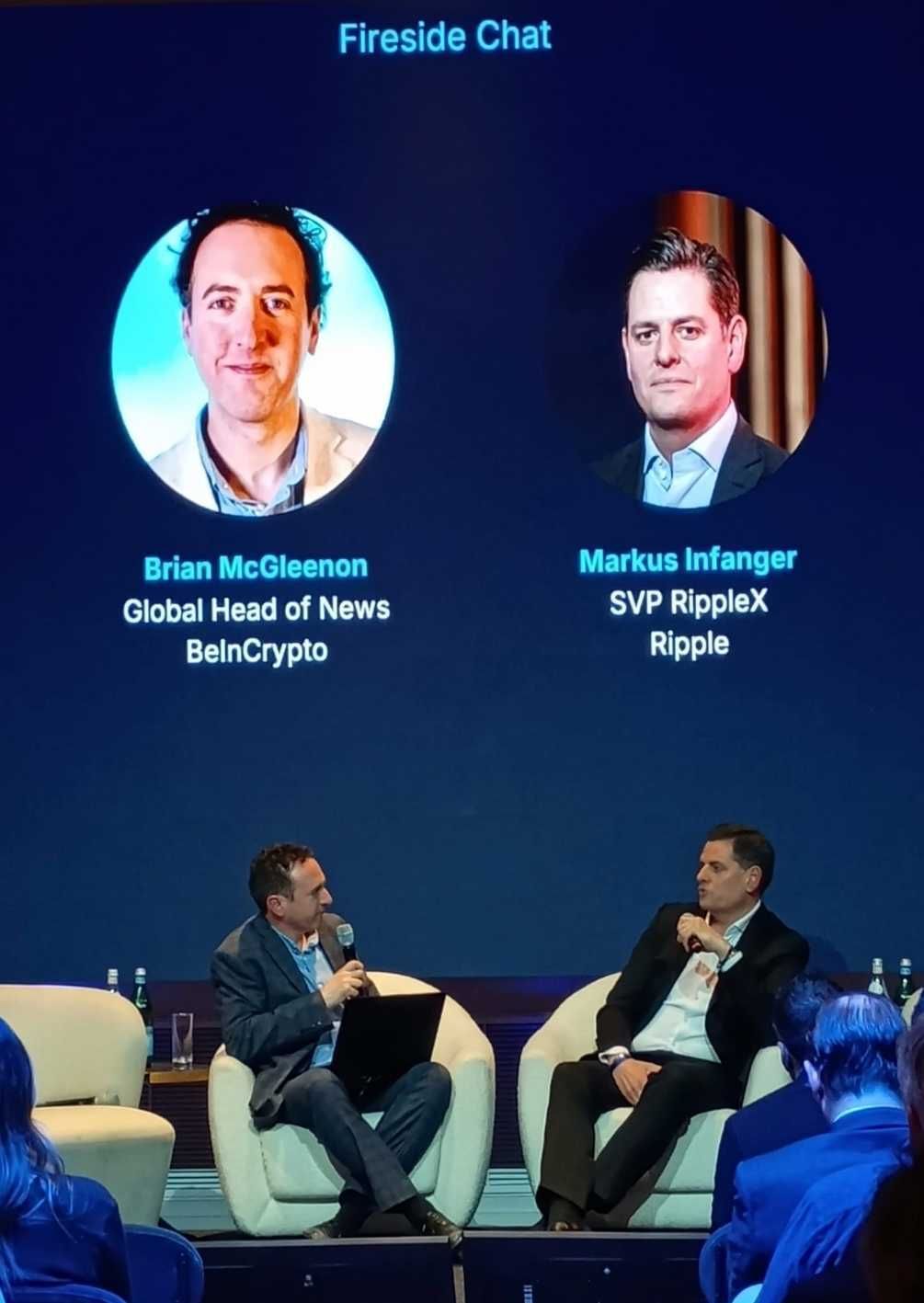
Brian also moderated a fireside at the RippleX Roadshow side event, on the topic of crypto markets evolving into financial infrastructure.
The session with Markus Infanger provided a sharp technical reality check, legacy finance is “fighting the clock” in a 24/7 global economy. The primary insight was that the traditional “the system works fine” defence is crumbling, as T+2 settlement isn’t just an inconvenience, it’s an active liability for the 2026 world of autonomous AI agents and bot-driven liquidity.
Infanger argued that blockchain is no longer an alternative, but the only plumbing capable of handling high-velocity, non-stop institutional demands. Especially in a new paradigm of tokenised equities, money market funds, RWA’s and stablecoins. Then when you add agentic payments into this mix, the inability of legacy systems to function becomes explicitly apparent.
Infanger also noted that while the industry has matured in terms of tokenisation, it has yet to fully solve the legal and operational connective tissue needed to fully embed them into institutional credit cycles. However, by utilising tools like the XRPL Lending Protocol, Ripple is bridging this gap, allowing banks to manage on-chain credit without abandoning off-chain underwriting.
Finally, Infanger highlighted a massive legislative inflection point. With the GENIUS and Clarity Acts providing a federal “green light” in the US, the institutional conversation has pivoted from legal fear to integration speed.
Paris, On Record
The conversations at Paris Blockchain Week did not stay at the level of trend and prediction. They went into methodology, architecture, and execution, the same depth that defines the Institutional 100 Awards, BeInCrypto’s recognition of the executives and institutions genuinely driving institutional adoption forward.
- Marat Faritov, Senior Analyst at Moody’s Ratings: Moody’s Ratings is nominated for Best Rating Provider at the Institutional 100 Awards. As rating methodology gets applied to on-chain debt instruments and tokenized bonds, this conversation goes into exactly how that works in practice. Watch the interview.
- Jody Mettler, COO of BitGo and President of BitGo Bank and Trust: Nominated for COO of the Year at the Institutional 100 Awards. On qualified custody, banking infrastructure, and what the institutional on-ramp looks like from inside the room. Watch the interview.
- Andranik Mnatsakanyan, EU Stablecoin Practice Lead at Visa: Visa on stablecoin payment rails in Europe, captured the same week MiCA conversations dominated the main stage. Watch the interview.
- Ouriel Ohayon, CEO and Co-Founder of Zengo Wallet: eToro’s acquisition of Zengo was announced on day one of Paris Blockchain Week. Watch the interview.
- Adam Back, CEO of Blockstream
The BeInCrypto x Proof of Talk Institutional 100 Awards
Paris Blockchain Week made one thing clear: institutional adoption is no longer a direction of travel, it is the current operating reality. The harder question now is who is actually building at the level the moment requires.
That is what the BeInCrypto x Proof of Talk Institutional 100 Awards exists to answer. The live ceremony takes place this June during Proof of Talk at the Louvre; the same venue that hosted Paris Blockchain Week. If the conversations started there, it’s only fitting that the recognition does too.
Find out who is already in the running, and put forward the institutions that deserve to be recognised: https://awards.beincrypto.com/
Recommended Articles


