




Why Prediction Markets May Be Crypto’s Most Durable Consumer Product
Gen Z is not abandoning crypto speculation. Rather, this generation is refining it as incomes tighten, after the post-2024 token cycle left millions of coins effectively dead.
A growing cohort of young, crypto-native traders is shifting capital away from altcoins and meme coins and into on-chain prediction markets.
Gen Z Turns to Prediction Markets as Average Salary Falls $9,000 Below Living Wage
Platforms like Polymarket and Kalshi are emerging as the next speculative venue for a generation priced out of long-term financial stability and increasingly skeptical of belief-driven token narratives.
The economic backdrop is unforgiving. The average Gen Z salary sits at $39,416. This is well below the $48,614 required for a basic living wage and far short of the roughly $106,000 needed to live comfortably.
Against that reality, traditional wealth-building strategies, from retirement accounts to slow-growth investments, feel abstract. Even within crypto, multi-year roadmaps and illiquid token bets are losing appeal.
Instead, Gen Z appears to be gravitating toward faster, more legible forms of risk.
Following a $150 billion wipeout across altcoins between late 2024 and the end of 2025, speculative attention has rotated sharply.
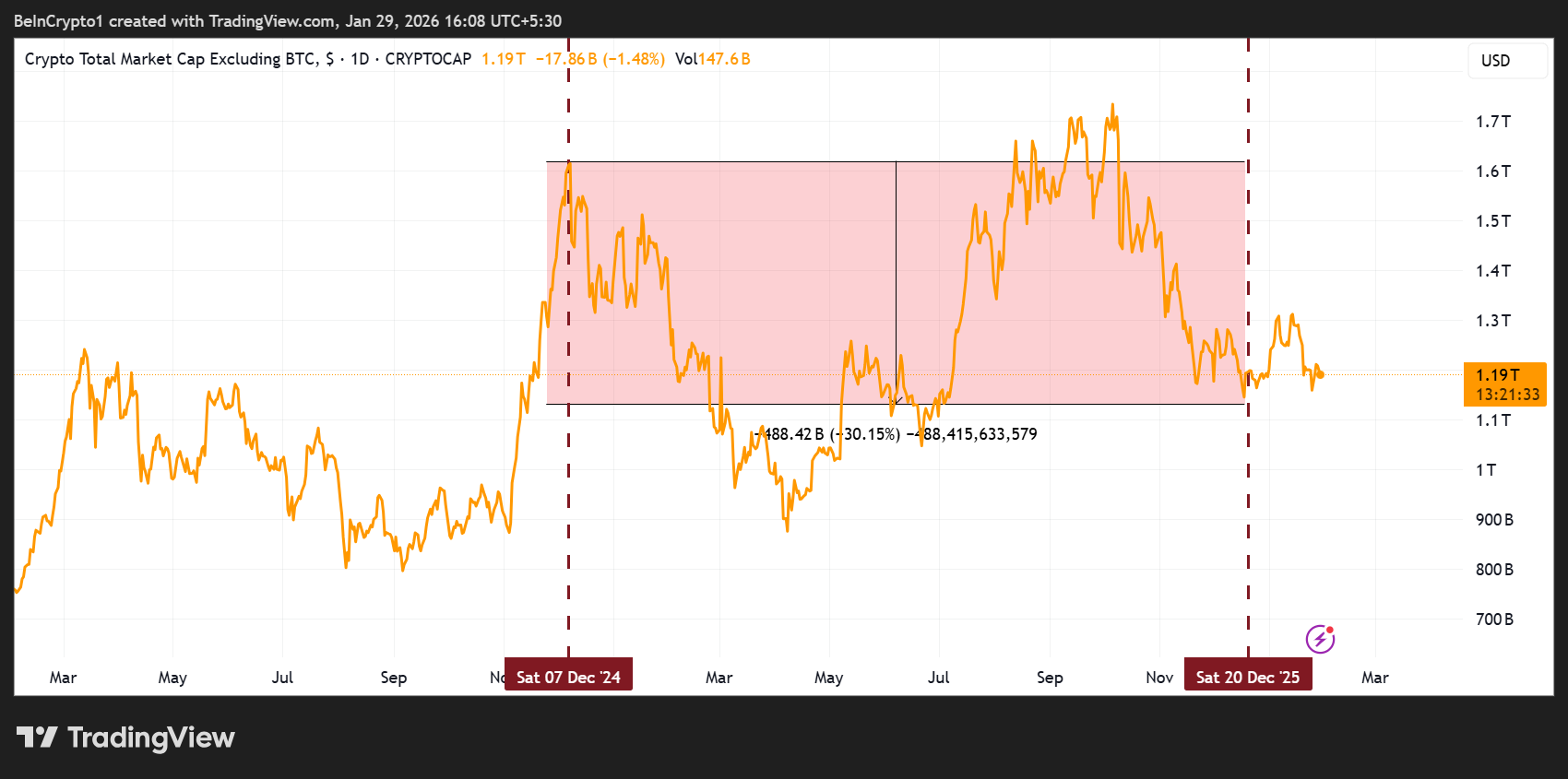 Altcoin Market Cap Drop from Late 2024 to Late 2025. Source: TradingView
Millions of tokens collapsed amid vanishing liquidity, auto-liquidations, and repeated accusations of insider advantage.
The result was not a retreat from crypto rails, but a migration across them as prediction markets have absorbed that flow.
Weekly notional volumes across platforms such as Polymarket and Kalshi surged from roughly $500 million in mid-2025 to nearly $6 billion as of January 19, 2026, according to Dune data.
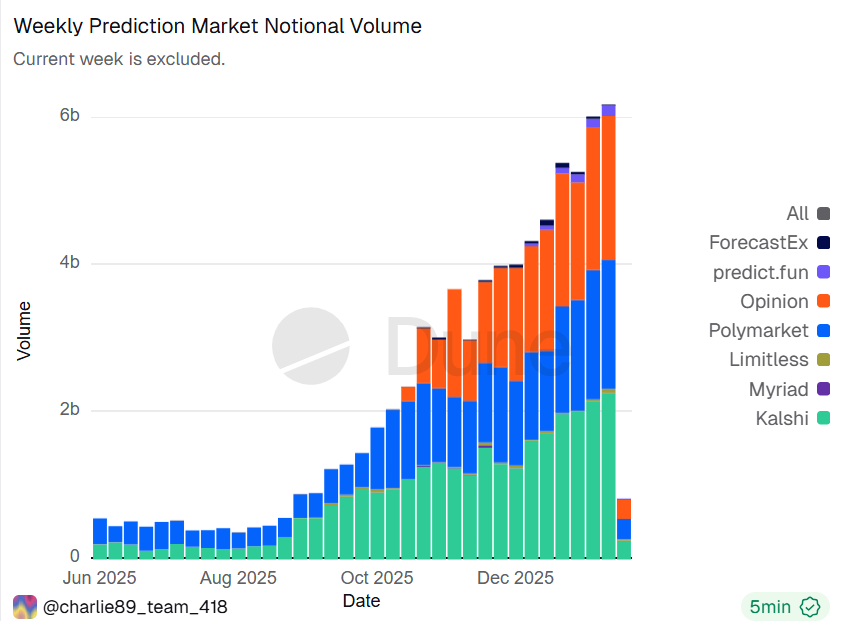 Weekly prediction market notional volume. Source: Dune
App installs reflect a similar trend. While crypto exchange downloads fell sharply last year, Polymarket and Kalshi saw installs multiply severalfold over the same period.
The appeal is structural, with prediction markets stripping speculation down to binary outcomes—yes or no, resolve or expire. This eliminates much of the narrative drift that defined the token boom.
There are no whitepapers to trust, no token unlocks schedules to fear, and fewer mechanisms for liquidity to be quietly pulled mid-cycle. For a generation that increasingly views crypto as “ruggable,” that simplicity matters.
Prediction Markets See Generational Adoption Gap
Survey data from The New Consumer and Coefficient Capital show that awareness of Polymarket is 17% among Gen Z and Millennials, compared with just 4% among Gen X and older users.
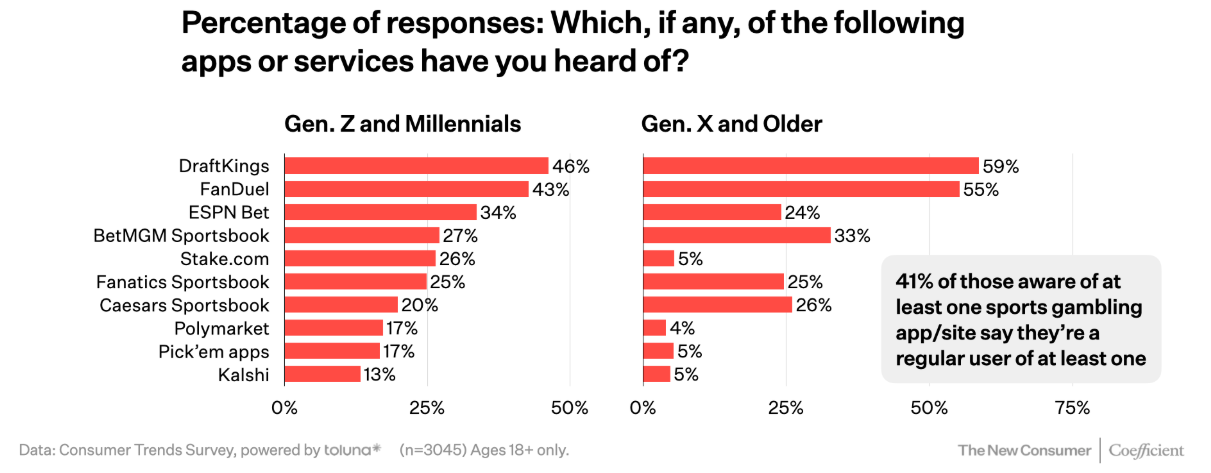 Awareness of prediction markets skews younger, while sports betting skews older. Source: Co-Efficient Cap
Kalshi follows a similar pattern. That 3–4x skew mirrors earlier adoption curves seen with DeFi, NFTs, and perpetual futures. This suggests prediction markets are not a niche offshoot, but the next mainstream crypto-native interface.
This shift also aligns with Gen Z’s broader financial behavior. Younger users consistently express discomfort with centralized systems that restrict withdrawals or delay access to funds.
Having grown up alongside decentralization and watched traditional savings institutions fail, liquidity and autonomy rank above yield.
Prediction markets, which allow rapid entry and exit and settle quickly against real-world events, fit that preference profile almost perfectly.
Prediction Markets Emerge as Crypto’s Post-Token Use Case
Notably, this is not a rejection of crypto infrastructure. On the contrary, prediction markets may be one of blockchain’s most durable consumer use cases to date.
On platforms like Polymarket, nearly every function (custody, settlement, payouts) runs on-chain. Stablecoins power the system. Wallets are the interface. Even crypto itself remains one of the most actively traded categories, with Bitcoin price contracts ranking among the top markets by volume.
In that sense, the current rotation looks less like a collapse and more like a repricing of speculation. Where the 2021–2024 cycle rewarded narrative belief and token proliferation, the post-crash environment favors clarity, speed, and outcome-driven risk.
Gen Z, facing wage pressure and limited capital buffers, appears to be responding rationally, optimizing for probability rather than promises.
Search interest in prediction markets has cooled from post-election highs, recently dipping to six-month lows.
However, historically, low attention has preceded the next leg of crypto adoption. With regulatory pressure easing, mainstream platforms integrating prediction products, and a generation of traders already fluent in crypto mechanics, prediction markets may be quietly positioning themselves as the next liquidity sink.
While the trade has changed for GenZ, the speculation has not.
Recommended Articles


