




How Will Fidelity’s FIDD Stablecoin Fare in An Already Crowded Marketplace?
Fidelity Investments, one of the world’s largest asset managers, announced on Wednesday that it will launch a stablecoin on Ethereum. The token, called the Fidelity Digital Dollar (FIDD), is expected to become available on exchanges in the coming weeks for institutional and retail investors.
The move highlights the growing entry of companies and financial institutions into the stablecoin sector, now valued at more than $316 billion. As competition intensifies, questions remain over which projects will achieve lasting adoption and which will fade.
Fidelity Enters Stablecoin Race With FIDD
In the official statement, Fidelity claimed that FIDD would seek to provide a stable digital dollar that combines the value of blockchain with the reliability of the US dollar.
“At Fidelity, we have a long-standing belief in the transformative power of the digital assets ecosystem and have spent years researching and advocating for the benefits of stablecoins,” said Mike O’Reilly, resident of Fidelity Digital Assets, in a statement.
The move comes a month after Fidelity Digital Assets, National Association, the firm’s national trust bank, received conditional approval to operate from the US Office of the Comptroller of the Currency. The entity will be responsible for issuing the FIDD.
In its statement, Fidelity described itself as one of the first traditional financial institutions to issue its own digital dollar. As with other stablecoins, FIDD will be fully backed by reserves to maintain its peg.
O’Rielly also cited the United States’ increasingly favorable stance toward stablecoins as a key factor behind the launch of FIDD.
“The recent passage of the GENIUS Act was a significant milestone for the industry in providing clear regulatory guardrails for payment stablecoins. We’re thrilled to launch a fiat-backed stablecoin at a time of increasing regulatory clarity to better support our customers’ needs,” he said.
However, given this newfound regulatory clarity, Fidelity is also entering an increasingly competitive arena.
Stablecoin Market Crowds After Genius Act
Since the passage of the Genius Act, stablecoin adoption has accelerated rapidly. At the time of writing, total trading volume sits just below $100 billion.
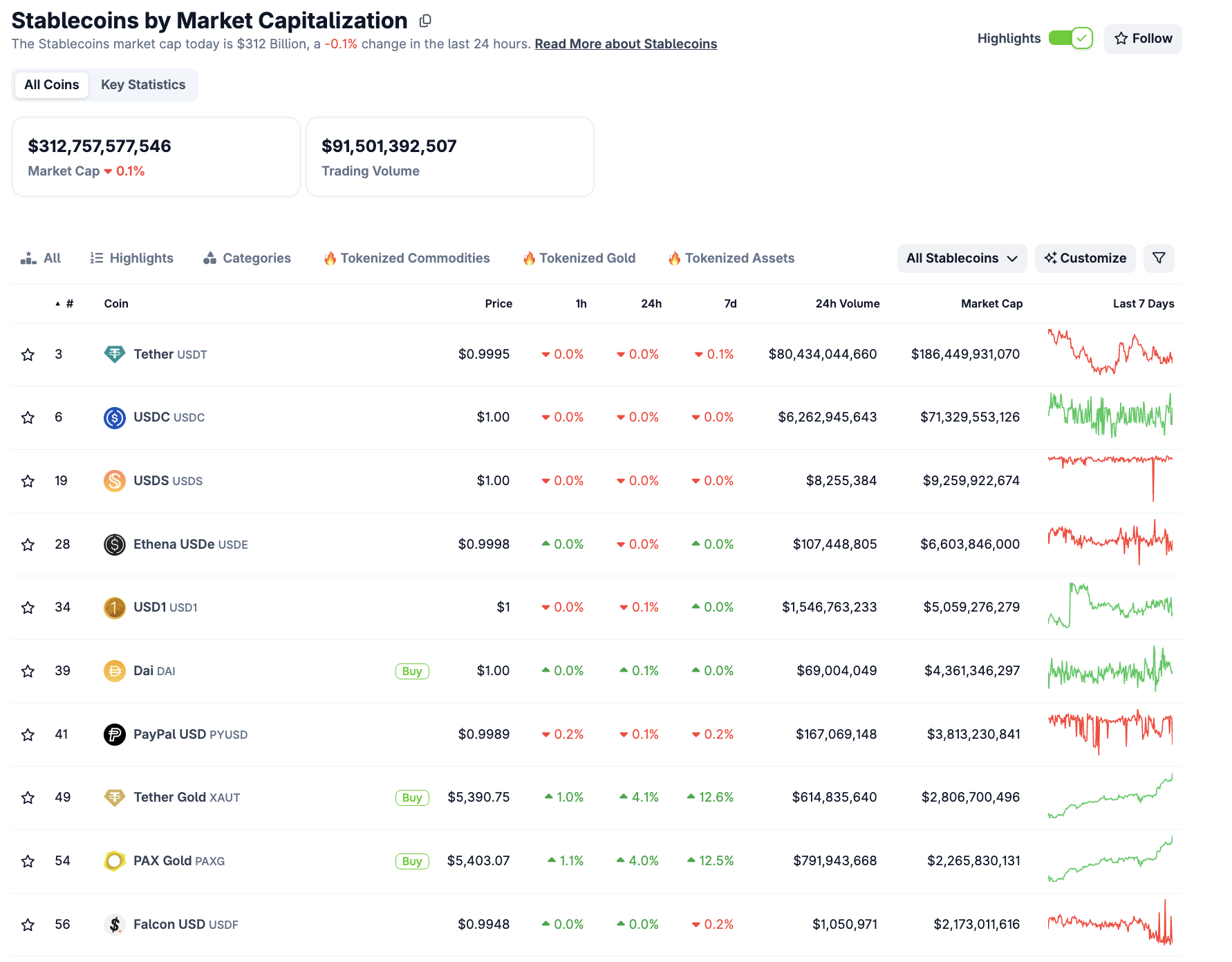 Top stablecoins by market capitalization. Source: CoinGecko.
Market leader Tether has long dominated the sector, with its flagship USDT token accounting for nearly 60% of all stablecoins in circulation and a market capitalization exceeding $186 billion.
Because much of Tether’s operations are based overseas, the company launched a new stablecoin, USA₮, earlier this week to comply with the Genius Act’s regulatory requirements.
Meanwhile, Circle’s USDC is the market’s second-largest stablecoin, with a market capitalization of more than $71 billion.
While these two stablecoins dominate the market, competition is intensifying as new entrants gain traction. Over the past two years, major financial firms, including PayPal and Ripple, have launched their own stablecoins.
However, compared with Tether and Circle, these stablecoins remain far from achieving a similar level of market penetration.
Against this backdrop, Fidelity’s entry into the stablecoin market with FIDD comes amid intense competition.
Recommended Articles


