




Standard Chartered Predicts $500 Billion Shift to Stablecoin | US Crypto News
Welcome to the US Crypto News Morning Briefing—your essential rundown of the most important developments in crypto for the day ahead.
Grab a coffee and settle in—things in banking and crypto are about to get interesting. What started as a quiet corner of the digital asset market is now nudging its way into the core of traditional finance (TradFi). Some of the biggest shifts may still be on the horizon, and not all banks are equally ready for them.
Crypto News of the Day: Standard Chartered Warns $500 Billion in US Bank Deposits Could Flow to Stablecoins by 2028
Standard Chartered first warned of the threat stablecoins pose to TradFi banks in October, as reported in a previous US Crypto News publication. Now the bank is issuing another warning, only this time, with a timeline.
The rapid adoption of stablecoins could pose a significant threat to US banks, according to Standard Chartered’s Head of Digital Asset Research, Geoff Kendrick.
In a report released today, Kendrick projects that as much as $500 billion (roughly one-third of US bank deposits) could migrate into stablecoins by the end of 2028.
“The tail is starting to wag the dog,” Kendrick said, highlighting the growing influence of stablecoins on traditional banking operations.
He noted that this shift is not limited to emerging markets, where he previously projected around $1 trillion in deposit outflows over the same period, but is increasingly relevant to developed markets, including the U.S.
Using net interest margin (NIM) income as a percentage of total revenue as a risk indicator, Kendrick identifies regional banks as the most exposed.
Deposits remain a core driver of NIM, meaning any significant outflows to stablecoins could directly impact bank earnings.
In contrast, diversified and investment banks are relatively insulated from these pressures due to broader revenue streams.
Regulatory Uncertainty Compounds the Risk for US Banks
The recent delay in the US CLARITY Act, intended to create a comprehensive regulatory framework for digital assets, highlights banks’ potential vulnerability.
The latest draft prohibits digital asset service providers from paying interest or yield to users holding stablecoins. Notably, this restriction prompted Coinbase to remove certain offerings.
Although Kendrick expects the CLARITY Act to pass by the end of Q1 2026, the delay highlights the ongoing challenges that US banks may face as digital asset adoption accelerates.
The risk is not just theoretical. Stablecoins could shift core banking functions such as payments and deposits away from TradFi institutions, creating a structural challenge for banks that rely heavily on deposit-driven income.
The Standard Chartered executive suggests that regional banks, in particular, need to prepare for the possibility of meaningful deposit outflows over the next several years.
“I try to determine which banks are relatively more/less exposed to this risk…regional banks are most exposed,” he indicated.
Therefore, the new US analysis extends the concern from emerging to developed markets, signaling a global reassessment of banking exposure to digital assets.
Ethereum Hits New Highs as Institutional Buying and Macro Tailwinds Bolster Crypto Markets
Despite these headwinds, the broader crypto ecosystem is showing signs of resilience. Ethereum activity continues to hit all-time highs, fueled by post-Fusaka upgrades that have improved capacity and sustained institutional interest.
BitMine (BMNR), for example, has increased its Ethereum holdings to nearly 5% of its Digital Asset Treasury, with plans to continue buying.
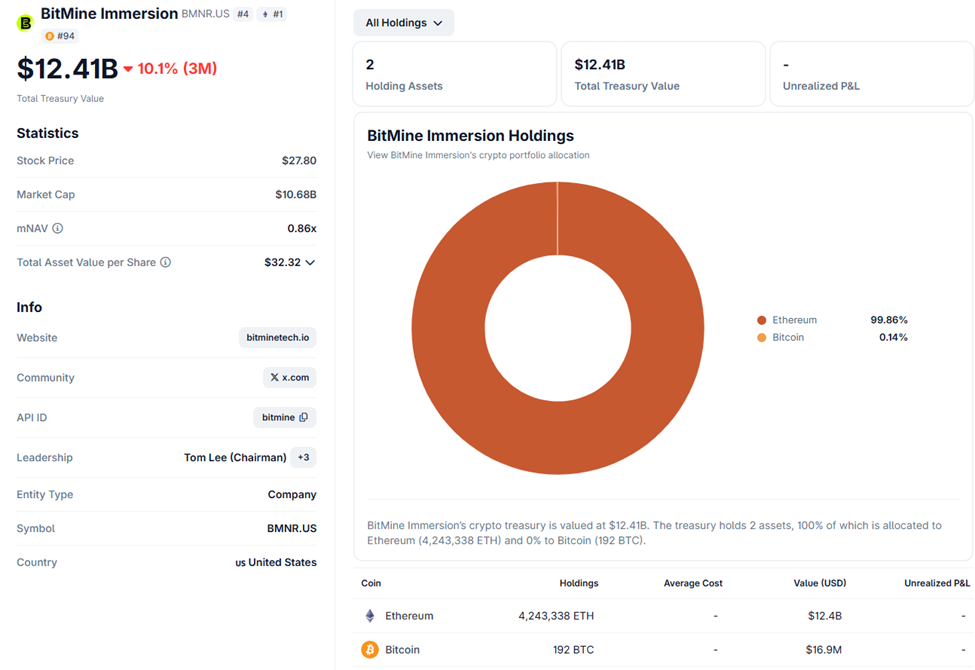 BitMine Ethereum Holdings. Source: CoinGecko
Macro developments, including easing pressure on global risk assets and favorable expectations for US monetary policy under potential Fed leadership changes, further support market stability.
Chart of the Day
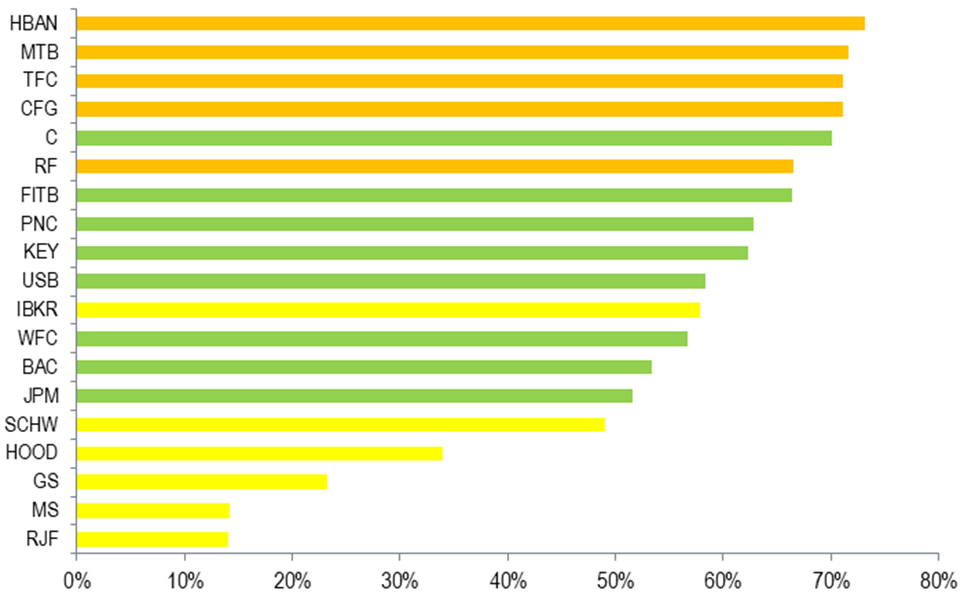 Standard Chartered Shows Which US Banks Are Most at Risk to Mass Adoption of Stablecoins
Byte-Sized Alpha
Here’s a summary of more US crypto news to follow today:
- Tether buys gold like a Central Bank—only faster and without a mandate.
- Ethereum in ETFs enjoys $110 million in inflows while institutional ETH wipes out.
- Asia doesn’t buy Trump after he cried wolf too often.
- Bitcoin price’s rise to $100,000 will warrant a pit-stop at this level.
- What VanEck’s Avalanche ETF debut reveals about investor sentiment in January.
- XRP price eyes a domino effect to relive the $3.30 dream – Here’s how.
- Bitcoin job listings grow 6% in 2025: Here’s what employers are looking for.
Crypto Equities Pre-Market Overview
| Company | Close As of January 26 | Pre-Market Overview |
| Strategy (MSTR) | $160.58 | $160.82 (+0.15%) |
| Coinbase (COIN) | $213.48 | $214.70 (+0.57%) |
| Galaxy Digital Holdings (GLXY) | $31.28 | $31.51 (+0.74%) |
| MARA Holdings (MARA) | $9.98 | $10.05 (+0.70%) |
| Riot Platforms (RIOT) | $16.23 | $16.40 (+1.05%) |
| Core Scientific (CORZ) | $19.05 | $19.31 (+1.36%) |
Recommended Articles


