


Gold Loses $5,000 Support: Safe-Haven Trade Collapses Amid Bearish Shift
TradingKey - Gold prices have broken below the $5,000 level and remain under pressure from multiple factors, with the risk of a further decline of approximately 7%.
On March 19 (GMT+8), gold prices saw a slight rebound after a sharp sell-off, rising 0.4%. Spot gold ( XAUUSD) is currently trading at $4,839 per ounce, with bears gradually gaining the upper hand. Yesterday, gold prices plummeted more than 4% intraday, as a massive bearish candle pierced the $5,000 threshold.
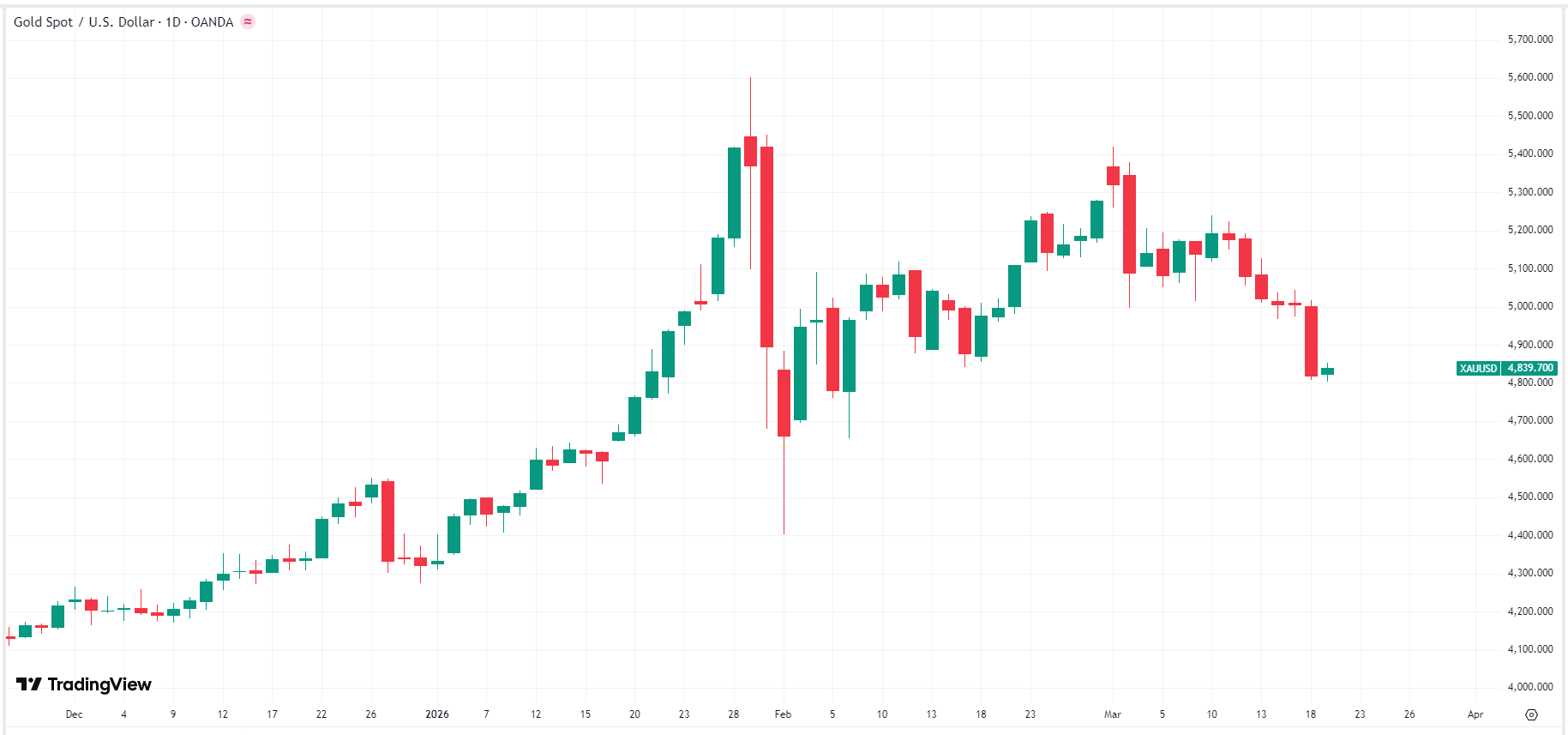 Gold Price Chart, Source: TradingView
Typically, war stimulates safe-haven demand, driving gold prices higher. However, amid the tensions in the Middle East, gold prices have unexpectedly fallen instead of rising, with a cumulative retracement of over 10%. Explaining this anomaly, JPMorgan noted, "Soaring energy prices have pushed up inflation expectations, prompting markets to significantly price out Fed rate cut expectations. Coupled with a rapid rebound in the U.S. dollar, this has created a direct bearish backdrop recently."
Since the U.S.-Iran war, crude oil prices have continued to surge. Specifically, WTI crude oil ( USOIL) prices surged from a low near $68 to around $120, a cumulative increase of nearly 80%. Despite a recent retracement, it still holds a 46% gain.
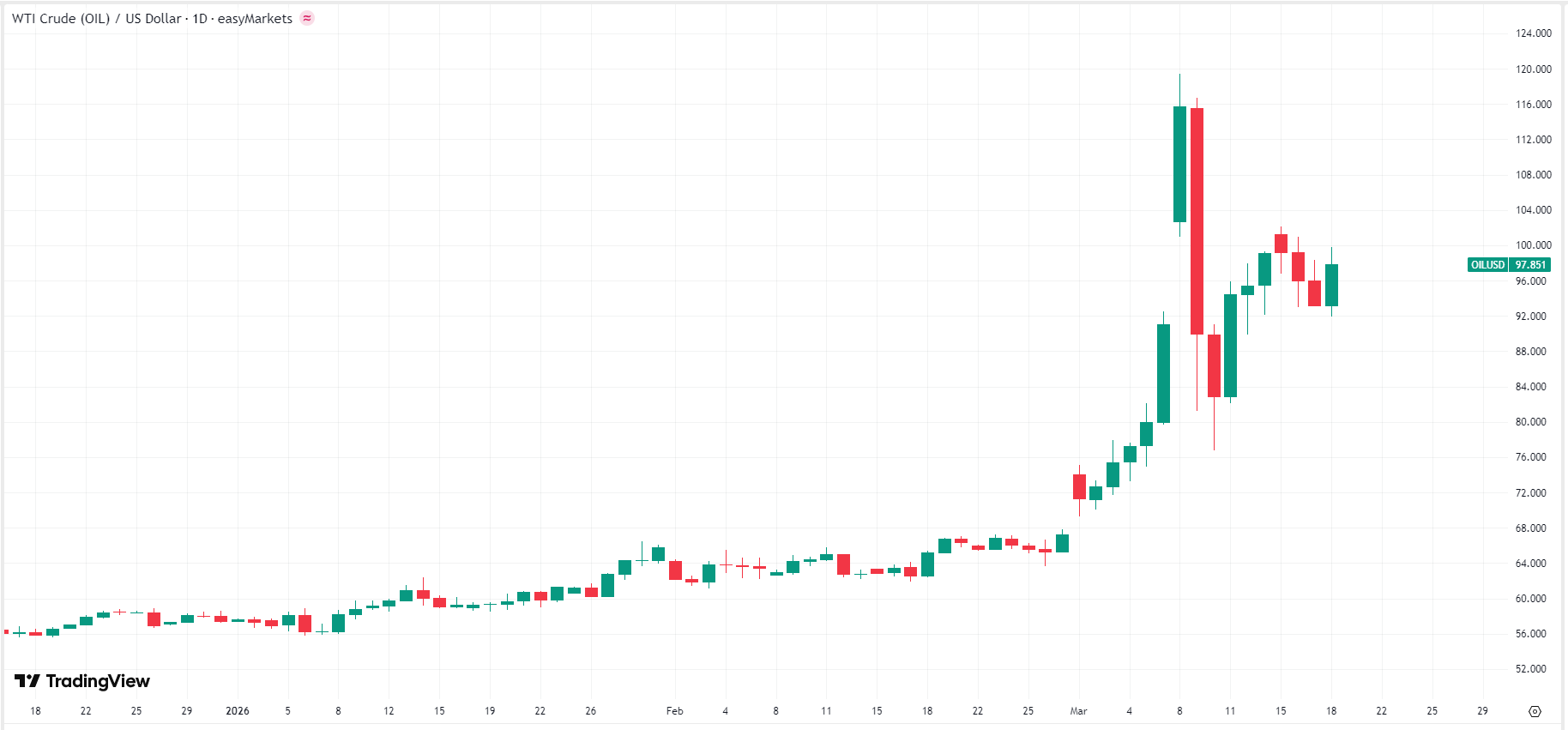 WTI Crude Oil Price Chart, Source: TradingView
This Wednesday (March 18), inflation data released by the U.S. Department of Labor exceeded expectations across the board. The data showed that the February PPI rose 3.4% year-on-year, well above the market expectation of 3.0%, and increased 0.7% month-on-month, also significantly exceeding the expected 0.3% (previous value 0.5%). Core PPI rose 3.9% year-on-year, higher than the market expectation of 3.7%, and increased 0.5% month-on-month, also above the 0.3% estimate.
Rising inflationary pressures have significantly narrowed the room for the Federal Reserve to cut rates. David Meger, Director of Metals Trading at High Ridge Futures, said, "The rise in energy prices caused by the continued escalation of the war has 'added fuel to the fire' for inflation, meaning the Fed may be unable to cut rates, which keeps gold prices under persistent pressure." On March 19, the Federal Reserve announced it would hold interest rates steady at 3.5%-3.75%, and Powell mentioned in his remarks that "the possibility that the next step could be a rate hike was indeed mentioned."
Since February 28, the U.S. Dollar Index has continued to soar and has now surpassed the 100 mark, which has put significant pressure on dollar-denominated gold. From a technical perspective, gold prices have broken through psychological defense lines, which will likely intensify technical selling and could extend the decline to the next support level at $4,500, representing roughly 7% further downside from current levels.
Recommended Articles


