


Corn Futures (CORN-F) Surges on Jul 15: Key Factors to Watch
Corn Futures (CORN-F) is up 2.06% at Jul 15 10:35(ET), now at $445.83, with a 7-day up of 3.06%.
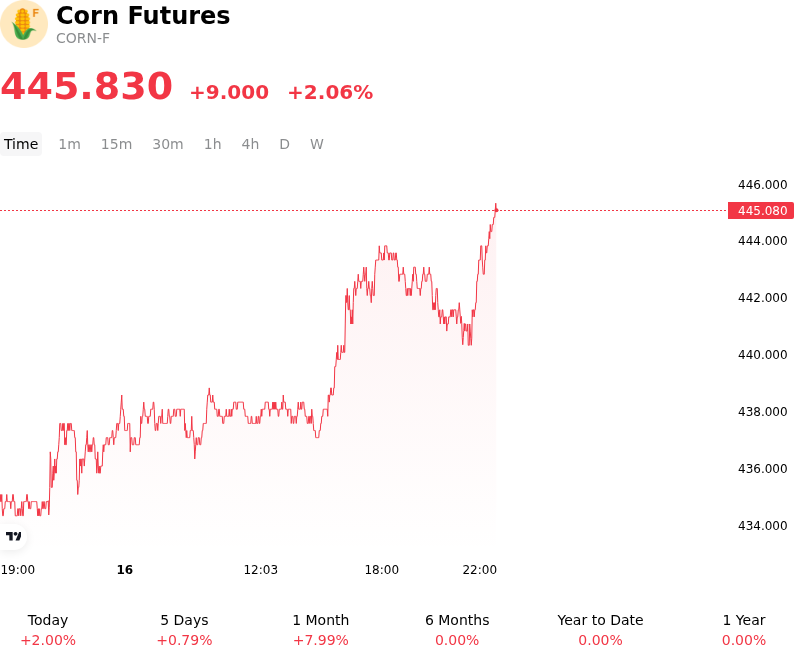
What is driving Corn Futures (CORN-F)’s stock price up today?
The primary catalyst for the current upward pressure on corn futures is the intensification of weather-related risks across the United States Corn Belt during the critical pollination phase. High-pressure ridges bringing above-average temperatures and below-normal precipitation have sparked concerns regarding yield potential. Because the corn crop is most sensitive to heat and moisture stress during the silking stage, which occurs throughout mid-July, market participants are aggressively pricing in a weather premium to account for the possibility of a downward revision in national production estimates.
Recent data from the USDA World Agricultural Supply and Demand Estimates has also provided a supportive backdrop, with projected ending stocks appearing tighter than historical averages. Institutional investors are closely monitoring weekly Crop Progress reports, where any incremental decline in Good-to-Excellent ratings triggers immediate buying interest. The tightening of the domestic balance sheet, coupled with robust demand from the renewable fuels sector for ethanol production, has shifted the fundamental outlook toward a more deficit-prone market for the upcoming marketing year.
On the macroeconomic front, a softening of the US dollar has bolstered the competitiveness of American grain in the global export market. As the dollar weakens against major currencies, US-originated corn becomes more attractive to international buyers, particularly in key markets such as Mexico and Japan. This currency tailwind coincides with ongoing logistical constraints and geopolitical uncertainty in competing export regions, further concentrating global demand toward North American supplies.
From a technical and positioning perspective, the price advance has been exacerbated by a shift in managed money flows. Systematic trend-followers and commodity trading advisors have been forced to cover short positions as prices breached key resistance levels, creating a feedback loop of buying activity. The convergence of peak seasonal weather sensitivity and a favorable currency environment suggests that the market is currently prioritizing supply-side risk over broader global growth concerns, as the window for crop recovery narrows.
More details about Corn Futures (CORN-F)
Recent Events and Risks:
- Favorable Midwestern Weather Forecasts: Updated 72-hour meteorological models for the U.S. Corn Belt indicate widespread precipitation and cooler-than-normal temperatures during the critical pollination window, effectively erasing the "weather premium" and raising expectations for trend-line or record yields.
- Brazilian Safrinha Harvest Pressure: Accelerated progress in the Brazilian second-crop harvest is increasing global supply availability, with regional producers aggressively pricing exports to clear storage, which is displacing U.S. corn in key Asian markets and weighing on futures prices.
- Bearish USDA Supply Adjustments: Follow-on volatility from the recent WASDE report continues as analysts digest higher-than-expected ending stocks and an upward revision in planted acreage, suggesting a larger domestic cushion that limits the potential for any sustained price rallies.
- Declining Ethanol and Feed Demand: Recent weekly data showing a contraction in ethanol production margins and slowing domestic feed demand—driven by high poultry and livestock slaughter rates—is creating a localized supply overhang in major interior processing hubs.
Recommended Articles


