


USD/CAD (USDCAD) Is down 0.58% on Jul 14: What Is Driving the Move?
USD/CAD (USDCAD) is down 0.58% at Jul 14 08:40(ET), now at $1.40699, with a 7-day down of 0.90%.
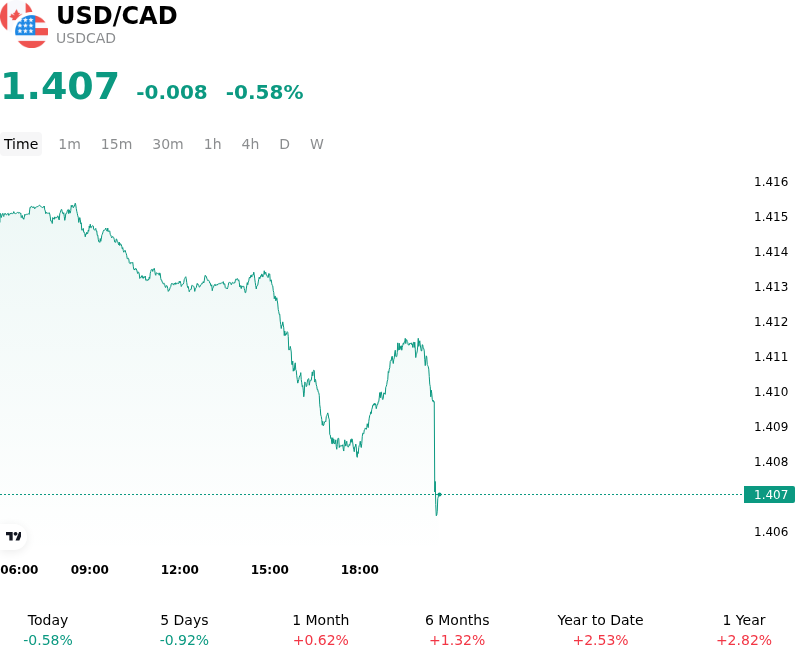
What is driving USD/CAD (USDCAD)’s stock price down today?
The decline in the USDCAD pair is primarily attributed to a softer-than-expected US Consumer Price Index release for June, which has fundamentally recalibrated market expectations for Federal Reserve policy. The cooling of headline and core inflation figures has led institutional investors to price in a more aggressive easing cycle or a prolonged pause, depending on the prevailing terminal rate environment. This shift in the US monetary outlook triggered a broad-based sell-off in the US dollar as terminal rate projections were adjusted downward, reducing the greenback’s carry advantage.
Concurrently, the moves in the sovereign bond markets have played a critical role in the pair's downward trajectory. US Treasury yields across the curve, particularly the front-end two-year note, experienced significant downward pressure following the inflation data. This led to a notable narrowing of the spread between US Treasuries and Canadian Government Bonds. As the yield differential shifted in favor of the Canadian dollar, capital flows pivoted toward CAD-denominated assets, providing a strong tailwind for the loonie.
The Canadian dollar also benefited from a constructive backdrop in the commodities complex. West Texas Intermediate crude prices moved higher during the session, supported by tightening global supply dynamics and a more optimistic outlook for global demand following the softer US inflation print, which eased fears of a restrictive monetary-induced recession. Given the loonie’s high correlation with energy prices, the rebound in oil served as a secondary catalyst that amplified the currency's outperformance relative to the US dollar.
From a central bank perspective, the divergence in immediate policy paths has become more pronounced. While the Federal Reserve faces mounting pressure to pivot toward a more accommodative stance to support economic activity, the Bank of Canada has maintained a relatively neutral to hawkish posture, buoyed by resilient domestic labor market data and steady wage growth. This relative hawkishness from the Bank of Canada, contrasted with the Fed’s potential shift, has further incentivized short positions in USDCAD among macro hedge funds and institutional desks.
Finally, broader risk-on sentiment in global equity markets contributed to the move. The softer inflation data sparked a rally in risk assets, which typically weighs on the defensive US dollar while supporting pro-cyclical currencies like the Canadian dollar. With technical support levels being breached during the intraday move, stop-loss triggers and systematic selling likely added momentum to the pair's decline.
Technical Analysis of USD/CAD (USDCAD)
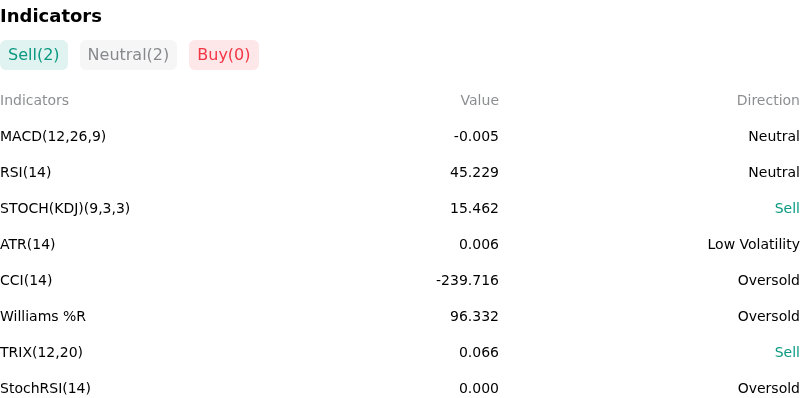
Technically, USD/CAD (USDCAD) shows a MACD (12,26,9) value of -0.005, indicating a neutral signal. The RSI at 46.001 suggests neutral condition and the Williams %R at 94.642 suggests oversold condition. Please monitor closely.
More details about USD/CAD (USDCAD)
Recent Events and Risks:
- Monetary Policy Divergence: The Bank of Canada’s recent shift toward a more dovish stance relative to the Federal Reserve has widened the yield spread between US and Canadian government bonds, creating sustained upward pressure on USDCAD as markets price in additional Canadian rate cuts.
- Crude Oil Price Volatility: Recent fluctuations in WTI crude prices, driven by uncertainty surrounding global demand forecasts and OPEC+ supply dynamics, pose significant downside risks to the Canadian Dollar due to its high correlation with energy exports.
- US Macroeconomic Resilience: Stronger-than-anticipated US labor market data and sticky services inflation have reinforced the Federal Reserve’s "higher-for-longer" narrative, sustaining USD strength and increasing the risk of a technical breakout above key resistance levels for the pair.
- Risk-Off Sentiment: Heightened geopolitical tensions in the Middle East and concerns over slowing global growth have triggered flight-to-quality flows into the US Dollar, disproportionately impacting the pro-cyclical Canadian Dollar during periods of heightened intraday volatility.
Recommended Articles


