



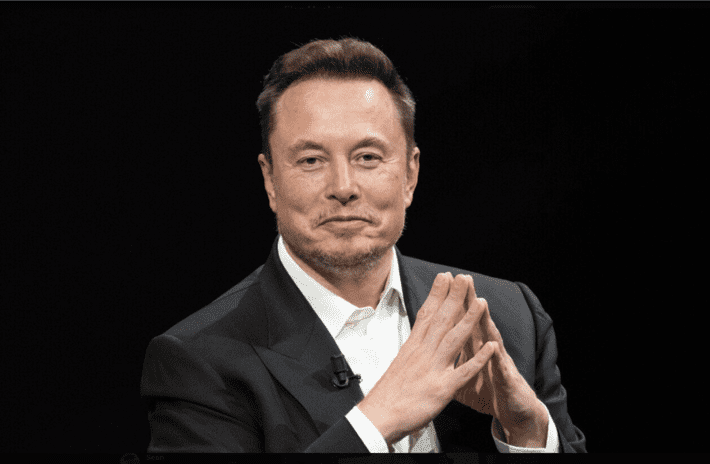
Elon Musk, the billionaire CEO of Tesla, is co-leading the newly formed Department of Government Efficiency (D.O.G.E) with Vivek Ramaswamy under the incoming administration of ‘crypto president’ Donald Trump.
The goal is to slash $2 trillion from federal spending. That’s nearly the size of the US government’s projected 2024 deficit. But here’s the thing, this project might not just fail — it could crash the entire US economy.
The pipe dream
D.O.G.E isn’t even a real government department. It’s an advisory group. It can’t implement anything without Congress or Trump signing off. But Elon’s name carries weight. His involvement alone has turned this into more than a theoretical exercise.
The plans are aggressive: massive layoffs, dissolving agencies, and gutting regulations. While Trump and his allies are cheering it on, skeptics are sounding alarms about the possible fallout.
Elon and Vivek are eyeing a government workforce reduction of up to 75%. Three-quarters of federal employees could be shown the door if D.O.G.E’s vision is realized.
But how realistic is this? Not very, say experts. Here’s why: about 75% of the federal budget is mandatory spending. Programs like Social Security and Medicare are untouchable without causing massive political backlash.
That leaves only discretionary spending—about $1.7 trillion—for cuts. Half of that goes to defense, which Trump and his allies are unlikely to touch. What’s left are pennies compared to the grand $2 trillion ambition.
Even the proposed savings from cutting inefficiencies (somewhere between $150 billion and $200 billion) are a drop in the ocean compared to the deficit. The math doesn’t add up.
Government shutdown standoff
Elon’s already flexing his political muscle, and it’s actually making Trump a bit nervous. Just weeks ago, the eccentric billionaire torpedoed a bipartisan deal to avoid a government shutdown. His fiery social media posts rallied Republican lawmakers to block the agreement.
He called the appropriations excessive, labeling them as wasteful spending. This has heightened fears of a government shutdown as the holidays loom. If federal operations grind to a halt, the economic impact would be catastrophic.
The 2018-2019 shutdown cost the economy $11 billion. Experts warn that a new shutdown could be even worse, especially with 2025’s inflation and interest rates outlook already creating a fragile economic environment.
And Elon’s influence isn’t even official yet. Imagine what happens when Trump takes office, and D.O.G.E begins to push its proposals more aggressively. The risk of prolonged gridlock in Washington is growing, and the economy will be collateral damage.
A debt crisis in the making
For all its talk of efficiency, D.O.G.E might actually worsen the national debt. The US is already in deep. The national debt is over $36 trillion, and the Congressional Budget Office (CBO) projects it will hit 166% of GDP by 2054. D.O.G.E’s proposals, if they fail to deliver real savings, could accelerate this trend.
Here’s how it could play out. First, D.O.G.E’s $2 trillion savings target seems unachievable. If they miss the mark, the government will have no choice but to keep borrowing. That means higher interest payments on the debt, which are already consuming $880 billion a year—13% of the budget.
Second, Trump has called on Congress to eliminate the statutory debt ceiling. While this might avoid debt crises in the short term, it could lead to uncontrolled borrowing in the long run.
Then there’s the wildcard of tax cuts. If Elon’s ideas include reducing taxes without corresponding spending cuts, deficits could explode. Trump’s first term added nearly $8 trillion to the debt, partly because of tax breaks. If D.O.G.E follows a similar playbook, the debt problem would spiral out of control.
Markets are on edge
As we’ve reported in the past, financial markets aren’t immune to D.O.G.E’s grand plans. Investors are watching nervously, and for good reason. Analysts say Elon’s cuts could create a “deflationary shock.” Bond yields are already rising, making borrowing more expensive for businesses and the government alike.
Yields have jumped from 3.6% in September to 4.46% now. This creates a liquidity crunch. Companies struggling to access cheap capital may cut back on investments, leading to slower economic growth. Stock markets could take a hit as investors shift toward bonds, which are seen as safer in uncertain times.
Of course that would also affect the crypto market, especially Bitcoin which remains stubbornly correlated with US equities, and Dogecoin (DOGE) which shares a name with the so-called department.
There’s also the fear of reduced consumer spending. If D.O.G.E’s cuts target entitlement programs like Social Security, millions of Americans could lose disposable income. That would affect the economy, hurting everything from retail sales to housing markets.
Read more
* The content presented above, whether from a third party or not, is considered as general advice only. This article should not be construed as containing investment advice, investment recommendations, an offer of or solicitation for any transactions in financial instruments.


