


Fed Cuts Rates: Bitcoin Rallies Then Retreats - Bear Market Ahead?

 Trending Articles
- US-Iran Rift Persists, Will Gold Rise or Fall Next?
- Gold rallies on hopes for US-Iran talks and falling US Treasury yields
- Gold Price Forecast: XAU/USD opens lower around $4,450 on fears of widening Iran conflicts
- USD/JPY Hits 160.00 Mark, Will Japanese Government Intervene? Will the Currency’s Rally Be Contained?
- Seesaw Effect Continues. US Pre-Market Three Major Index Futures Weaken, Oil Prices Rise, Bitcoin Drops Below 68,000 Mark
- Brent: Forecast lifted with $150 risk – Societe Generale
TradingKey - Fed Rate Cut Fails to Buoy Bitcoin, Signaling Bull Market's End?
Early on December 11,the Federal Reserve delivered an expected 25 basis point rate cut.Bitcoin (BTC) briefly surged to $94,000 but then rapidly declined below $90,000, touching $89,646 before recovering above $90,000.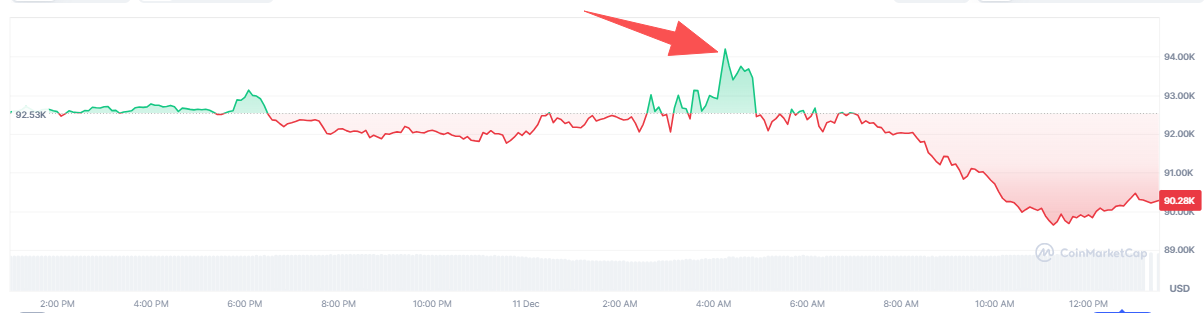 Bitcoin Price Chart, Source: CoinMarketCap.
Concurrently,the broader crypto market mirrored Bitcoin's downturn, with major altcoins seeing steep declines.Ethereum (ETH) fell over 3%, nearing $3,200; Ripple (XRP) dropped almost 4% to $2; Binance Coin (BNB) shed over 2%, falling below $900; and Solana (SOL) plunged over 5%, touching $130.
The sudden shift in the crypto market exposed investors to renewed peril, with long positions bearing the brunt of the losses. Over the past 24 hours,over $500 million in leveraged positions were wiped out across more than 150,000 user accounts.Long positions comprised nearly $100 million, or over 70%, of these liquidations, while short positions totaled more than $100 million, or almost 30%.
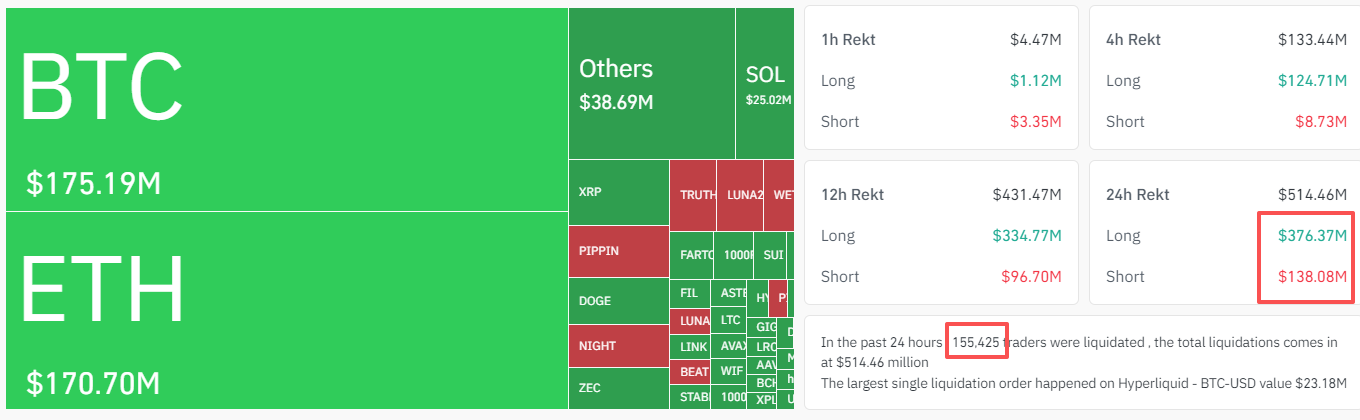 Crypto Market Liquidation Data, Source: Coinglass.
Long positions faced a particularly harsh blow during this market swing. This was primarily because, prior to the Fed's rate decision, investors widely bet on continued rate cuts from the central bank. This implied a sharp reduction in market borrowing costs, encouraging significant inflows of capital, especially from "smart money," into risk assets. Cryptocurrencies, spearheaded by Bitcoin, were consequently expected to see substantial gains.
However, despite the Fed cutting rates as anticipated, Bitcoin did not experience the expected surge. Instead, it saw a brief rebound followed by a rapid decline. The main reason for this quick reversal was the Federal Reserve's hawkish outlook for its future interest rate policy. This hawkish tilt implies a tightening of global liquidity, steering capital away from aggressive bets towards more cautious investments. As a result, risk assets such as Bitcoin and U.S. stocks could lose their appeal, leading to their pre-emptive decline.
The post-decision statement from the latest rate meeting highlighted an increasingly high hurdle for future rate reductions. Moreover, the Fed's dot plot suggested potentially only one more rate cut in 2026. Seven Fed officials projected rates would remain unchanged next year, while three even foresaw a single rate hike. Should the Fed maintain its current stance or even tighten monetary policy over the next two years, Bitcoin's key upward catalyst could diminish. This might cause it tobreak its "four-year cycle" theory and fall back into a bear marketuntil the next halving in 2028.
A pivotal factor, however, remains the choice for the next Federal Reserve chair. U.S. President Trump has consistently championed low interest rates this year, often criticizing Chairman Powell for not cutting rates or for acting too slowly. Nevertheless,Trump's decision next May on whether to appoint dovish White House economic advisor Kevin Hassett to replace Powell will be crucial in determining Bitcoin's ability to defy current trends and sustain its rally.
Hassett is reportedly a frontrunner for the position and, like Trump, firmly advocates for lower rates. Ahead of the recent rate announcement, Hassett reiterated that "the Federal Reserve probably needs to implement further rate cuts. They have ample room to reduce rates, absolutely able to cut by 50 basis points or even more."
Read more
* The content presented above, whether from a third party or not, is considered as general advice only. This article should not be construed as containing investment advice, investment recommendations, an offer of or solicitation for any transactions in financial instruments.


