


Bitcoin Google Search Volume Drops to Low Point: Does This Signal an Imminent Price Crash?

 Trending Articles
- Gold Price Trend Forecast: Why Did Gold Prices Fall After US CPI Cooled? Fed Chair Speech and Iran Situation Become Obstacles
- Gold Price Trend Forecast: June CPI Plus Fed Chair Congressional Testimony, Can Gold Price Hold Above $4,000?
- TradingKey Daily Market Brief: Gold Falls Below $4,000, TSMC’s Strong Earnings Fail to Stop AI Trade Cooling, Chip Stocks Sold Off
- Gold Price Forecast: Cooling Inflation Fails to Offset Fed Hawkish Pressure, Gold Price May Fall to $3,500
- Today’s Market Recap: Unexpected PPI Drop Boosts Markets, Apple Hits All-Time High, AI Hardware Stocks Remain Under Pressure, Micron, SanDisk Slump
- WTI rises as Trump's threats strikes on Iran

A drop in Bitcoin's Google search volume doesn't directly indicate a price decline. However, it does show bearish signals.
Recently, Bitcoin (BTC) reached $95,000. Yet, Google searches didn't rise. Instead, they fell below 30, a long-term low. Does this unusual trend mean a price drop is imminent?
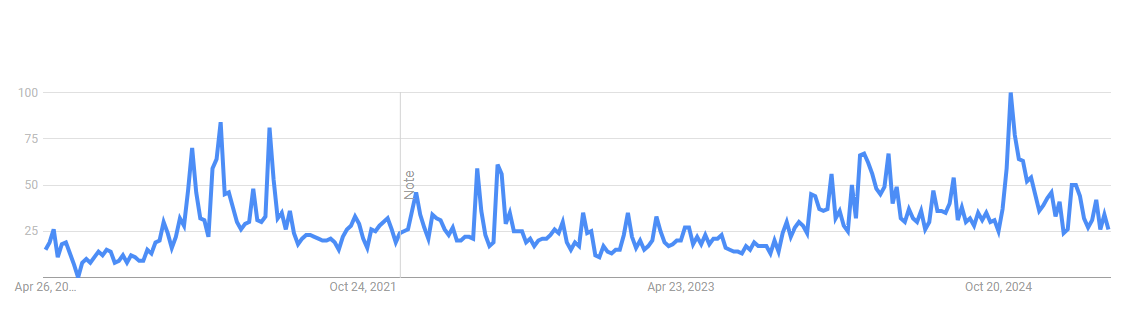
Bitcoin search volume on Google. Source: Google Trends.
Hunter Horsley, CEO of Bitwise, links this anomaly to buyer dynamics. He notes, "The price rise isn't driven by retail investors. Institutional buyers, advisors, corporations, and countries are entering the market."
While Google search volume reflects market interest, it doesn't directly show bullish or bearish forces. However, the average Bitcoin futures funding rate does. According to Glassnode, this rate dropped to about -0.023%. This indicates a dominant short position, with contract prices below spot prices. It signals a weakening demand for bulls.
Additionally, Bitcoin's price chart shows strong bearish signals. Since April 25, Bitcoin surged past $95,000 but couldn't hold that level. Prices continued to decline, hitting new lows. This indicates persistent bearish momentum, while bulls struggle to keep up.
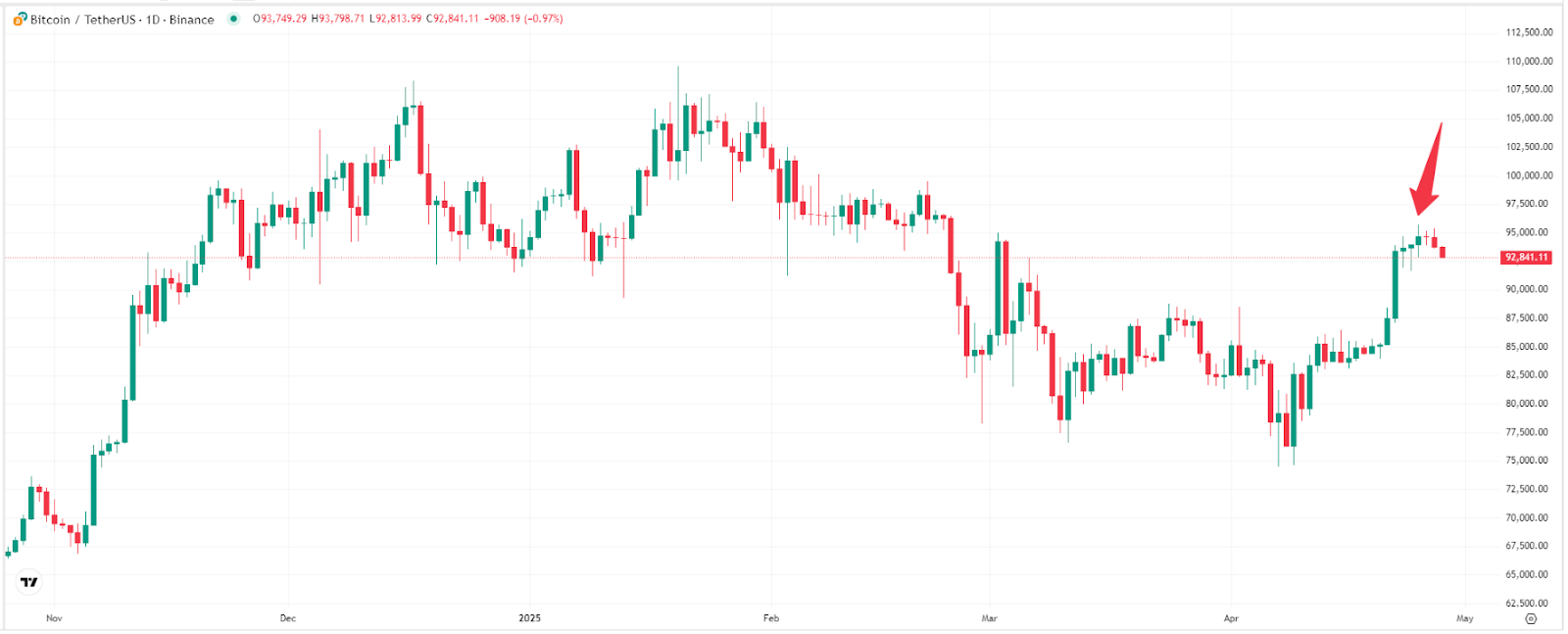
Bitcoin price trend chart. Source: TradingView.
Read more
* The content presented above, whether from a third party or not, is considered as general advice only. This article should not be construed as containing investment advice, investment recommendations, an offer of or solicitation for any transactions in financial instruments.


